
The Evolution of Terror: Why Found Footage Horror Remains Unconquered in the Age of AI
Main Facts: The Enduring Power of Simulated Reality
For three decades, the horror genre has lived in the shaky, pixelated shadow of a cinematic revolution. When The Blair Witch Project debuted in 1999, it didn’t just introduce a new way to make movies; it weaponized realism, convincing audiences that what they were watching was raw, unedited, and tragic evidence of the supernatural.

Today, the landscape of visual media is undergoing an even more seismic shift. With the explosive global adoption of artificial intelligence capable of instantly generating hyper-realistic video, society stands on the precipice of a dizzying new reality. Soon, distinguishing between practically shot "found footage" and completely synthetic, algorithmically generated imagery will become nearly impossible. Yet, rather than eroding the subgenre, this technological encroachment has only heightened our primal fear of the recorded image.

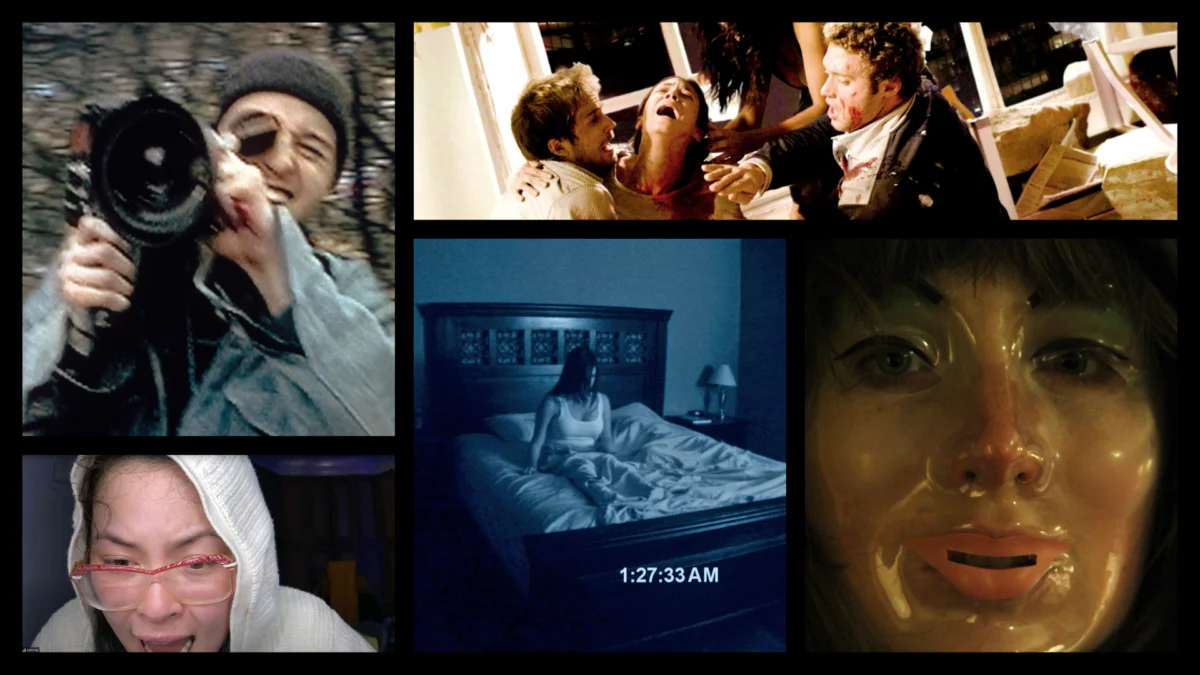
As horror fans gear up for the Halloween season, the found footage format continues to thrive, bridging the gap between nostalgic classics—from the relentless compilation scares of the V/H/S franchise to Rob Savage’s pandemic-era Zoom-terror Host—and bold new cinematic experiments. Whether it is evidence recovered from a desolate crime scene, continuous live-streams from surveillance grids, or chaotic social media broadcasts, found footage remains the ultimate cinematic playground for active imaginations. It operates on a simple, terrifying premise: offering what feels like physical, undeniable proof of hell on Earth.

Chronology: Thirty Years of Shaky-Cam Evolution and Current Milestones
To understand why found footage continues to captivate audiences, one must look back at its trajectory across thirty years of shifting technology and storytelling techniques:

- The Precursors (Pre-1999): Early experiments like Cannibal Holocaust (1980) laid the groundwork for the faux-documentary and recovered-media tropes, shocking international audiences with their uncomfortably realistic violence and framing devices.
- The Paradigm Shift (1999): The Blair Witch Project changes the game forever, utilizing the infancy of the consumer internet to market a fictional missing-person documentary as a real-life tragedy.
- The Franchise Boom (Late 2000s–2010s): Low-budget indie concepts prove to be massive box-office juggernauts. Paranormal Activity (2007) and Cloverfield (2008) demonstrate that limitations in budget can be transformed into artistic advantages through static home-monitoring and frantic handheld perspectives.
- The Digital Pivot (2020–2024): As everyday communication shifts entirely to screens, horror adapts. Films like Host (2020) capture the claustrophobia of lockdown via video-conferencing software, while streaming platforms give new life to under-seen international gems like Lake Mungo and The Tunnel.
- Summer 2025: Peter S. Hall and Paul Gandersman debut their divisive festival entry, Man Finds Tape, later acquired by Magnet Releasing, proving that the subgenre still holds fresh narrative tricks for indie filmmakers.
- Late 2025 and Beyond: Duplass Brothers Productions and the Transgender Film Center forge a partnership to launch a dedicated production fund supporting trans artists working specifically within the found footage format. Meanwhile, anticipation reaches a fever pitch for YouTuber-turned-critic Chris Stuckmann’s feature directorial debut, Shelby Oaks, a paranormal missing-persons investigation distributed by Neon arriving on October 24.
Supporting Data: The Found Footage Renaissance and Industry Metrics
While Hollywood blockbusters often rely on massive CGI budgets and pristine digital cinematography, the found footage subgenre continues to operate on high-concept efficiency, proving that financial restriction breeds creative freedom.

According to box office tracking and indie distribution data across the last two decades, found footage films consistently yield some of the highest return-on-investment (ROI) ratios in cinematic history. For instance, The Paranormal Activity franchise—produced for a meager $15,000 initially—went on to gross nearly $200 million worldwide. Similarly, micro-budget titles distributed via digital platforms have found sustained, long-tail viewerships that traditional theatrical releases often envy.

Furthermore, institutional support for the format is expanding. The joint initiative by Duplass Brothers Productions and the Transgender Film Center represents a vital structural investment in the subgenre, ensuring that marginalized voices have the resources to experiment with documentary-style horror. As audiences increasingly consume their media through fragmented, user-generated channels like TikTok, YouTube, and Twitch, the formal grammar of found footage—glitchy frames, jump cuts, and unpolished audio—has become the native visual language of modern youth culture.

Official Responses: Creators and Critics on the Future of the Subgenre
Industry insiders, directors, and critics have increasingly spoken out about how the intersection of AI, modern surveillance, and traditional filmmaking is reshaping horror.

Reflecting on the psychological weight of the subgenre, critics note that horror cinema must continually push its technical boundaries to remain effective in an era where everyday life is thoroughly recorded. In recent interviews surrounding the festival circuit and theatrical rollouts, creators of modern found footage projects have emphasized that the fear factor no longer relies merely on "things jumping out in the dark," but rather on the erosion of privacy and the haunting permanence of digital footprints.

When Magnet Releasing acquired Man Finds Tape over the summer, studio executives pointed to the film’s clever manipulation of physical media as a direct pushback against frictionless digital streaming. Similarly, as Neon prepares to unleash Chris Stuckmann’s Shelby Oaks—a film that blends traditional cinematic storytelling with investigative online sleuthing—critics have highlighted how contemporary horror relies heavily on the "missing person case" dynamic to draw viewers into obsessive, participatory detective work.

Implications: The Psychological Toll of a Screen-Saturated World
What are the broader implications of a society that continues to obsess over fictionalized, panicked recordings?

First, it highlights a deep-seated cultural distrust of our own archiving systems. When every street corner has a CCTV camera, every home has a smart doorbell, and every individual carries a high-definition recording device, privacy has effectively vanished. Found footage horror taps directly into this ambient paranoia. By turning the tools of modern life—webcams, home security feeds, handheld camcorders—into instruments of terror, these films suggest that the technologies we build to protect and connect us are precisely what will document our undoing.

Second, the rise of generative AI threatens to muddy the waters of the subgenre entirely. If a computer can fabricate a convincing "found" video in seconds, the raw authenticity that made The Blair Witch Project or Cloverfield feel dangerous could be cheapened into a novelty.

Yet, this very threat ensures the survival of the form. True artistry in found footage has never been about technical perfection; it has always been about imperfection, human error, and the desperate, futile attempt to document the inexplicable. As long as humans fear the unknown—and fear the prospect of leaving behind only a corrupted file as proof of our existence—found footage horror will endure as our most unsettling mirror.
