
A Box Office Reckoning: "Digger" Collapses as "Verity" Takes the Crown
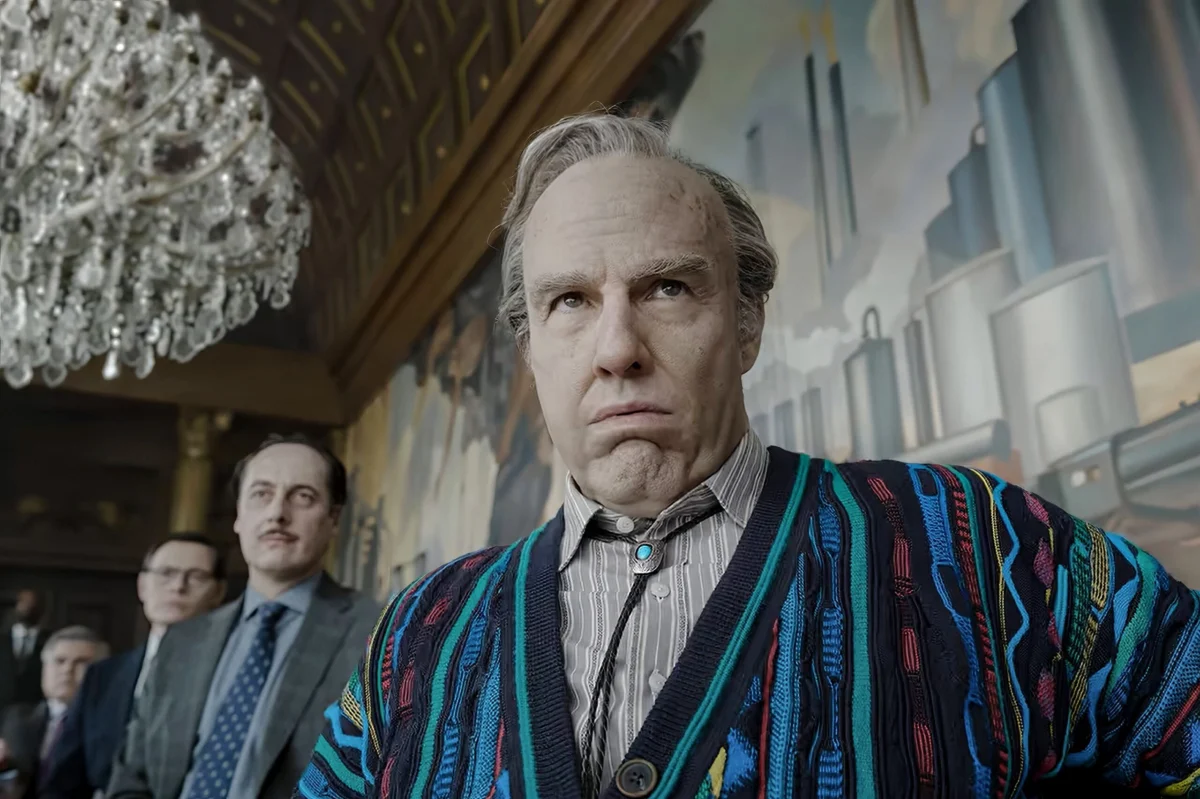
In what is being described as one of the most staggering theatrical flameouts in modern cinematic history, Tom Cruise’s latest vehicle, the oil-industry satire Digger, has hit a catastrophic wall at the North American box office. While Cruise is widely regarded as the "last true movie star," capable of single-handedly buoying the theatrical experience, even his considerable star power could not salvage a project that audiences have resoundingly rejected.
The film, directed by the visionary Alejandro González Iñárritu, was expected to be a prestige event. Instead, it has transformed into a cautionary tale, opening to an embarrassing $8 million from 3,321 theaters. As final tallies are finalized this Monday, analysts expect that figure to slide even further toward $7.5 million, cementing Digger as one of the year’s most profound commercial failures.
The Anatomy of a Flop: A $180 Million Miscalculation
The financial trajectory of Digger is as grim as its premise. With a production budget estimated between $160 million and $180 million, the film required a robust opening weekend—likely in the neighborhood of $40 million—just to begin justifying its massive overhead. Warner Bros. had high hopes that pairing Cruise with Iñárritu, the auteur behind critical darlings like Birdman and The Revenant, would yield a sophisticated, high-grossing satire.
Instead, the film’s reception was marred by a "deluge of bad buzz" that intensified in the weeks leading up to its release. The R-rated satire, which features Cruise as a beleaguered oil tycoon facing ecological collapse, failed to find its footing with critics or general audiences. By the time it reached multiplexes, the projections had been slashed repeatedly, yet the final result still fell short of even the most pessimistic estimates.
"For a black comedy, the numbers are not bad," notes David A. Gross, an analyst at Franchise Re. "But black comedies are inherently niche, small-scale films. This isn’t a small film; it’s a Tom Cruise blockbuster. The comedy walks a fine line, and when it misses, it misses."
Chronology of a Marketing Crisis
The failure of Digger was not entirely unexpected, though its scale caught industry observers off guard. In an unprecedented move, Warner Bros. attempted to weaponize the negative reviews as part of its marketing strategy. Recognizing that critics found the film "unpleasant" and "baffling," the studio’s advertising campaigns urged audiences to "decide for yourself."
One particularly desperate social media campaign suggested that the film’s lack of appeal was limited to American sensibilities, implying that international audiences would embrace the film. That hypothesis was quickly disproven. Digger fared just as poorly abroad, pulling in a meager $12 million from 73 international markets. With a global opening of only $20 million, the film has no path to profitability.
The production of Digger was plagued by cost overruns, with the initial $125 million budget ballooning during a lengthy, complicated shoot. When factoring in the additional $100 million spent on global marketing, industry executives estimate the film’s theatrical break-even point is roughly $350 million. While a Warner Bros. spokesperson contested this, suggesting a break-even point of $300 million, the distinction is largely academic. Given that theaters retain approximately half of all ticket sales, the film is on track to lose at least $150 million to $200 million, a loss exacerbated by Cruise’s "first-dollar gross" contract, which ensures he is paid before the studio recoups its investment.
The Rise of "Verity": A Counter-Programming Success
While Digger floundered, Amazon MGM’s adaptation of Colleen Hoover’s best-selling novel Verity emerged as the weekend’s undisputed champion. Grossing $32.6 million from 3,510 theaters, the film proved that star power—in this case, Anne Hathaway—coupled with a loyal fanbase is a more reliable engine for success than an expensive, abstract satire.
Verity marks Hathaway’s third No. 1 opening of 2026, following the success of The Devil Wears Prada 2 and The Odyssey. Directed by Michael Showalter, the psychological thriller centers on an author who hires a struggling writer to complete a series after a debilitating accident. Despite a mediocre 34% on Rotten Tomatoes and a "C+" CinemaScore, the film is a model of fiscal responsibility. Produced for just $40 million, it is already on its way to turning a tidy profit for Amazon MGM.
"This is an excellent opening," says Gross. "The critical reception is not hurting the film. Audiences are showing up in big numbers because they are already invested in the source material."
The data supports this: 78% of the opening weekend audience was female, with a core demographic of 25- to 34-year-olds. The success of Verity reinforces Hollywood’s growing interest in Colleen Hoover’s bibliography, which offers studios low-risk, high-reward opportunities to reach underserved demographics.
Implications for Warner Bros. and the Industry
The failure of Digger arrives at a particularly sensitive time for Warner Bros. The studio is currently navigating the final stages of its acquisition by Paramount, a merger set to close on October 6. This transition will coincide with the departure of Warner co-chiefs Mike De Luca and Pam Abdy.
While the duo oversaw a string of 2025 successes—including Sinners, A Minecraft Movie, and Weapons—their 2026 slate has been defined by a lack of domestic hits. Not a single Warner Bros. film has managed to cross the $100 million mark in the U.S. this year, and Digger only exacerbates the perception of a studio in crisis following other misfires like The Bride and Supergirl.
Meanwhile, the broader industry remains in a state of flux. Sony continues to find success, with Resident Evil holding steady at second place with $12.5 million, bringing its domestic total to $124.8 million. Furthermore, Disney’s aggressive re-release of Avengers: Endgame—intended to drum up anticipation for December’s Avengers: Doomsday—has allowed the superhero epic to reclaim the title of the highest-grossing film in history, narrowly surpassing Avatar.
A Resilient 2026 Marketplace
Despite the high-profile disaster of Digger, the overall health of the 2026 theatrical market remains robust. Total domestic box office receipts currently stand at $7.95 billion, representing a 19% increase over the same period in 2025. The industry is currently poised to cross the $8 billion threshold, a milestone that was not reached until December of last year.
"September certainly did its part," says Paul Dergarabedian of Rentrak. "For a month that has often been viewed as a transitional period, these numbers are a strong indication of the depth and durability of the 2026 marketplace."
As the industry looks toward the final quarter of the year, the failure of Digger serves as a stark reminder that even the most formidable stars and directors are not immune to the evolving tastes of the audience. In an era where ticket prices are high and entertainment options are limitless, the "prestige gamble" is becoming an increasingly dangerous game for major studios. For Warner Bros., the focus will now shift to the post-merger era, where the demand for fiscal discipline and consistent performance will be higher than ever.
