
Expanding the Visual Language of Mobile Cinema: SANDMARC Launches the Telephoto 96mm Lens for Pro iPhones
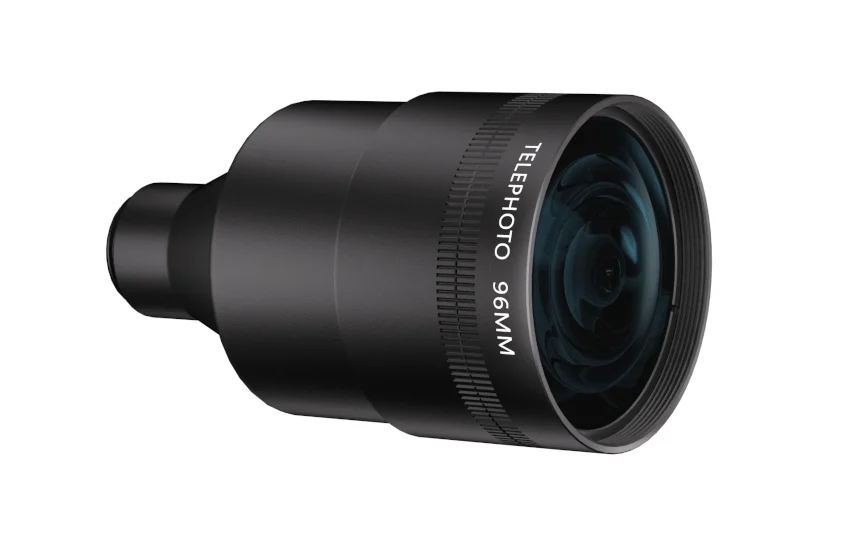
Long lenses have historically defined the visual language of high-end cinema and professional photography. By compressing perspective, isolating primary subjects against dreamy backgrounds, and allowing operators to capture intricate details from afar without altering the physical geometry of a scene, telephoto optics are indispensable.
Until recently, achieving this cinematic aesthetic required bulky cinema cameras and massive glass. However, accessory manufacturer SANDMARC is rewriting the rules of mobile production. The company has officially announced its Telephoto 96mm Lens, an external, high-grade optical attachment engineered specifically to interface with Apple’s advanced tetraprism telephoto camera architecture found on recent Pro-tier iPhones.
Priced at $345, this specialized accessory aims to bridge the gap between pocket-sized convenience and traditional long-range cinematography. Rather than relying solely on aggressive digital cropping or computational enlargement—which often introduces artifacts and degrades fine detail—SANDMARC’s newest optic introduces true physical magnification to the modern smartphone ecosystem.
Main Facts: What is the SANDMARC Telephoto 96mm Lens?
At its core, the SANDMARC Telephoto 96mm Lens is an external glass optic designed to mount directly over the native telephoto camera of compatible Apple devices.
- Optical Magnification: The lens provides 4x true optical magnification when paired with the compatible iPhone telephoto module.
- Maximum System Zoom: According to SANDMARC, this configuration unlocks up to 32x total zoom on the iPhone 17 Pro and iPhone 17 Pro Max. For users of the iPhone 16 Pro series and iPhone 15 Pro Max, the total zoom ceiling reaches up to 20x.
- Physical Dimensions: The lens measures 88.9mm in height, sports a 46mm diameter, and weighs a substantial 255g, reflecting its multi-element glass construction.
- Compatibility: The system is explicitly tailored for Apple’s tetraprism camera design, supporting the iPhone 17 Pro, iPhone 17 Pro Max, iPhone 16 Pro, iPhone 16 Pro Max, and iPhone 15 Pro Max.
- Pricing and Ecosystem: The lens carries a retail price tag of $345 (optic only, with specialized mounting cases sold separately) and requires SANDMARC’s free proprietary camera application for optimal operation.
Chronology and Development: Evolving Smartphone Glass
The trajectory of smartphone optics has shifted dramatically over the past decade. While early mobile photography relied entirely on wide-angle primary sensors and rudimentary digital zoom, manufacturers quickly recognized the demand for optical reach.
The Shift to Tetraprism Technology
Apple’s introduction of the tetraprism telephoto camera—which folds light reflections multiple times internally to achieve longer focal lengths within a slim phone body—was a watershed moment for mobile imaging. It provided native optical zoom capabilities that far outpaced older traditional telephoto lenses.
Recognizing this hardware leap, accessory makers like SANDMARC began exploring ways to push these physical boundaries even further.
- Phase One (Foundational Wide & Macro): Historically, external smartphone lenses focused primarily on anamorphic wide-angle looks, macro details, and fisheye effects. Long-range telephoto options were rare because stacking external glass onto unstable digital telephoto sensors usually resulted in severe vignetting, chromatic aberration, and catastrophic light loss.
- Phase Two (Refined Mobile Telephoto): As Apple upgraded its sensor resolution, stabilization, and internal processing pipelines, the fidelity of smartphone telephoto cameras improved exponentially.
- Phase Three (The Tetraprism Era – 2025/2026): With the standardization of tetraprism technology across Pro models, SANDMARC developed the 96mm system. By matching the exit pupil and optical requirements of Apple’s folded glass design, the company created an external lens capable of interfacing cleanly with the native hardware without breaking autofocus algorithms or destabilizing image stabilization.
Supporting Data and Technical Specifications
For professional videographers and technical purists, raw numbers dictate whether an accessory belongs in a working kit. SANDMARC has published detailed specifications regarding the 96mm lens’s focal equivalents and physical build:

Focal Length Equivalents
Because smartphone sensors feature crop factors drastically different from full-frame cinema cameras, system-equivalent figures provide a clearer picture of how the lens performs in the field:
- iPhone 17 Pro / Pro Max Configuration: SANDMARC describes combinations using the 4x base setting alongside the 96mm lens as reaching an equivalent of 384mm, while utilizing an 8x setting with the lens pushes the reach to an astonishing 768mm.
- iPhone 16 Pro / 16 Pro Max / 15 Pro Max Configuration: The company outlines a 5x native configuration paired with the lens that yields a system-equivalent focal length of 480mm. (Note: These are system-equivalent figures representing field-of-view comparisons relative to traditional 35mm full-frame formats, rather than the physical focal length of the external glass element itself).
Optical Construction and Filtration
To combat the optical degradation typical of cheap add-on lenses, SANDMARC utilizes multi-element, multi-coated glass elements. This multi-coating minimizes internal reflections, ghosting, and flare while maximizing light transmission—a critical necessity when shooting in challenging low-light environments.
Furthermore, the lens incorporates a 17mm inner thread. This crucial design choice ensures native support for SANDMARC’s ecosystem of physical filters. Documentary and narrative filmmakers who rely on neutral density (ND) filters to maintain cinematic shutter speeds under harsh midday sun can seamlessly thread their filters onto the front of the telephoto lens.
Official Responses and Creator Perspective
While consumer brands often market extreme zoom numbers as party tricks, industry professionals view telephoto glass through the lens of creative control. In its official releases and promotional campaigns, SANDMARC has leaned heavily into how compression transforms the visual narrative of mobile production.
Redefining Mobile Composition
"Long lenses can completely change the visual language of a production," notes SANDMARC in its product brief. By compressing perspective—making background elements appear closer and larger relative to the foreground—filmmakers can craft images that look remarkably distinct from the typical wide-angle distortion associated with smartphones.
Rather than relying on software-driven portrait modes or artificial computational blur, the SANDMARC Telephoto 96mm generates optical depth of field. This produces natural bokeh and organic subject separation, giving mobile footage a cinematic fingerprint that algorithms struggle to replicate authentically.
Targeted Use Cases
Official statements and early field tests highlight several key disciplines where this optic shines:
- Documentary Filmmaking: Operators can capture intimate, candid reactions or wildlife details from a respectful distance without physically disrupting the subjects or altering the environment.
- Event and Concert Coverage: Videographers shooting from restricted press areas or the back of a venue can frame performers tightly, overcoming distance barriers that render standard smartphone lenses useless.
- Urban Cinematography: Cityscapes benefit immensely from focal compression. Layering distant skyscrapers, heavy traffic, and pedestrians into a tightly bound frame creates an intense, epic visual density.
Implications for the Future of Mobile Filmmaking
The release of a $345 telephoto lens for iPhones raises an important question: Where does the line blur between dedicated cinema rigs and smartphone kits?

The Rise of the Modular iPhone Rig
For years, indie filmmakers have embraced the iPhone for its convenience, ProRes recording capabilities, Log color profiles, and incredible stabilization. However, audio routing, power management, and lens modularity have always required an ecosystem of third-party cages, handles, and mounts.
The SANDMARC 96mm lens fits squarely into this modular philosophy. It acknowledges that while an iPhone cannot physically house a massive 400mm cinema prime lens inside its ultra-thin chassis, it can accept external glass when a production demands specialized reach.
Economic and Practical Considerations
At $345 for the lens alone—with required mounting cases and accessories purchased separately—the complete kit represents a meaningful financial investment. For casual users, this price point is difficult to justify.
However, for commercial content creators, travel journalists, and budget-conscious indie directors who already own a compatible Pro iPhone, the math is compelling. Spending a few hundred dollars on an optical modifier is vastly cheaper than renting or buying a dedicated mirrorless camera body and a professional telephoto zoom lens. It preserves the ultra-portable footprint of a smartphone kit while expanding its creative ceiling.
Final Thoughts
SANDMARC’s Telephoto 96mm Lens is not designed to turn an iPhone into an absolute replacement for high-end Hollywood cinema packages. Instead, it occupies a specialized, highly valuable niche.
By combining multi-coated optical glass with Apple’s sophisticated tetraprism sensor technology, the lens empowers mobile filmmakers to push past the traditional limits of smartphone focal lengths. It delivers genuine optical compression, natural subject isolation, and impressive reach—all while maintaining the pocket-sized agility that makes shooting on mobile so revolutionary in the first place.
As mobile sensors continue to evolve, high-performance physical optics like the SANDMARC 96mm prove that the future of cinema isn’t just about computational photography—it is about the marriage of smart software and brilliant glass.
Source: SANDMARC
