
The Architecture of Silence: Inside ‘The Gift of Room Tone’
In the hyper-kinetic world of film production, where the roar of the camera, the frantic adjustments of the gaffer, and the sharp commands of the director define the daily rhythm, there exists a brief, sacred moment of stillness. It is a few seconds of near-silence known to professionals as "room tone." Often ignored by the audience and overlooked by the casual observer, this atmospheric audio has been elevated into an art form by Daniel Reis, an editor for The Criterion Collection. His recent video project, The Gift of Room Tone, offers an evocative, meta-commentary on the invisible glue that holds cinema together.
The Main Facts: Defining the Invisible
"Room tone" is perhaps the most essential, yet least appreciated, element of cinematic post-production. At its simplest, it is the ambient sound of a location—the low-frequency hum of air conditioning, the subtle settling of building structures, or the distant, muffled resonance of the outside world.
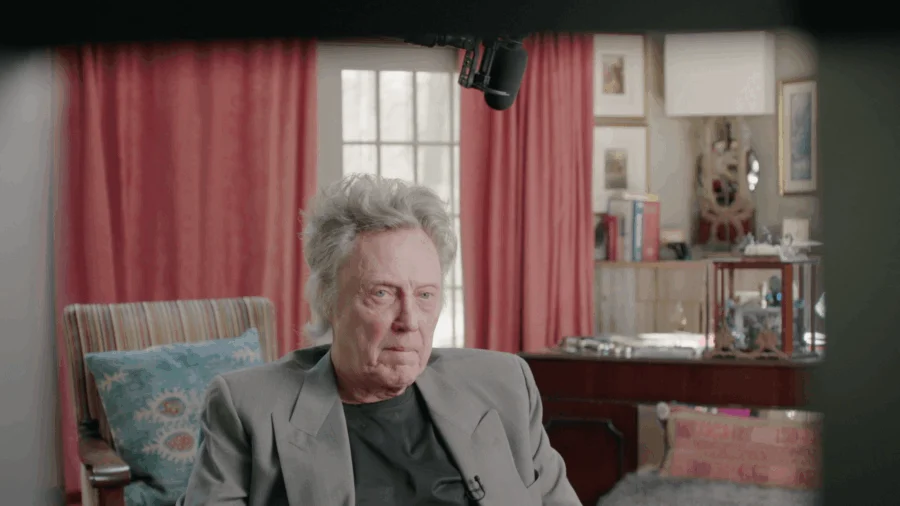
In his project, Reis compiles raw footage captured at the conclusion of various high-profile interviews. These moments occur after the cameras have ceased recording the subject’s dialogue but before the set has been struck. The subjects—ranging from legendary directors like Martin Scorsese to actors like Christopher Walken—sit in a state of suspended animation, looking into the lens as the production team captures the "fingerprint" of the room’s acoustic profile.
Reis describes this audio as the "mortar between bricks." For an editor, room tone is not just filler; it is a structural necessity. When an editor trims a stutter, removes a cough, or stitches together two disparate sentences, they create artificial silence. Without a layer of room tone underneath these edits, the audio track would drop to an unnatural, digital void—a "dead" space that would immediately signal to the audience that an edit has occurred.
Chronology: From Pandemic Boredom to Artistic Triumph
The genesis of The Gift of Room Tone is inextricably linked to the global stagnation of the early 2020s. As the COVID-19 pandemic forced film production to a grinding halt, many industry professionals found themselves suddenly removed from the sets that defined their lives.
Early 2020: The Archive Emerges
In the early months of 2020, as Reis transitioned into remote work, he began reviewing his extensive digital archives. Having spent years editing content for The Criterion Collection, he had accumulated hours of "B-roll" and interview outtakes. While most editors would discard these snippets of silence, Reis saw an opportunity. He began to perceive these moments not as technical requirements, but as a meditation on the human condition.
Mid-2020: Curation and Assembly
By mid-year, the compilation took shape. Reis focused on the juxtaposition of high-profile figures—Bong Joon-Ho, Spike Lee, Roger Deakins, and Alfonso Cuarón—captured in these unscripted, vulnerable moments of waiting. The video was finalized and released, quickly gaining traction within the industry as a poignant reminder of what it felt like to be on a set.
Post-Release Impact
Following its release, the video became a cult hit. It served as a therapeutic touchstone for film workers who were waiting for their industry to restart, providing a sensory connection to the professional environments they were temporarily barred from.
Supporting Data: The Technicality of Silence
To understand the necessity of room tone, one must look at the physics of audio editing. Digital Audio Workstations (DAWs) operate on a binary system. In the digital realm, silence is represented as a flat line—a total absence of signal. However, the human ear is highly sensitive to abrupt shifts in sound pressure levels.
- The Seamless Edit: If an editor removes a two-second pause from a dialogue track, they create a "cut." If that cut is not bridged with a consistent "bed" of ambient noise, the listener perceives a "pop" or a "click."
- Acoustic Signature: Every room has a unique "frequency response." A library sounds different from a soundstage; a cathedral sounds different from a closet. If an editor tries to "patch" a clip from a library into a scene shot in a soundstage, the difference in the noise floor—the background hum of electricity and air movement—will reveal the manipulation.
- The Quantitative Reality: Professional sound mixers often require at least 30 to 60 seconds of clean room tone per location to ensure they have enough material to work with throughout the duration of the edit.
The cast of characters featured in the video is a "Who’s Who" of modern cinema. Beyond the aforementioned directors, the inclusion of actors like Carey Mulligan and Jake Gyllenhaal, as well as cultural icons like Tony Hawk, underscores the universality of the experience. Regardless of their stature, everyone must eventually sit in the chair and provide the room tone required to finish the work.
Official Responses and Industry Reception
The reaction from the creative community has been overwhelmingly positive. Industry publications and trade blogs, including The Black and Blue, highlighted the project as a form of "pulling focus"—a deliberate, slow-paced look at the details we usually rush past.
In his commentary, Reis emphasizes the difficulty of replicating these sounds. "Room tone is something that can’t really be faked," he writes. "Each space has its own ambience, and it’s very hard to re-create once you’ve left." This sentiment has been echoed by sound engineers who struggle with the "Frankenstein" approach of trying to synthesize room tone in post-production using white noise or library samples, which rarely match the authentic resonance of a physical space.
For the subjects involved, the video offers a rare glimpse into the "off-camera" persona. There is a distinct, almost melancholic humanity in watching someone like Christopher Walken—usually a man of distinct, rhythmic speech—simply existing in a quiet room, waiting for the signal that his work is done.
Implications: The Legacy of the "Quiet"
The success of The Gift of Room Tone raises questions about the future of film production and our relationship with the environments we inhabit.
1. The Value of the "In-Between"
The project challenges the contemporary urge to curate only the "high points" of an experience. By choosing to highlight the silence rather than the performance, Reis argues that the value of an interview is not merely the content of the speech, but the environment in which that speech occurs. It forces the viewer to consider the room itself as a character.
2. A Shift in Post-Production Philosophy
As AI-driven audio tools become more prevalent, the art of traditional editing is changing. Software can now generate "silence" that sounds natural. However, as Reis demonstrates, there is a tangible, emotional authenticity to organic room tone that algorithms cannot replicate. The project serves as a reminder to current and future editors that their craft is rooted in physical reality, not just digital manipulation.
3. Cultural Nostalgia
The project also serves as a time capsule. By compiling these moments during the 2020 pandemic, Reis unintentionally created a piece of art that documents the longing for communal, physical spaces. The silence in the video, once a technical necessity, became a metaphor for the quiet streets, the empty offices, and the paused production schedules that defined a global epoch.
Conclusion
Daniel Reis’s The Gift of Room Tone is more than a technical demonstration; it is a love letter to the process of filmmaking. By stripping away the dialogue, the music, and the editorial pacing, he reveals the humble infrastructure that allows stories to be told. It reminds us that even in the loudest of industries, there is a profound power in simply stopping, holding still, and listening to the air around us. As we look back on the industry’s recovery, we are reminded that the "empty space" is never truly empty—it is filled with the resonance of our shared experiences, waiting to be captured and preserved.
