
From Bisection to Backdrop: How Darth Maul Became Star Wars’ Most Unlikely Prestige TV Antihero
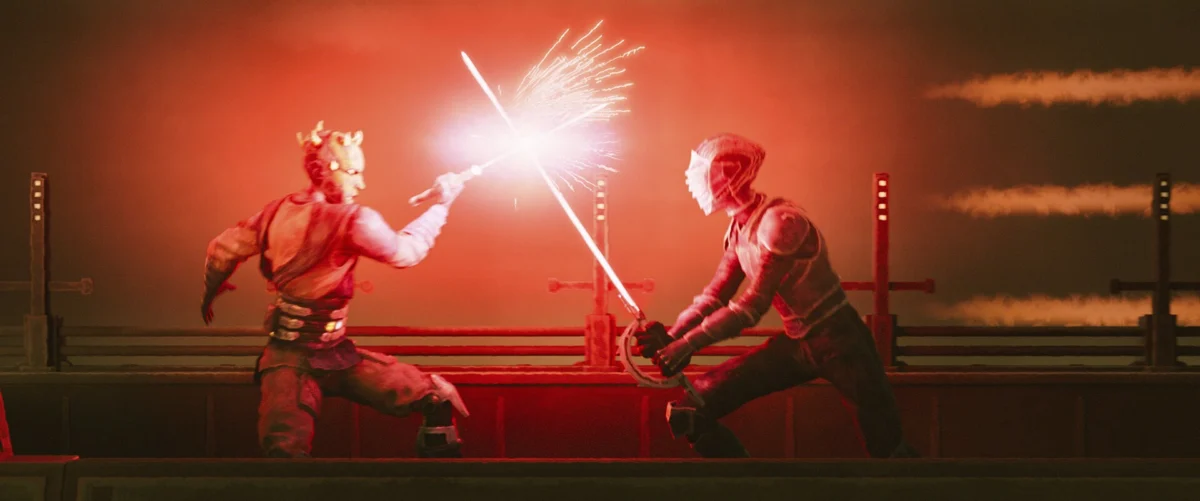
Few moments in cinematic history have redefined a pop-culture icon quite like the frantic, neon-lit climax of Star Wars Episode I: The Phantom Menace. For a mere 15 minutes, a horned, crimson-and-black Zabrak warrior known as Darth Maul sliced through the Jedi Order’s mystique with a dual-bladed lightsaber, only to be bisected by Obi-Wan Kenobi and unceremoniously dropped down a reactor shaft.
For over a decade, that should have been the end of the story. Instead, it was merely the origin.
Today, Lucasfilm is doubling down on the galaxy’s most resilient outcast. In the upcoming animated event series Star Wars: Maul — Shadow Lord, the character achieves a milestone matched only by Boba Fett: he becomes the second Star Wars villain to headline a dedicated television series. Filling the narrative gap between his criminal empire in The Clone Wars, his live-action cameo in Solo: A Star Wars Story, and his tragic twilight in Star Wars Rebels, Shadow Lord promises a gritty, artistically daring evolution for a character who began his journey as little more than a silent, menacing cinematic action figure.
Main Facts: The Anatomy of Star Wars: Maul — Shadow Lord
Shadow Lord is positioned as a pivotal, canon-shifting bridge within the broader Star Wars timeline. Set during the turbulent early days of the Galactic Empire, the series picks up the pieces of Maul’s fractured life following his devastating defeat during the Siege of Mandalore. Stripped of his seat of power, his criminal syndicates, and his hard-earned influence, Maul is a hunted, desperate animal with a score to settle.
His primary targets are twofold: Emperor Palpatine (Darth Sidious), the Sith Master who cast him aside in favor of Anakin Skywalker, and the underworld crime syndicates that abandoned him the moment his empire crumbled. Yet, the series introduces a surprising psychological twist. Alongside his quest for vengeance, Maul finds himself oddly compelled to mentor a new apprentice: a disillusioned Jedi Padawan named Devon.

Unlike the episodic, mission-of-the-week formats that defined much of early Star Wars animation, Shadow Lord adopts a fully serialized structure. It leans heavily into a mature, morally grey landscape where the boundaries between heroism and villainy blur, offering a stark thematic departure from its predecessors.
Chronology: Tracing Maul’s Improbable Evolution
To understand the weight of Shadow Lord, one must trace the winding, decades-long path of the character across multiple mediums:
- 1999 (The Phantom Menace): Introduced as a quiet, lethal enforcer for Darth Sidious. He slays Qui-Gon Jinn before suffering apparent death at the hands of Obi-Wan Kenobi.
- 2012 (The Clone Wars Season 4 & 5): Brought back from the dead via dark side sorcery and cybernetic legs. He builds a criminal empire, slays Pre Vizsla to claim the Darksaber, and watches his brother, Savage Opress, die at the hands of Sidious.
- 2018 (Solo: A Star Wars Story): Revealed in a live-action cameo as the hidden crime lord steering the criminal syndicate Crimson Dawn from the shadows.
- 2016–2017 (Star Wars Rebels): Appears as a broken, aging hermit stranded on Malachor, seeking an ultimate reckoning with Obi-Wan Kenobi, which ends in his final, quiet death in the desert sands of Tatooine.
- The Present (Maul — Shadow Lord): Fills in the missing years between The Clone Wars and Solo, exploring Maul’s transition from empire-builder to solitary shadow.
Supporting Data & Production Craft: A Painterly Approach to the Dark Side
Behind the scenes, Shadow Lord represents a technical and artistic evolution for Lucasfilm Animation. Rejecting the clean, hyper-rendered digital surfaces common to modern television, the production team pursued a textured, painterly aesthetic spearheaded by Director of Photography Joel Aron.
Aron, who previously experimented with live-action techniques in The Bad Batch, elevated his methodology for Shadow Lord. The production utilized oil-on-canvas matte paintings, physical brushstrokes on glass panes, and practical, hand-made physical models for spacecraft. This hybrid approach not only expedited the rendering of complex backgrounds and massive Star Destroyers but also grounded the series in a tactile, grittier reality.
This handmade philosophy extends directly to the action sequences. The lightsabers in Shadow Lord are deliberately designed to evoke visible paintbrush strokes, trading the clean, humming laser-blade look of traditional Star Wars media for something resembling a raging fire cutting through the atmosphere.

Sound design plays an equally vital role. Sound designer David W. Collins integrated actor Sam Witwer’s actual, unvarnished screams into the audio profile of the lightsaber swishes, ensuring that every clash resonates with raw, visceral hatred and exhaustion.
Production challenges naturally accompanied this ambitious creative vision. Executive Producer Athena Yvette Portillo noted that the fully serialized format required an entirely new post-production pipeline to maintain visual consistency across episodes.
"We didn’t want a situation where someone would say episode four looked better than the first," Portillo explained. "We would constantly go back to earlier episodes and pepper them with what we learn from later episodes. It’s like cooking. You’re taste testing the episodes, then going back in and adding spices to keep it consistent."
Official Responses: Inside the Mind of the Zabrak
For actor Sam Witwer, who has voiced and breathed life into Maul since his 2010 resurrection in The Clone Wars, Shadow Lord represents the completion of a creative marathon.
"It’s been a real surprise that the character continues to evolve and to grow," Witwer told IndieWire. "The fun of it is reinventing him every time that we bring him out and learning new things about him. I’ve always had a lot of questions about Maul, and now I feel like I finally have the full vision of his arc throughout Star Wars for the first time in my life."

Supervising Director Brad Rau highlighted the psychological complexity that makes Maul such a magnetic focal point for a narrative series.
"He’s a survivor, and dedicated to his causes," Rau noted. "He’s also a manipulator, and a very charismatic one at that. He provides a kind of devil on the shoulder of our characters… He’s, in some regards, a relatable character, due to the losses he’s suffered, and the mistakes he keeps repeating."
Showrunner Matt Michnovetz emphasized the deliberate choice to keep the looming threat of the Galactic Empire at arm’s length throughout the narrative, drawing thematic inspiration from the political grit of Andor.
"We wanted to make it a menacing, strong, external force that would come in at the right time to push the story forward," Michnovetz said. "It’s a looming presence, one that every character is well aware would heavily disrupt their lives if it were to show up."
Implications: A Mirror Image of Ahsoka Tano
The arrival of Maul — Shadow Lord signals a broader storytelling shift within modern Star Wars television. By centering an entire series on an unredeemable, tragic antihero, Lucasfilm is testing the waters for darker, morally ambiguous narratives that step away from straightforward Jedi-versus-Sith dichotomies.

The thematic core of Shadow Lord relies heavily on mirrors and parallels. Narrative analysts have pointed out that Maul’s dynamic with his new Padawan apprentice, Devon, serves as a dark mirror to Anakin Skywalker and Ahsoka Tano. Like Ahsoka, Maul was stripped of his family, indoctrinated into a restrictive ideology, and ultimately abandoned by the masters he served.
However, while Ahsoka managed to break the cycle and find a path toward healing and altruism, Maul remains imprisoned by his trauma, funneling his grief into a hollow pursuit of control and vengeance. Knowing the tragic, solitary end that awaits him on Tatooine in Rebels imbues Shadow Lord with an inevitable, operatic sadness.
As Star Wars continues to expand its television footprint outward, Shadow Lord proves that even the most fragmented, blood-stained villains can sustain a compelling narrative if given the room to bleed, breathe, and evolve. In the end, as long as the franchise endures, Darth Maul will remain in the shadows, waiting for his next chance to tear the galaxy apart.
