
Terror in the Canopy: Jessica Rothe Breaks Down the Gruesome Realism of ‘Beware Boiúna’
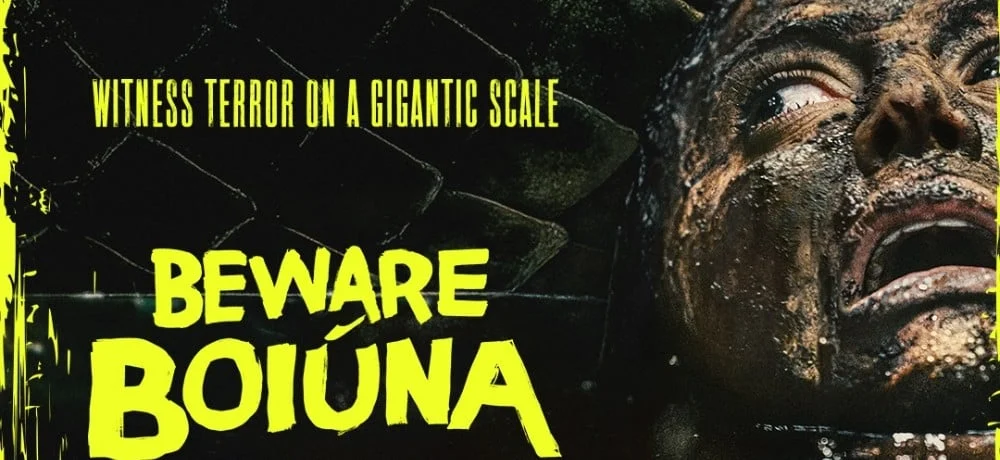
In the pantheon of creature features, few films have generated as much pre-release anxiety as the upcoming survival-horror epic, Beware Boiúna. Set against the suffocating, verdant backdrop of the Amazon rainforest, the film promises to redefine the "nature run amok" subgenre. As the October 2, 2026, release date approaches, anticipation has reached a fever pitch—not only due to the film’s high-concept premise but because of the unflinching, visceral practical effects that ground its supernatural threats in terrifying reality.
Today, we go behind the curtain with the film’s lead, Jessica Rothe, to dissect one of the most stomach-churning sequences in the film: the infamous "botfly scene."
The Premise: When the Jungle Bites Back
The narrative of Beware Boiúna is deceptively simple. A high-stakes medical mission intended to provide aid to isolated indigenous populations spirals into a claustrophobic fight for survival. The catalyst for this descent into madness is the awakening of the titular Boiúna—a colossal, ancient predator of Amazonian legend that views the human intruders not as saviors, but as an affront to its domain.
In the lore of the Amazon, the Boiúna is a shape-shifting entity, a serpent of immense proportions that controls the dark waters and the dense undergrowth. In the film, nature is not merely a setting; it is an active antagonist. As the medical team navigates the foliage, they find that the jungle’s smaller inhabitants—the parasites, the insects, and the decay—are just as lethal as the gargantuan monster stalking them from the shadows.
Chronology of a Nightmare: The Botfly Sequence
For audiences who have seen the leaked snippets of the "botfly sequence," the immediate reaction is visceral. In the film, a member of the medical team sustains a minor abrasion while hacking through a dense thicket. What follows is a slow-burn horror sequence that eschews jump scares for the creeping, biological dread of a parasite claiming a host.
Phase 1: The Incubation
The sequence begins in the humid, low-light conditions of a makeshift camp. The character, exhausted and delirious from the humidity, discovers a strange, pulsating welt on their forearm. The cinematography by DP Elena Rossi utilizes macro-lens photography to heighten the viewer’s discomfort, emphasizing the texture of skin and the unnatural movement beneath the surface.
Phase 2: The Discovery
Rothe, whose character leads the frantic attempt to excise the parasite, describes the scene as the most challenging week of the shoot. "We weren’t just acting," Rothe explains. "We were dealing with animatronics that felt damp, warm, and alive. The sound design team captured the wet, tearing audio of the extraction process, which is arguably more haunting than the visual itself."
Phase 3: The Escalation
The sequence does not end with the removal. It serves as a narrative pivot, signaling to the audience that the jungle is no longer a place of science or medicine, but a place of biological hostility. The botfly represents the microscopic danger, a grim precursor to the macroscopic terror of the Boiúna itself.
Supporting Data: The Craft of Practical Horror
The production of Beware Boiúna relied heavily on a "practical-first" philosophy. In an era dominated by CGI, director Marcus Vane insisted that the physical threats—from the dense, suffocating makeup effects to the animatronic set pieces—must have a tangible presence.
Budget and Resource Allocation
- Practical Effects Budget: Approximately 35% of the film’s total production budget was allocated to prosthetics and animatronics, a significant deviation from modern horror standards.
- Technical Team: A crew of 40 specialists, including entomologists and biologists, were consulted to ensure the "behavior" of the creatures felt authentic to the Amazonian setting.
- The "Boiúna" Animatronic: Measuring 45 feet in length, the primary creature prop required six operators and a sophisticated hydraulic system to replicate the fluid, serpentine motion of a river-dwelling predator.
"We wanted the audience to smell the rot," Vane stated in a press briefing. "If you see a parasite, you shouldn’t see a digital layer. You should see the skin stretching. You should see the sweat. That is what sticks with people long after the credits roll."
Official Responses and Behind-the-Scenes Insights
Jessica Rothe has been vocal about the physical toll the production took on the cast. "There was no air conditioning in the jungle sets," she recalls. "We were covered in synthetic mud, fake blood, and insect repellent that wasn’t actually meant for the bugs we were filming with. When we shot the botfly scene, the tension in the room was genuine. We were all exhausted, and that translated into the performance."
Rothe notes that the scene serves as a metaphor for the film’s broader themes: the hubris of humanity attempting to "cure" a wild, untamable world. "The botfly isn’t evil," she says. "It’s just surviving. The Boiúna isn’t evil either. They are simply part of an ecosystem that doesn’t recognize our right to be there. The horror comes from our realization that we are, effectively, the intruders."
Implications: The Evolution of Survival Horror
Beware Boiúna arrives at a pivotal moment for the horror genre. Following the success of atmospheric, creature-based films in the early 2020s, audiences have signaled a desire for "grounded horror"—stories that feel like they could happen, even if the premise is supernatural.
The Shift Toward Biological Realism
The film’s focus on the intersection of medical science and environmental horror suggests a new trend. By grounding the fear in biological facts—the parasitic nature of botflies, the claustrophobia of the rainforest, the unpredictability of apex predators—the film creates a "dread-loop" that persists throughout the runtime.
Impact on the Industry
If Beware Boiúna hits its projected box office numbers, industry analysts expect a resurgence in practical effects-heavy creature features. The industry has been trending toward digital dependence for years, but the positive reception of recent "tactile" horror suggests that audiences are hungry for the imperfections and the raw, tangible nature of physical sets.
Environmental Commentary
Beyond the scares, the film carries an underlying ecological message. By framing the Amazon as an entity that "decides who lives and who dies," the film taps into contemporary anxieties regarding climate change and the loss of biodiversity. The Boiúna acts as the personification of a planet pushed to its breaking point, striking back against those who have encroached upon its territory.
Conclusion: A Date with Destiny
As October 2, 2026, approaches, Beware Boiúna stands poised to be the definitive horror experience of the year. Through a combination of grueling practical effects, an unflinching commitment to realism, and a stellar performance by Jessica Rothe, the film aims to do more than just frighten—it aims to leave the audience fundamentally uneasy about the natural world.
Whether it is the microscopic terror of the botfly or the gargantuan, ancient wrath of the Boiúna, the film serves as a stark reminder: there are places on this Earth where human law does not apply. In the deep Amazon, the jungle is not just watching. It is hungry.
Prepare yourselves for an experience that, much like the film’s central parasite, will bury itself deep under your skin and refuse to let go. Beware Boiúna is not just a movie; it is a warning.
Only in theaters October 2, 2026.
