
Your Mission, Should You Choose to Accept It: Ranking Every ‘Mission: Impossible’ Film From Worst to Best
Few actors in Hollywood history have been sustained by a single ongoing franchise more than Tom Cruise. The relentless hype surrounding Mission: Impossible — The Final Reckoning proves that nearly three decades after a 1960s television espionage show was successfully translated into a cinematic blockbuster, the franchise’s high-stakes formula remains as potent as ever.
The longevity and consistent quality of the Mission: Impossible series is an unusual sight in modern Hollywood. Over the years, these films have so thoroughly eclipsed the original television show in the cultural consciousness that generations of moviegoers forget the small-screen origins entirely. Created by Bruce Geller, the original Mission: Impossible starred Peter Graves as an agent of the IMF (Impossible Mission Force), recruiting a team of elite specialists to combat Cold War foes, corrupt syndicates, and international crime lords.
In 1996, producer and star Tom Cruise weaponized the concept, bringing Lalo Schifrin’s iconic theme music, the exploding briefing tapes, and the signature phrase—"Your mission, should you choose to accept it"—to the silver screen. What followed was a masterclass in cinematic endurance. Across eight films, the franchise has evolved from a slick, paranoid spy thriller into a globally revered spectacle of practical stunts and relentless cinematic craftsmanship.

Main Facts: The Evolution of an Action Juggernaut
The trajectory of the Mission: Impossible franchise is defined by a revolving door of visionary auteurs. In its early days, the series operated as a showcase for distinct directors to leave their individual stamps on the material. Brian De Palma, John Woo, J.J. Abrams, and Brad Bird each directed a single installment, shifting the tone from Hitchcockian paranoia to kinetic gun-fu, and eventually to expansive, blockbuster architectural destruction.
Everything changed in 2015 when Christopher McQuarrie took the reins for Rogue Nation. Breaking tradition, McQuarrie stayed on to helm subsequent entries, steering the episodic property into a deeply serialized narrative epic. Under his direction, the ensemble cast surrounding Ethan Hunt tightened and deepened. Characters like Rebecca Ferguson’s enigmatic Ilsa Faust and Vanessa Kirby’s calculating White Widow transformed the cinematic landscape, turning a revolving cast of disposable love interests into recurring, complex allies and adversaries.
Remarkably, out of eight films to date, the franchise has never truly faltered. While individual entries spark passionate debates among fans and critics, there is not an outright dud in the bunch. This high baseline makes the challenge of ranking them especially tricky.

Chronology: A Complete Ranking of the Franchise
8. “Mission: Impossible II” (2000)
One surefire way to stall a viable franchise is to hand the keys to John Woo and let him indulge every early-2000s action trope imaginable. Featuring a convoluted plot involving rogue viruses and corporate malfeasance, Woo’s entry is widely considered a narrative low point for the series.
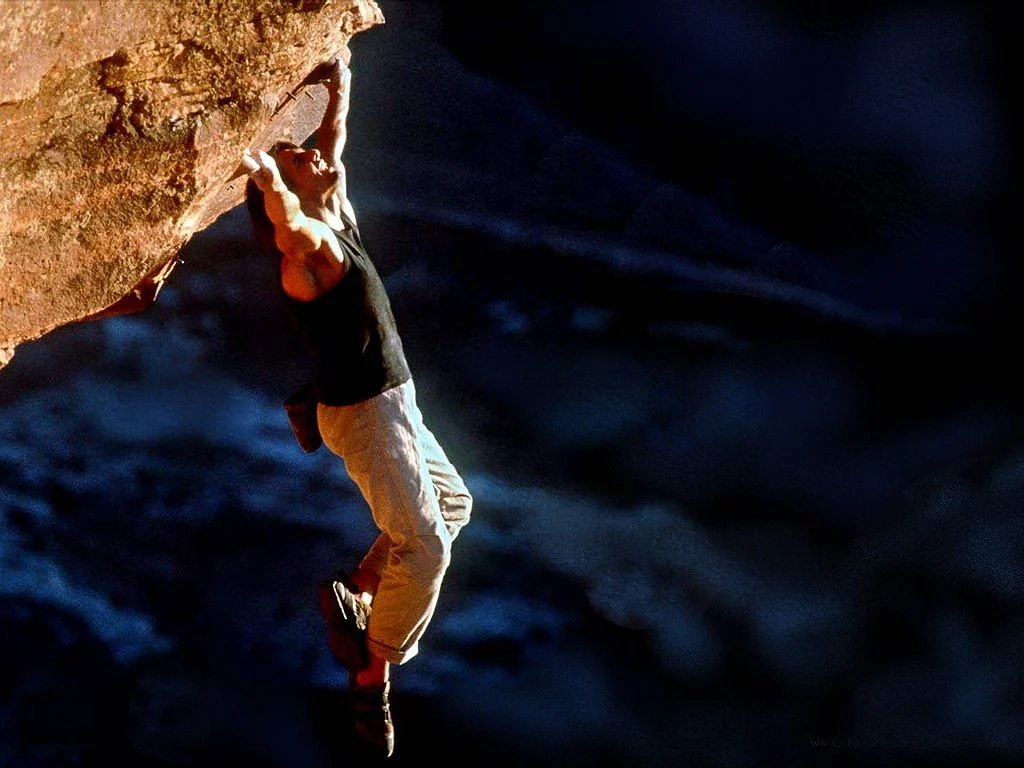
Yet, the film is not entirely devoid of merit. Thandie Newton introduces a captivating, Bond-girl-esque presence as Nyah Nordhorn, a thief-turned-spy who stands as one of the series’ more compelling early love interests. Furthermore, the climactic motorcycle chase between Cruise and Dougray Scott is a classic Woo set piece, even if it was later outdone by Rogue Nation. Its opening rock-climbing stunt—jaw-dropping at the turn of the millennium—was similarly rendered quaint by a franchise hellbent on constantly outdoing itself.
7. “Mission: Impossible — The Final Reckoning” (2025)
A heartbreaking misstep, The Final Reckoning occasionally loses sight of why audiences fell in love with this franchise in the first place. Historically, Mission: Impossible has thrived on pulse-pounding set pieces and breathtaking spectacle, treating overarching continuity and villains as secondary elements.

In attempting to deliver an emotional, definitive send-off for Ethan Hunt, Christopher McQuarrie ties all previous seven films together in an overly dense narrative knot. The first act bogs down under the weight of an uninteresting primary antagonist—the AI known as "The Entity"—which feels unnecessarily bleak for a series built on kinetic joy. While the final act delivers enough structural redemption to salvage the runtime, Ethan Hunt deserved a cleaner, more exhilarating victory lap.
6. “Mission: Impossible III” (2006)
J.J. Abrams brought his television pedigree (Alias, Lost) to the franchise for his feature directorial debut, resulting in a tightly wound, plot-driven entry. M:I: III was the first film in the series to actively invest in Ethan Hunt’s emotional vulnerability, introducing his civilian wife, Julia Meade (Michelle Monaghan), whose presence permanently alters the stakes of Hunt’s career.
While the "Rabbit’s Foot" MacGuffin remains thoroughly forgettable, the film’s true trump card is Philip Seymour Hoffman as arms dealer Owen Davian. Hoffman plays Davian with a chilling, dead-eyed calm, creating the most terrifying and grounded villain the franchise has ever produced.

5. “Mission: Impossible — Dead Reckoning Part One” (2023)
Reviewing Dead Reckoning Part One requires acknowledging its structural reality: it is explicitly half of a larger story. Taking the narrative as a standalone piece, however, reveals a masterclass in blockbuster pacing. The frantic car chase through the historic, cobbled streets of Rome and the gravity-defying train wreckage finale rank comfortably among the franchise’s finest achievements.
Despite these highs, the film suffers from antagonist troubles. Battling a faceless, omnipresent artificial intelligence lacks the visceral punch of a physical nemesis, and Esai Morales’s Gabriel struggles to command the screen the way past villains have. Additionally, the sidelining and ultimate exit of Rebecca Ferguson’s Ilsa Faust in favor of Hayley Atwell’s newcomer Grace leaves an unnecessarily bitter taste in an otherwise stellar thrill ride.
4. “Mission: Impossible — Rogue Nation” (2015)
Rogue Nation represents a watershed moment for the franchise, primarily due to the introduction of Rebecca Ferguson. Her portrayal of undercover MI6 agent Ilsa Faust injected a brilliant, equal-footing female energy into a series that desperately needed it.

Working from his own script, writer-director Christopher McQuarrie stripped away some of the hyper-kinetic cartoonishness of previous entries, favoring a classical, Hitchcockian approach to espionage. Featuring an unforgettable, tension-drenched fistfight set against the backdrop of a live opera performance, Rogue Nation stands as one of the tightest, most elegantly constructed thrillers of the 21st century.
3. “Mission: Impossible — Ghost Protocol” (2011)
If J.J. Abrams brought the franchise closer to James Bond territory, legendary animator Brad Bird proved precisely what a live-action blockbuster could achieve with Ghost Protocol. Making his live-action debut, the mastermind behind The Iron Giant and The Incredibles applied an animator’s meticulous eye to every action sequence.
From the balletic, brutal hand-to-hand combat between Léa Seydoux and Paula Patton to Tom Cruise’s vertigo-inducing, nail-biting scaling of Dubai’s Burj Khalifa, Bird treats action choreography like a symphony. Every beat builds with calculated precision, creating an unbroken chain of escalating cinematic thrills.

2. “Mission: Impossible” (1996)
Brian De Palma’s 1996 original established the DNA of the cinematic franchise. Centered around the iconic, nerve-shredding vault infiltration sequence—where a sweating Ethan Hunt hangs inches above a laser-rigged floor—the film establishes a masterclass in pure tension.
De Palma opens the film with a brilliantly ruthless narrative gamble: assembling a high-profile supporting cast (including Kristin Scott Thomas and Emilio Estevez) only to brutally assassinate them in the opening act. This betrayal sets off a paranoid, double-crossing spy narrative that remains unmatched in its atmospheric elegance, culminating in a delightfully bonkers high-speed chase atop a bullet train and inside a helicopter.
1. “Mission: Impossible — Fallout” (2018)
It takes mere minutes to recognize that Mission: Impossible — Fallout is quite simply one of the greatest action movies ever made. Whether it is the breathtaking, single-take HALO jump from 25,000 feet captured by aerial cinematographer Craig O’Brien, or the brutal, white-knuckle bathroom brawl in a Parisian nightclub, Christopher McQuarrie directs with absolute peerless mastery.

Yet, Fallout transcends its technical achievements because it fulfills a deeper promise. It honors the absolute commitment of its star, Tom Cruise, who remains a cinematic supernova in an era dominated by faceless corporate brands. When Cruise looks the camera in the eye and delivers the thematic thesis of the entire franchise—"I won’t let you down"—it is a promise he has kept for nearly three decades.
Supporting Data: Box Office Performance & Critical Acumen
The financial and critical trajectory of the Mission: Impossible franchise reflects a rare Hollywood phenomenon: a series that improves its critical reception and box office returns the longer it runs.
| Film | Release Year | Director | Worldwide Box Office (Approx.) | Rotten Tomatoes Score |
|---|---|---|---|---|
| Mission: Impossible | 1996 | Brian De Palma | $457.7 Million | 67% |
| Mission: Impossible II | 2000 | John Woo | $546.4 Million | 57% |
| Mission: Impossible III | 2006 | J.J. Abrams | $398.5 Million | 71% |
| Mission: Impossible — Ghost Protocol | 2011 | Brad Bird | $694.7 Million | 93% |
| Mission: Impossible — Rogue Nation | 2015 | Christopher McQuarrie | $682.7 Million | 94% |
| Mission: Impossible — Fallout | 2018 | Christopher McQuarrie | $791.1 Million | 97% |
| Mission: Impossible — Dead Reckoning Part One | 2023 | Christopher McQuarrie | $567.5 Million | 96% |
As the data illustrates, the franchise bottomed out critically with John Woo’s second installment but experienced a staggering creative and financial renaissance starting with Brad Bird’s Ghost Protocol in 2011, culminating in the near-universal acclaim of Fallout.

Official Responses and Industry Impact
Paramount Pictures and Skydance Media have consistently leaned into the real-world, practical stunt ethos spearheaded by Tom Cruise and his collaborators. Unlike many modern blockbusters heavily reliant on green screens and post-production computer-generated imagery, the Mission: Impossible production machine has built its brand equity around authenticity.
In promotional campaigns and press junkets, studio executives and cast members alike have continuously highlighted the physical toll exacted upon Cruise during production. Following the well-publicized ankle injury Cruise sustained while jumping between rooftops during the filming of Fallout—a fracture that production notoriously kept rolling with—industry peers praised the actor’s single-minded dedication to preserving the theatrical experience.
Directors such as Christopher McQuarrie have frequently emphasized in interviews that the primary objective of the franchise is to pull audiences out of their everyday lives and deliver visceral, shared theatrical communal experiences. This philosophy has made the franchise a critical darling during an era where traditional movie-stardom is rapidly disappearing.

Implications: The End of an Era
As the franchise navigates its latter chapters, the cultural implications of the Mission: Impossible series loom large over contemporary cinema. Tom Cruise has positioned himself as the ultimate defender of theatrical exhibition, proving through the enduring success of Ethan Hunt that practical filmmaking, physical commitment, and narrative suspense still hold immense power over global audiences.
Whether The Final Reckoning truly marks the definitive conclusion of Ethan Hunt’s journey or simply another pivot point for the Impossible Mission Force, the franchise has fundamentally rewritten the rules of cinematic longevity. By refusing to compromise on practical spectacle, narrative ambition, and uncompromising stunt work, Cruise and his collaborators have ensured that Mission: Impossible will stand as the definitive action standard of the 21st century. Your mission to rewatch them all starts now.
