
Beyond the Textbook: Inside the High-Stakes, Unpredictable World of Independent Filmmaking with Jason Kartalian
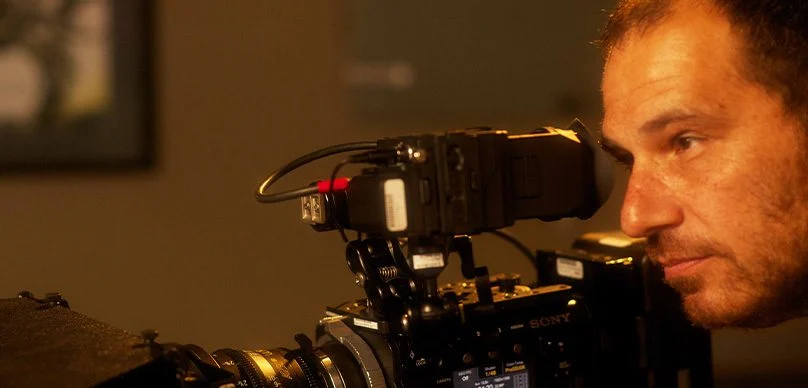
There is a distinct divergence in the realm of modern cinema. On one side exists the idealized version of filmmaking found in academic textbooks, classroom lectures, color-coded diagrams, and meticulously crafted shot lists. On the other side exists reality: a frantic, high-stakes environment where you are racing against a merciless clock, a crucial lens refuses to mount, a hard drive suddenly corrupts without warning, an uncooperative location manager threatens to shut down production, and twelve script pages still need to be photographed before the fading sun dips below the horizon.
Writer, producer, and director Jason Kartalian lives firmly in that second version. Known for independent features such as Driller and Seahorses, Kartalian has spent his career navigating the beautiful, chaotic, and often punishing world of indie film. In this landscape, creative agility is not simply an artistic advantage—it is the vital life force that keeps a production from collapsing.
The Genesis of a Filmmaker: Growing Up on Studio Backlots
Kartalian’s relationship with the cinematic arts began unusually early, forged in the shadows of Hollywood history. His father, the late Buck Kartalian, was a prolific and recognizable character actor whose extensive credits included iconic features like the original Planet of the Apes (1968), Cool Hand Luke (1967), and Clint Eastwood’s The Outlaw Josey Wales (1976).
For young Jason, visiting film sets was not a glamorous excursion; it was an education in industrial alchemy. He watched crews construct entirely artificial worlds out of plywood and paint, observing firsthand how individual scenes were assembled piece by piece through the collective labor of dozens of artisans.
His family actively cultivated that innate curiosity. Kartalian spent his youth making rudimentary, often comedic movies for family gatherings, experimenting with heavy VHS camcorders and Super 8 film stock. Over time, a realization began to take root: he felt fundamentally more comfortable behind the lens than standing in front of it.
Watching the deeply unpredictable, feast-or-famine lifestyle of a working character actor also left a lasting impression. Filmmaking offered an appealing alternative—the agency to become the person who initiates the work rather than perpetually waiting for someone else’s permission to step onto a stage.
Directing Actors and Crafting the Emotional Machine
That unique upbringing fundamentally shaped how Kartalian approaches actor direction and narrative structure. On his debut feature film—originally titled Pedestrian and later released commercially as One False Step—he took on the formidable task of directing his own father alongside a cast of seasoned character actors.
The trial-by-fire experience instilled a deep sense of professional humility. Rather than obsessing exclusively over expensive cameras, exotic lenses, and technical perfectionism, Kartalian realized that filmmakers must constantly remind themselves what all those heavy-duty tools are actually meant to accomplish: making the audience feel something.
In Kartalian’s view, the script, the actor’s performance, the camera movement, the lighting grid, and the production design are not isolated departments; they are interlocking cogs of the exact same emotional machine. A technically flawless, beautifully lit image means virtually nothing if the human truth at the core of the scene has evaporated.
Pragmatism on a Micro-Budget: The Art of Survival
That pragmatic philosophy becomes a matter of survival on a low-budget indie set, where time is invariably the most precious and volatile commodity. Kartalian issues a stern warning against the common trap of burning precious hours capturing endless coverage that will likely never find its way into the final cut.
He recalls witnessing a production squander an extraordinary amount of time repeatedly filming an actor entering a mundane doorway, only to discover during editing that the entrance sequence wasn’t even included in the final narrative arc.
Kartalian’s counter-strategy is rooted in ruthless pragmatism: capture the scene efficiently. When the production clock is working aggressively against him, his preferred approach is to secure the entire sequence in a single, comprehensive master shot first. The guiding internal logic is simple and reassuring: "At least we got the scene." Once the foundational story exists safely on camera, additional setup angles and creative coverage can be layered on to elevate it—but the movie itself will survive even if external circumstances suddenly force a premature wrap.
Weathering the Elements: Tales from the Malibu Ranch
The capacity to adapt and survive sudden, catastrophic changes is arguably the defining skill set of the independent filmmaker. Kartalian recalls the grueling experience of shooting Driller during overnight blocks on a remote Malibu ranch. The production was besieged by a gauntlet of environmental hazards: freezing night temperatures, unforgiving terrain, venomous snakes, aggressive tarantulas, swarms of bees, and actors required to perform in minimal wardrobe.
The immediate, exhausted response from the director was to swear off exterior shoots entirely and vow to make his next picture inside a controlled soundstage. Yet, as he quickly learned, controlled locations simply introduce an entirely new set of logistical complications.
That is the unvarnished reality of filmmaking: solve one massive obstacle, and two more immediately take its place. What ultimately sustains a production through the turbulence is not luck, but the strength of the team. Kartalian summarizes it succinctly:
"Filmmaking is about dealing with adversity."
When actors, producers, camera operators, and support crew members foster mutual trust and remain resolutely committed to collaborative problem-solving, a film production becomes remarkably difficult to stop.
Technical Literacy and Post-Production Safeguards
Beyond artistic vision, Kartalian firmly believes that independent directors benefit immensely from a working technical knowledge of the machinery surrounding them. While he does not advocate for directors acting as their own directors of photography (DPs), he insists that a filmmaker must understand cameras, lighting packages, focal lengths, audio recording, and basic grip equipment well enough to remain functional when a department head hits a wall.
This technical literacy is not about micromanaging or usurping control from department heads; it is about understanding practical limitations, expanding creative possibilities, and preventing the entire multi-thousand-dollar enterprise from grinding to a halt because of one missing link.
This protective mindset extends far beyond principal photography. Kartalian stresses the unglamorous administrative realities of indie filmmaking:
- Securing airtight agreements in writing before rolling a single frame.
- Collecting, verifying, and offloading raw media footage at the end of every grueling shooting day.
- Maintaining redundant, off-site data backups throughout the entirety of post-production.
These lessons lack cinematic romance, but losing an entire feature film because a single primary hard drive failed is considerably less glamorous.
The Film School Paradox: Theory Versus The Trenches
Kartalian’s journey has also left him with a nuanced, somewhat complicated perspective on formal film education. Having attended California State University, Northridge (CSUN), he values specific aspects of the academic experience—notably narrative writing classes and mentorship from inspiring professors. However, he maintains that the most vital lessons about physically executing a motion picture can only be learned inside the unpredictable trenches of active sets.
Universities can successfully teach camera mechanics, lighting theory, and technical terminology. However, the far more demanding lessons involve high-pressure diplomacy, executive leadership, cross-departmental collaboration, real-time creative problem-solving, and the cultivation of an authentic artistic voice.
Kartalian believes aspiring filmmakers can effectively curate their own curriculum by actively listening to industry veterans, volunteering on local independent productions, intensely studying the cinematic craft, and immediately translating that knowledge into practice. The objective should never be to simply mimic how established studios make movies, but rather to discover what makes an individual creator’s perspective unique.
Character-Driven Screenwriting and the Metaphor of Seahorses
That unwavering individuality directly informs Kartalian’s screenwriting methodology. While he respects traditional three-act structure and utilizes structural outlines to anchor his narratives, he refuses to let rigid formulas suffocate character development.
He focuses heavily on accumulating granular character details—wardrobe choices, beverage preferences, idiosyncratic habits, and subtle personal flaws—allowing those organic discoveries to organically shape the progression of the screenplay.
During the production of Seahorses, this collaborative process evolved even further. Kartalian engaged in extensive table reads and rehearsals with his cast, actively weaving elements of the actors’ personal backgrounds into subsequent script revisions. Even the film’s visual language reinforced its central thematic concept: aquatic imagery, deliberate color palettes, minimalist production design, nuanced performances, and the screenplay all converged around the symbolic metaphor of the seahorse.
Self-Funding, Self-Distribution, and the Post-Release Reality
Perhaps the purest expression of Kartalian’s auteur philosophy is Seahorses itself. Facing a traditional industry reluctant to take risks on non-formulaic material, he largely self-funded the feature using capital accumulated from outside commercial work. The project was deeply personal, driven by a point of creative exhaustion where he reached a definitive turning point: he no longer cared whether a massive commercial audience embraced it—he simply needed to manifest the story for himself.
The gamble paid off. Seahorses earned legitimate festival recognition and successfully connected with international audiences. Opting to self-distribute rather than surrendering the film’s copyright and distribution rights to a third-party aggregator for a lengthy, unfavorable term, Kartalian confronted yet another uncomfortable industry truth: simply uploading a finished movie onto a digital streaming platform is never the finish line.
Availability does not automatically equate to cultural awareness. The independent filmmaker must still act as an active promoter, generating earned attention and continuously convincing audiences that a low-budget indie feature deserves two hours of their valuable time.
Summary: The Magic and Cruelty of the Medium
For emerging independent filmmakers, Jason Kartalian’s career trajectory serves as an invaluable roadmap:
- Master the technical tools, but never worship them blindly.
- Protect your raw footage with rigorous data redundancy.
- Understand the distinct operational roles of your crew members.
- Surround yourself with collaborators you fundamentally trust.
- Prioritize complex, grounded characters over superficial plot mechanics.
- Allocate your scarce financial resources exclusively to what the audience will actually see on screen.
- Above all, make art about subjects you genuinely care about.
Ultimately, viewers sitting comfortably in a dark theater or streaming at home remain blissfully unaware of the physical exhaustion, broken equipment, heated arguments, painful budget compromises, and sleepless nights required to bring a cinematic vision to life.
As Kartalian observes with hard-earned wisdom:
"They don’t see the pain and suffering… They see what we show them."
In that single observation lies the ultimate paradox, the enduring cruelty, and the undeniable magic of independent filmmaking.
