
The Enigma of Identity: Warner Bros. Unveils Trailer for Sci-Fi Thriller Model Citizen
By Editorial Staff
October 7, 2026
In an industry landscape defined by massive tentpole blockbusters and high-concept streaming exclusives, the arrival of a quiet, mid-budget genre entry often signals a specific kind of release strategy. Today, Warner Bros. released the official trailer for Model Citizen, a sci-fi action thriller directed by Tag Mendillo. The film, which stars Aaron Eckhart and Emmanuelle Chriqui, appears to be positioning itself as a psychological deep dive into the fragility of memory and the horrors of unchecked surveillance. However, the film’s direct-to-VOD rollout has sparked industry discourse regarding its market positioning and the nature of its production.
The Premise: A Fractured Reality
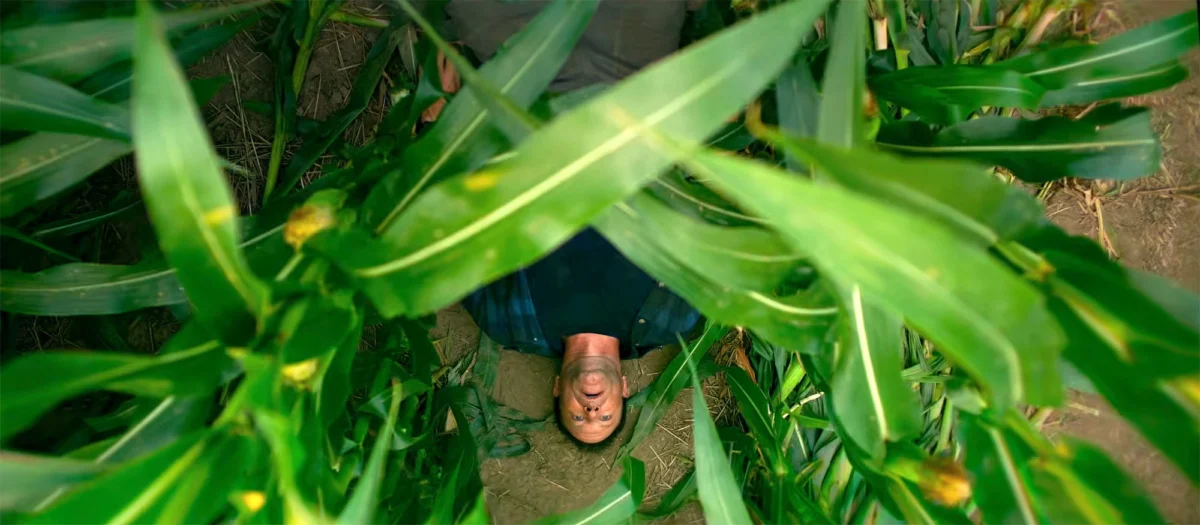
Model Citizen centers on Steven Bay, portrayed by Aaron Eckhart. Bay is introduced as a man living a modest, quiet life as a farm laborer, haunted by persistent, violent visions of a past he cannot fully recall. His life is defined by a profound sense of dislocation; he is a man without a narrative, trapped in the physical world but alienated from his own history.
The narrative hook deepens when Bay encounters Gretchen, played by Emmanuelle Chriqui. The burgeoning relationship between the two serves as the catalyst for the film’s central conflict. During a routine outing, an incident with a belligerent bar patron forces Bay into a physical confrontation. It is here that the film introduces its primary mystery: despite his visceral instincts and the internal pressure of his memories, Bay finds himself physically unable to fight back. This inability to react, contrasted with the violent nature of his recurring nightmares, suggests a dissonance between his mind and his physiology.
As the trailer reveals, the mystery expands beyond mere psychological distress. Upon further investigation, Bay discovers his home is outfitted with an elaborate network of hidden surveillance cameras. The revelations compound: the memories he possesses of his childhood home are revealed to be fabricated, and he bears an uncanny, near-identical resemblance to Jonathan Locke—a disgraced former police officer imprisoned for a string of brutal murders.

Chronology: From Production to VOD
The journey of Model Citizen to the screen has been relatively understated. Tag Mendillo, a veteran producer known for his work on projects such as Kissing a Fool and The Dog Lover, makes his directorial debut with this feature. Unlike high-profile studio projects that undergo years of public speculation and marketing campaigns, Model Citizen was kept largely under the radar.
The production timeline suggests a project that prioritized efficiency and tight-knit creative control. Following the conclusion of photography, Warner Bros. opted for a strategy that bypasses the traditional theatrical window entirely. With the release date set for November 3, 2026, the studio has effectively opted to drop the film directly into the Video-on-Demand (VOD) marketplace. This "dumping" strategy, as some industry observers have noted, often reflects a studio’s lack of confidence in a film’s box-office potential or a calculated decision to maximize revenue through digital rental and purchase platforms during the competitive autumn season.
Supporting Data: The Science of Identity and Surveillance
At the heart of Model Citizen is a thematic exploration of human experimentation and the ethics of surveillance—a trope that has become a staple of 21st-century science fiction. The film posits a world where identity is not an inherent trait but a construct that can be manipulated, erased, or "programmed."
The film’s marketing materials describe it as a "lethal government experiment gone wrong," placing it in the lineage of classics like The Manchurian Candidate or contemporary thrillers like The Bourne Identity and Source Code. By framing memory as a "prison" and identity as a "weapon," Mendillo aims to explore the paranoia inherent in a digitized society.
From a technical standpoint, the film relies on the contrast between the pastoral, quiet setting of the farm and the cold, mechanical nature of the surveillance technology Bay uncovers. This visual dichotomy serves to heighten the sense of claustrophobia. The film’s reliance on the mystery of Jonathan Locke also suggests a narrative structure that demands high engagement from the audience; the viewer must solve the puzzle of Bay’s true identity alongside the protagonist.

Official Responses and Industry Reception
The lack of a major promotional push has been noted by several industry critics. When studios opt for a direct-to-VOD release without a traditional press tour or red-carpet premiere, it often signifies that the film is being treated as a secondary asset.
However, the inclusion of an actor of Aaron Eckhart’s caliber provides a degree of legitimacy that the film might otherwise lack. Eckhart, known for his intense, grounded performances in The Dark Knight and Thank You for Smoking, brings a specific gravitas to the role of Steven Bay. His ability to convey internal turmoil through subtle physicality is the linchpin of the trailer’s effectiveness.
When contacted for comment regarding the distribution strategy, representatives for Warner Bros. provided standard press materials but did not elaborate on the decision to forego a theatrical release. This silence has fueled speculation among critics. Is Model Citizen a hidden gem being released without fanfare, or is it, as some early reviews suggest, an "instantly forgettable" entry in the overcrowded sci-fi genre? The truth likely lies somewhere in the middle, as is often the case with genre films that rely heavily on high-concept hooks but lack the budget for extensive polish.
Implications: The Changing Landscape of Sci-Fi Thrillers
The release of Model Citizen serves as a case study for the current state of mid-budget science fiction. Historically, films that dealt with government conspiracies and memory modification were the backbone of mid-budget theatrical cinema. Today, these stories are increasingly relegated to the digital marketplace.
1. The Death of the "Mid-Budget" Theatrical Model
The decision to push Model Citizen to VOD is indicative of a broader industry trend where the "middle class" of movies is vanishing from cinemas. Studios are increasingly unwilling to risk marketing spend on films that do not possess established IP or a massive franchise hook. Consequently, projects that rely on original scripts or moderate-budget genre tropes are often funneled into the direct-to-streaming or VOD pipelines.

2. The Role of the "Identity Thriller"
Model Citizen highlights the enduring appeal of the "identity thriller." Audiences remain consistently drawn to stories about protagonists who must reconstruct their pasts. This trope allows for a unique narrative flexibility; it enables filmmakers to blend crime, sci-fi, and action elements into a single, cohesive package. However, the risk of this genre is the tendency toward derivative storytelling. With so many films covering similar ground, Model Citizen faces the challenge of distinguishing itself from its predecessors.
3. The Future of Tag Mendillo’s Career
For Mendillo, this film represents a crucial pivot. Moving from a career as a producer to the director’s chair is a significant transition. Whether or not Model Citizen becomes a cult classic or fades into obscurity, the project serves as a showcase for his ability to manage a complex, multi-layered narrative on a constrained budget. If the film resonates with the VOD audience, it could open doors for larger, more ambitious projects in the sci-fi space.
Conclusion: A Gamble on Genre Audiences
As November 3rd approaches, the question remains: will Model Citizen find its audience? By targeting the niche but vocal demographic of sci-fi fans who frequent VOD platforms, the film has a clear path to profitability. The trailer suggests a film that, while perhaps not redefining the genre, offers the kind of high-stakes, paranoid tension that genre enthusiasts crave.
The film serves as a reminder that science fiction, at its core, is the literature of ideas. Whether it is a "lethal government experiment" or a deeper existential crisis regarding the nature of the self, Model Citizen asks the viewer to consider what they would do if their entire life turned out to be a lie. For Aaron Eckhart’s Steven Bay, the answer is a desperate, violent search for truth—a journey that will, in just a few weeks, be available for the public to judge for themselves.
Ultimately, Model Citizen is a testament to the fact that even in an age of streaming dominance, there is still a market for the dark, gritty, and mysterious thrillers that once defined the video rental era. Whether it succeeds or falters, it provides a fascinating look at the intersection of corporate distribution strategies and the creative aspirations of those who, like Bay, are searching for their own identity in a crowded, surveillance-heavy world.
