
The Sound of Chaos: How Jon Batiste Captured the Live-Wire Energy of ‘Saturday Night’
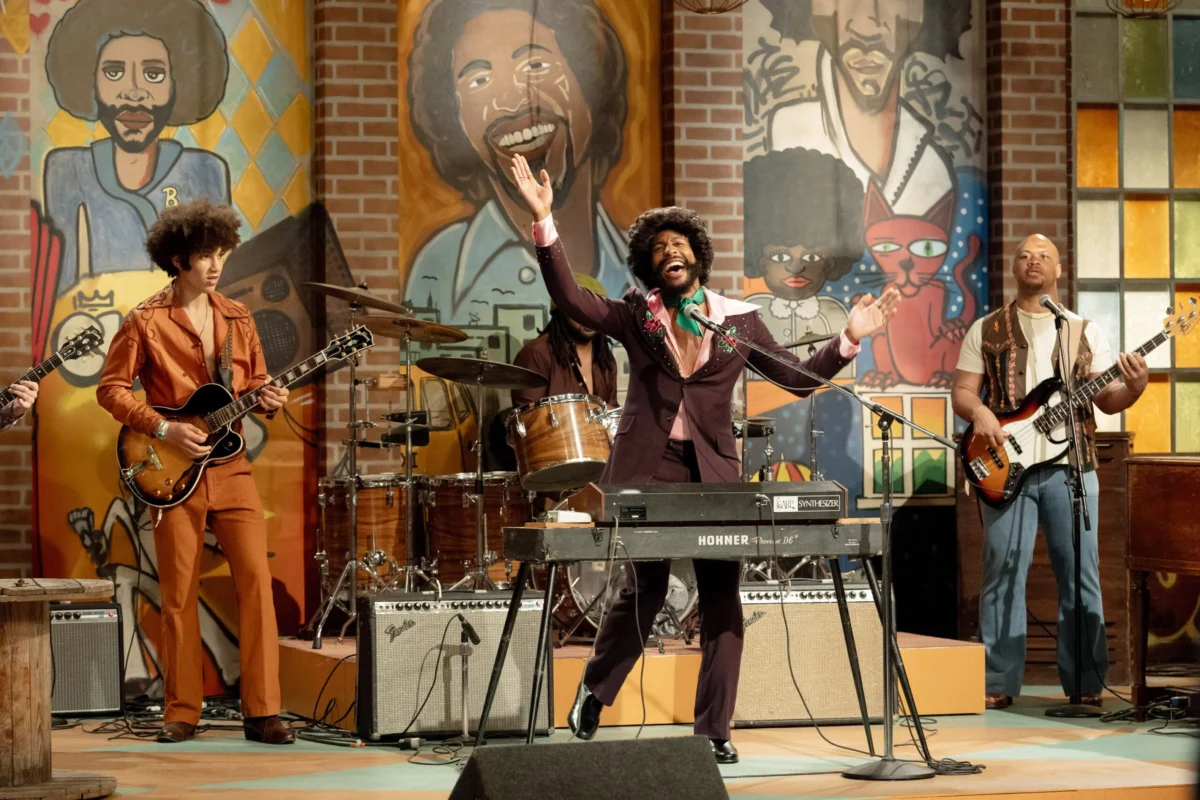
The challenge of adapting a cultural monolith like Saturday Night Live for the silver screen is not merely about casting the right performers or recreating the period-accurate aesthetic of 1975 New York. It is about capturing the specific, volatile alchemy of a live broadcast—the sensation of a ticking clock that threatens to run out before the curtain even rises. In Jason Reitman’s Saturday Night, that sense of mounting pressure is not just a narrative device; it is the heartbeat of the film, driven by an unconventional, live-recorded score from musical polymath Jon Batiste.
While much has been rightfully lauded regarding the cast’s ability to embody the comedy legends who populated the original SNL lineup, the film’s sonic landscape acts as its secret architecture. By moving the scoring process out of the traditional, sterile studio environment and onto the set itself, Batiste has crafted an auditory experience that feels as raw, unpredictable, and urgent as the frantic behind-the-scenes reality of Studio 8H.
The Clock as the Antagonist: A Sonic Interpretation
In most cinematic narratives, the villain is a person—a competitor, a skeptical executive, or a rival. In Saturday Night, the true antagonist is time itself. Willem Dafoe’s portrayal of an NBC executive provides a human face to the corporate pressure, but it is the constant, rhythmic, and increasingly discordant score that serves as the unrelenting "ticking clock."
Batiste, who also appears on-screen as the legendary musical guest Billy Preston, approached the composition with a singular philosophy: the music had to mirror the creative chaos of the production. Drawing inspiration from a diverse range of auditory landscapes—from the urban pulse of The Social Network to the sleek, jazz-inflected tension of Duke Ellington’s work on Anatomy of a Murder—Batiste sought to create a soundscape that felt as if it were being composed in real-time.

"It’s a pressure cooker," Batiste noted in an interview. "New York City, with all of its eclectic wonder, is the backdrop. We had musicians like Pedrito Martinez, a titan of the Afro-Latin percussion tradition, and Cory Henry, who channels the deep organ traditions of Brooklyn churches, all working to create this musical representation of that ticking clock."
Chronology of a Collaborative Process
The methodology behind the score was as unconventional as the film’s subject matter. Rather than delivering finished tracks to a post-production house, Batiste and his ensemble operated in a state of constant, fluid collaboration with director Jason Reitman and the editing team.
The routine was rigorous. Throughout the production, once the cameras stopped rolling for the day, the band would retreat to an on-set space. Trading his "Billy Preston" wardrobe for street clothes, Batiste would sit with his musicians, watching the day’s footage—roughly assembled cuts that lacked final pacing. With limited time to deliberate, the group would work on musical cues, often relying on an oral tradition of communication that harkened back to Batiste’s own formative years in New Orleans.
"I was showing the musicians the music the way that I learned it from the elders," Batiste explained. "It was like a flashback. You sit in a circle, you communicate the idea verbally, and then you play. It was an incredibly present, visceral experience."

This approach meant that many of the cues heard in the final film were first-take recordings. By the time the film reached its final edit, the music was already fused to the DNA of the scenes. This prevented the common trap of "mickey-mousing"—where music simply underlines the action—and instead allowed the score to act as an active, sometimes adversarial, participant in the scene.
The Oral Tradition and the Elders
Batiste’s approach to the Saturday Night score is deeply rooted in his background at the New Orleans Center for Creative Arts (NOCCA). He views his craft not just as a technical skill, but as an extension of an unbroken lineage of African diasporic musical traditions.
"The late great Alvin Batiste, Ellis Marsalis, and Kid Jordan—these are people who were instrumental in teaching us that you don’t just learn from a page," Batiste shared. "You learn by sitting with the elders, absorbing the wisdom, and keeping the oral tradition alive. That is the same way I taught this music to the band for this film."
This sense of heritage added a layer of profound weight to the project. Just as the young writers and actors in the film were attempting to define a new medium by reaching back to the traditions of Vaudeville and sketch comedy, Batiste was utilizing an ancient method of musical transmission to capture the modern anxiety of a live broadcast.

Supporting Data: Pushing the Boundaries of Sound Design
The collaboration between the sound department and the music team resulted in a blurred line between "sound effect" and "score." By recording on set, Batiste captured the room tone—the unique acoustic signature of the studio space—which allowed the music to sit within the same environment as the actors’ dialogue.
"The sound and the room tone of the scenes is the same as the score, which makes it feel integrated in a magical way," said Batiste. This integration allowed for a more flexible sound mix. In several sequences, the music is allowed to drown out the dialogue or dominate the soundscape entirely, a bold choice that breaks the standard cinematic paradigm where music is always secondary to the spoken word.
Batiste points to this as a potential roadmap for future filmmakers. "It’s normal to think of a score as orchestral—where strings and timpani tell you how to feel. Any time someone breaks that paradigm, it’s wonderful. We were able to show that you can push the norms of how these elements balance."
Official Responses and Creative Implications
The reception of this "live" scoring technique has been met with significant intrigue within the industry. For director Jason Reitman, the process was essential to maintaining the film’s frantic, improvised feel. By having the music created in response to the edits as they were happening, the film gained a sense of "presence"—a quality that is notoriously difficult to manufacture in the studio.

The implications for the future of film scoring are substantial. As streaming services and digital workflows encourage faster, more clinical post-production cycles, the return to a communal, in-the-moment scoring session offers a powerful counter-narrative. It suggests that if a score feels "deeply integrated," it is because the musicians were physically and emotionally present during the birth of the images they were supporting.
Conclusion: A Living Legacy
Ultimately, the score for Saturday Night is a testament to the power of human connection in the digital age. It captures a fleeting moment—a group of people gathering to create something that will never be replicated exactly the same way again.
"That’s what I love about this," Batiste reflected. "You compose to find that pocket of presence. Even if the audience doesn’t know the story of how this score was made, they can feel it. It’s alive."
By bridging the gap between the oral traditions of the past and the high-pressure environment of a modern film set, Jon Batiste has done more than just provide a background track for Saturday Night. He has provided the audience with a rhythmic entry point into the chaos of Studio 8H, ensuring that the legacy of the original Saturday Night Live team is not just remembered, but felt with every ticking second of the film. In doing so, he has proven that when the music is allowed to breathe, to clash, and to exist in the same room as the story, the result is nothing short of magic.
