
The Architecture of Immersion: Decoding the Foundational Principles of Game Design

Video games are more than just software; they are sophisticated ecosystems of psychology, logic, and artistry. When a player picks up a controller, they are entering a meticulously crafted contract between the creator and the user. But what separates a forgettable title from a genre-defining masterpiece? The answer lies in the rigorous application of game design principles—the invisible scaffolding that dictates how we think, feel, and act within a digital space.
The Foundations of Game Design: What Are the Rules of Engagement?
At its most fundamental level, game design is the deliberate engineering of a player’s experience. It encompasses the creation of rules, mechanics, objectives, and the narrative architecture that binds them together. A game designer is an architect of behavior, tasked with balancing the delicate triad of challenge, reward, and engagement.
Game design principles serve as the “North Star” for developers. These foundational guidelines ensure that every element—from the movement speed of a character to the color palette of a dungeon—serves a unified purpose. Without these principles, a game risks becoming a collection of disjointed mechanics that fail to provide a coherent or satisfying journey.

Core Mechanics: The Heartbeat of Gameplay
If a game is a story, mechanics are the grammar. They define the "verb"—what the player can actually do.
Defining Core vs. Supplementary Systems
Core mechanics are the essential interactions that define the gameplay loop. In a first-person shooter like Call of Duty, the core loop revolves around movement, aiming, and firing. If you strip away these elements, the game ceases to exist.
Conversely, non-core mechanics are the flavor text of interactivity. Consider the collectible hats in Little Nightmares 2. While they allow for self-expression and encourage exploration, they are not strictly necessary to reach the end credits. These systems provide depth and longevity, transforming a linear path into a rich, lived-in world.

Building Complexity Through Iteration
Once the core mechanics are set, the designer’s job is to prevent stagnation. By introducing subtle variations—such as changing environmental hazards, altering enemy behavior, or granting the player new tools—designers keep the gameplay fresh. The goal is to evolve the player’s mastery over the mechanics without making the game feel unpredictable or unfair.
The Balancing Act: Fairness, Challenge, and the Flow State
The most successful games operate within a psychological "flow state"—the perfect balance where the player is neither bored by simplicity nor overwhelmed by frustration.
The Psychology of Challenge
Creating a "fair" challenge is one of the most complex tasks in development. If a game is too easy, the player disengages. If it is too difficult without clear feedback, the player feels cheated and abandons the experience.
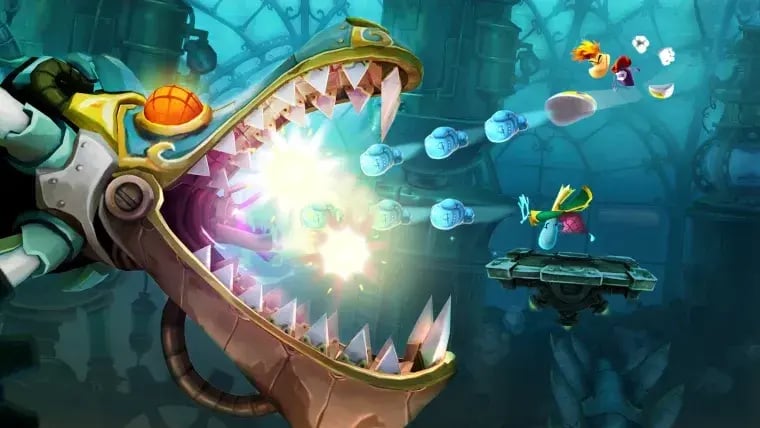
Cuphead serves as a fascinating case study in this regard. Known for its punishing difficulty, it relies on strict pattern memorization and precision. However, because the game provides clear visual cues and responsive controls, the failure feels like a personal lack of mastery rather than a broken system. This encourages the "one more try" mentality that defines high-engagement titles.
Achieving Equilibrium
Maintaining balance involves constant tuning. Developers must ensure that no single strategy—often called "the meta"—becomes the only viable way to win. By offering a variety of choices and playstyles, designers ensure that players can express their personality through their strategies, whether they prefer stealth, brute force, or tactical resource management.
Player Motivation and the Feedback Loop
Why do we play? The answer lies in the feedback loop—the engine of player motivation. A feedback loop is a cyclical system where a player’s action generates a result, which then informs their next action.

Positive vs. Negative Loops
- Positive Feedback Loops: These systems reward success with further advantages. For instance, in a racing game, a player who hits a speed boost gains a lead, making it easier to maintain that lead. This creates a sense of momentum and power.
- Negative Feedback Loops: Often called "rubber-banding," these systems are designed to keep the game competitive. If a player falls behind, the game might offer a comeback mechanic (like an item drop or a speed boost) to prevent them from becoming discouraged.
These loops are the hidden hand that keeps the player invested. They transform the grind of gameplay into a meaningful climb toward mastery.
Immersion: The Art of "Show, Don’t Tell"
Immersion is the suspension of disbelief. It is the moment the player stops seeing polygons and code and starts seeing a world.
Narrative Design and Environmental Storytelling
Modern narrative design has moved away from heavy exposition dumps. Instead, developers are increasingly relying on environmental storytelling. In titles like The Last of Us, the world itself is a protagonist. The placement of debris, the state of the architecture, and the subtle lighting choices tell a story of societal collapse without requiring a single line of dialogue.

By delivering information organically, developers allow players to piece together the narrative themselves, which fosters a deeper emotional connection to the game world.
The Future of Game Design: Beyond the Screen
As we look toward the horizon, the principles of game design are being stretched by emerging technologies.
The Evolution of Interaction
- Adaptive AI: Future games will likely feature non-player characters (NPCs) that react dynamically to a player’s unique playstyle, making every playthrough feel bespoke.
- Procedural Narrative: We are moving toward systems where stories are not just written but generated, allowing for near-infinite narrative branches that respond to player decisions in real-time.
- Haptic Integration: As virtual reality and haptic feedback become more sophisticated, the line between the digital and physical will continue to blur, making immersion a tactile experience.
Conclusion: The Professional Perspective
The creation of a great video game is a rigorous, iterative, and highly collaborative process. Whether it is a solo indie project or a AAA blockbuster, the underlying principles remain the same: challenge the player, reward their curiosity, and immerse them in a world that feels alive.

For those looking to enter the industry, understanding these principles is the first step toward a career in game design. It requires a blend of technical proficiency, psychological insight, and a passion for the craft. By studying the mechanics that drive our favorite titles—and by learning how to implement them with precision—aspiring designers can transform their creative ideas into the digital worlds of tomorrow.
About the Author
Rose Heyland is a specialized journalist covering the intersection of technology and creative arts. Her work focuses on the pedagogical structures of game development and the evolving narrative techniques used by modern studios.
