
FilmConvert Expands Color Science Integration with New DJI Osmo Pocket 4P Profiles for Nitrate and CineMatch
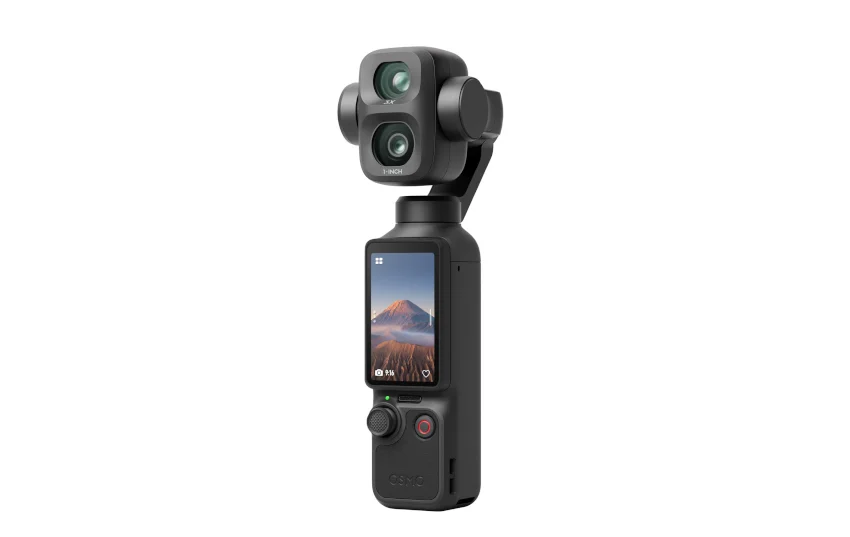
September 21, 2026 — In a move designed to streamline post-production workflows for mixed-format productions, popular post-production software developer FilmConvert has officially rolled out dedicated camera profiles for the DJI Osmo Pocket 4P. The newly introduced profiles are now available for both FilmConvert Nitrate and CineMatch, providing video editors, colorists, and independent filmmakers with robust, camera-specific tools to seamlessly integrate footage from DJI’s ultra-portable stabilized camera into high-end cinematic pipelines.
As modern productions increasingly rely on multi-camera setups—combining primary cinema packages and mirrorless bodies with compact, agile B-rolls or specialized action tools—bridging the color science gap has become a primary hurdle in post-production. This latest update aims to eliminate that friction, allowing creators to spend less time manually fighting mismatched color spaces and more time on creative storytelling.
Main Facts: What the Update Brings to Editors
The core of this release centers on bridging the technical gap between DJI’s consumer-friendly sensor technology and professional grading environments.
- Direct Camera Selection: Users no longer need to rely on generic or unsupported camera profiles when handling DJI Osmo Pocket 4P footage. The camera now appears directly within the FilmConvert and CineMatch plugin menus.
- CineMatch Integration: The update brings the Pocket 4P into CineMatch’s powerful sensor-matching ecosystem. Editors can automatically align the color matrices, exposure, white balance, and tint of the Pocket 4P to match primary cinema cameras (such as RED, ARRI, Sony, or Canon systems).
- FilmConvert Nitrate Compatibility: Nitrate users can now apply authentic film-stock emulations, advanced grain controls, and specialized color processing directly to Pocket 4P assets, ensuring that behind-the-scenes (BTS) material, travel logs, and secondary angles share the same organic look-development as the main A-cam footage.
- Streamlined Installation: The profiles are available for immediate download directly through the native plugin camera lists, requiring only a quick software refresh or host application restart to initialize.
Chronology: The Evolution of Mixed-Format Workflows
To understand the significance of the DJI Osmo Pocket 4P profiles, it helps to examine how modern production workflows have evolved over the past decade.
Phase One: The Era of Disjointed Formats (Pre-2018)
In the early days of 4K digital cinematography, using a small, stabilized pocket camera alongside a traditional cinema rig was a logistical nightmare in the color grading suite. Codecs differed wildly, color science proprietary data was often closed-off or poorly documented, and colorists had to spend hours pulling secondary keys and manually curve-matching disparate footage. Small cameras were largely relegated to crash-cams or strictly amateur projects because making them look cohesive with a high-end sensor required prohibitive amounts of time.
Phase Two: The Rise of Universal Matching Tools (2018–2022)
As compact cameras grew increasingly sophisticated—capable of shooting high-bitrate, log-profile video—software developers recognized a massive market gap. The introduction of tools like CineMatch revolutionized indie and commercial editing suites by providing mathematical algorithms to translate footage from one camera’s color space to another. However, coverage for hyper-compact, consumer-targeted stabilized devices often lagged behind traditional mirrorless bodies.
Phase Three: The Prosumer Convergence (2023–Present)
Today, pocket-sized gimbals and stabilized modular cameras routinely rival the resolution and dynamic range capabilities once reserved for mid-tier mirrorless systems. Filmmakers frequently deploy them for complex tracking shots, restricted-space interior angles, and rapid-fire travel sequences where setting up a heavy cinema rig is physically impossible.
With the launch of the DJI Osmo Pocket 4P, the hardware reached a new threshold of professional adoption. Recognizing this trend, FilmConvert’s September 2026 update represents the latest step in acknowledging that modern cinematic workflows are inherently heterogeneous, requiring software that bridges the gap between massive Hollywood rigs and pocket-sized stabilization marvels.

Supporting Data: The Technical Utility in Production
The integration of the DJI Osmo Pocket 4P into FilmConvert Nitrate and CineMatch addresses specific logistical and creative challenges frequently cited by post-production supervisors and online content creators alike.
1. Solving the Dynamic Range and Color Science Discrepancy
While compact sensors have advanced remarkably in recent years, their color science often leans toward high contrast and vivid saturation straight out of the box to appeal to general consumers. When shot in flat or log profiles to preserve dynamic range, grading them against professional cinema cameras can reveal subtle shifts in skin tones, shadow retention, and highlight rolloff.
By applying dedicated camera profiles, CineMatch extracts the precise mathematical characteristics of the Pocket 4P sensor, mapping its tonal curve directly into the target camera’s color space. This drastically reduces the time required to achieve a baseline match.
2. Expanding Creative Scope Through Nitrate
FilmConvert Nitrate is widely favored for its sophisticated emulation of physical celluloid stocks (such as Kodak and Fuji profiles) paired with realistic film grain generation. Previously, applying these looks to footage from niche or compact cameras could yield unpredictable results due to uncalibrated sensor responses.
With the new profile, a creator shooting a documentary or a narrative indie film can seamlessly blend dramatic aerial or stabilized walking shots captured on the Pocket 4P into the exact same celluloid look profile as their primary digital cinema camera, ensuring zero visual distraction for the viewer.
3. Practical Use Cases Across Industries
- Documentary Filmmaking: Crews often rely on pocket gimbals to maintain a low profile in sensitive environments or crowded public spaces. The ability to instantly match this footage to an FX6 or a Canon C-series camera saves thousands of dollars in post-production labor.
- Travel and Adventure Content: Content creators frequently switch between heavy primary setups on tripods and ultra-lightweight pocket cameras for active tracking movements.
- Corporate and Event Production: Multi-camera setups frequently incorporate compact devices to cover tight angles where traditional rigs won’t fit, such as mounted on instruments, vehicles, or stage setups.
Official Responses and Industry Perspectives
While FilmConvert has built its reputation on supporting professional-grade cinema and mirrorless systems, the inclusion of specialized stabilization devices highlights a broader shift in how software developers view the contemporary creator economy.
"The modern production landscape is no longer strictly divided between high-end cinema and low-end consumer video," noted a digital imaging workflow analyst familiar with the update. "Today’s independent filmmakers and commercial directors demand tools that are agnostic to form factor. They want the freedom to capture an image with whatever tool is physically closest to the action, knowing that post-production software will intelligently handle the translation back to their master color grade."
Although official commentary from FilmConvert emphasizes the seamless plug-and-play nature of the new profiles, early user feedback within professional post-production forums highlights an enthusiastic response. Colorists who previously had to build custom power grades and manual hue-vs-hue curves for B-roll footage can now establish an accurate baseline in a matter of clicks.

Implications for the Future of Post-Production
The release of the DJI Osmo Pocket 4P profiles for Nitrate and CineMatch carries several significant implications for the future of digital filmmaking and color grading workflows:
Democratization of High-End Post-Production
As software tools like CineMatch and Nitrate become more inclusive of consumer-grade form factors, the technical barrier to entry for achieving a professional look continues to drop. Solo shooters and small production teams can produce cinematic results that rival boutique agencies, even when operating with a mixed bag of equipment budgets.
The Shift Toward "Agnostic" Capture Systems
We are rapidly approaching an era where hardware brand loyalty matters less in the grading suite than the underlying metadata and profile support. When software can effortlessly translate a pocket-sized gimbal’s output to match a high-end digital cinema camera, creators are empowered to choose their gear based purely on ergonomics and physical utility rather than post-production compatibility concerns.
Continued Growth of Specialized Plugins
As hardware manufacturers continue to innovate at a rapid pace—releasing new drones, action cameras, and stabilized pocket systems annually—the burden shifts heavily onto software developers to maintain parity. FilmConvert’s proactive integration of the Osmo Pocket 4P signals that developers must continually update their software ecosystems to keep pace with how filmmakers actually shoot today.
How to Access the Update
For existing users of FilmConvert Nitrate and CineMatch, acquiring the new profiles requires minimal effort:
- Open your current editing NLE (such as Adobe Premiere Pro, DaVinci Resolve, or Final Cut Pro).
- Load the FilmConvert or CineMatch plugin on a clip.
- Navigate to the camera selection dropdown menu.
- If the DJI Osmo Pocket 4P does not appear automatically, ensure your plugin is updated to the latest version and restart your editing suite to refresh the library assets.
By bridging the gap between ultra-portable stabilization and high-end color science, this update ensures that the DJI Osmo Pocket 4P is no longer viewed merely as a convenient consumer gadget, but as a fully viable, integrated component of the professional cinematic toolkit.
