
The Second Coming of Absurdity: How Jesse Moynihan’s ‘Jesus 2’ is Redefining Existential Animation
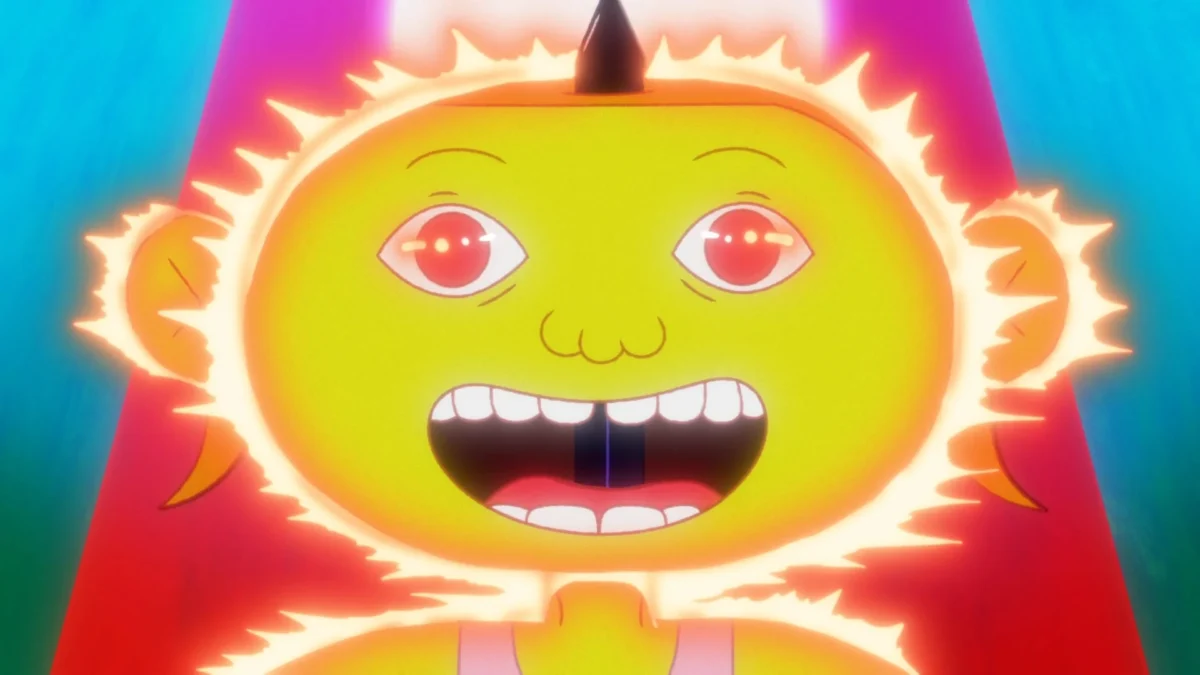
In the vast, hyper-saturated landscape of modern internet animation, few projects have managed to marry the sacrilegious, the surreal, and the profoundly human with quite as much reckless abandon as Jesus 2. Written and directed by Jesse Moynihan—an artist already revered for his work on Adventure Time—the eight-minute pilot is a kaleidoscopic fever dream that defies categorization. By casting the figure of Christ not as a benevolent savior, but as a cosmic, rainbow-spewing antagonist, Moynihan has created a work that is as visually arresting as it is narratively unhinged.
While the premise may sound like the fever dream of a provocateur, Jesus 2 is a masterclass in tonal dissonance. It is a work that manages to be simultaneously hilarious, terrifying, and deeply touching, serving as a mirror to the anxieties of a generation grappling with the terminal nature of existence.
The Anatomy of the Narrative: A Premise Born of Chaos
At its core, Jesus 2 is a narrative of high-concept science fiction that pivots on a singular, absurd inciting incident. The story is set in a future where the concept of mortality has been rendered obsolete. Enter Doc Green, the President of the "Zombie Nation," a political opportunist who decides that the ultimate publicity stunt for his undead constituents is the resurrection of Jesus Christ.
However, the Christ that emerges from the slab is not the humble carpenter of biblical tradition. He is, in the words of his creator, a "complete asshole." Instead of preaching peace or offering salvation, this resurrected Messiah opts for a more nihilistic form of hedonism. He commandeers a black comet, drifting through the cosmos and coating entire planets—and their helpless denizens—in a shimmering, magical rainbow goo. This substance grants eternal life, but at the cost of free will and the natural order of the universe.
Standing in opposition to this celestial vandal are Sunday and Monday, two swashbuckling space pirates who have been imbued with divine powers by a cadre of enigmatic angels. Their mission is as straightforward as the pilot’s runtime: stop the Messiah before he turns the entire galaxy into a static, goo-covered playground. It is a narrative framework that pulls from the pulp traditions of 1970s sci-fi while maintaining the irreverent, fast-paced humor of contemporary Adult Swim-style animation.
A Chronology of Creation: From Cartoon Network to the Digital Frontier
The journey of Jesus 2 is as unconventional as the film itself. Initially, the project was conceived as a potential children’s show for Cartoon Network. Given the network’s history of embracing off-beat, creator-driven content—a lineage that includes shows like The Marvelous Misadventures of Flapjack and Regular Show—the premise of a resurrected Christ might have initially seemed like a radical expansion of the network’s "weird" quotient.
However, as the project evolved, it became clear that Jesus 2 was destined for a different path. The demands of traditional network television—which prioritize narrative cohesion and moral clarity—were fundamentally at odds with the manic, stream-of-consciousness energy Moynihan was injecting into the script.
By pivoting away from the constraints of the network system, Moynihan was able to lean into the abstract and the unhinged. The production timeline saw the project shift from a storyboarded pitch into an independent labor of love. Freed from the potential oversight of corporate standards and practices, Moynihan pushed the visuals toward a more experimental, painterly aesthetic. The resulting pilot, released independently online, represents a rare moment where an artist’s unfiltered vision was allowed to reach its final, chaotic form without compromise.
Supporting Data: The Viral Reception of the Sublime and Grotesque
The reception to Jesus 2 has been nothing short of a digital phenomenon. Within weeks of its release, the pilot garnered hundreds of thousands of views across YouTube and Vimeo, transcending niche animation circles to reach a broader, mainstream audience.
The data suggests that viewers are responding to the film’s unique "scattergun" approach to storytelling. Comment sections across various platforms are flooded with a mix of genuine critical analysis and bewildered enthusiasm. This is not merely a viral hit; it is an intellectual litmus test. The high engagement metrics—measured in long watch times, high re-watch rates, and extensive discussion threads—indicate that audiences are finding something within the chaos that feels substantive.
Furthermore, the film’s success highlights a growing trend in the animation industry: the shift away from the "pilot season" model of traditional networks toward the "proof of concept" model of the digital age. By releasing the film directly to the public, Moynihan has bypassed the gatekeepers, turning his audience into the ultimate arbiters of the show’s future.
Official Perspectives: The Philosophy Behind the Goo
Perhaps the most compelling aspect of Jesus 2 is the motivation behind the madness. In recent interviews, Moynihan has been candid about the personal roots of the project. Far from being a calculated attempt to stir controversy, the film is a direct manifestation of his own struggles with severe panic attacks and an acute fear of mortality.
"If you find the prospect of death absolutely terrifying," Moynihan has suggested, "perhaps the only reasonable response is to resurrect Jesus, put him on a space comet, and cover the universe in rainbow goo."
This perspective shifts the lens through which we view the film. The "magical rainbow goo" is no longer just a bizarre plot device; it becomes a metaphor for the human desire to freeze time, to stop the clock, and to preserve the status quo at all costs. The character of Jesus, in this light, represents the ultimate, terrifyingly indifferent force of nature—a figure that offers a warped version of "eternal life" that leaves the world unrecognizable and stripped of its agency. By externalizing these existential fears, Moynihan has successfully transformed a personal crisis into a universal fable about the agony of being alive.
Implications: The Future of Existential Animation
What does the success of Jesus 2 mean for the future of independent animation? For one, it signals a renewed appetite for "high-concept, low-reverence" storytelling. Audiences are clearly craving content that does not talk down to them, nor does it shy away from the darker, more metaphysical questions that define the human condition.
The implications for the industry are twofold:
- The Rise of the Independent Auteur: Jesus 2 serves as a blueprint for how independent animators can leverage digital platforms to build a dedicated fanbase, effectively crowdfunding interest and influence without the need for initial studio backing.
- The Normalization of Surrealism: By successfully blending religious iconography with space-opera tropes, Moynihan has demonstrated that audiences are more than capable of navigating non-linear, surrealist narratives, provided there is an emotional core to anchor them.
As for the future of the series, the ball is firmly in the audience’s court. Moynihan has expressed a desire to see if his explorations of the "sublime and the grotesque" resonate with a larger public consciousness. Given the current trajectory of the project, it is highly likely that we have not seen the last of Sunday, Monday, and their cosmic adversary.
Conclusion: A Second Coming Worth Watching
Jesus 2 is not a film that asks for your reverence; it asks for your attention. It is a messy, violent, and deeply beautiful meditation on the absurdity of death and the human desire for salvation—even when that salvation arrives in the form of a space-faring, rainbow-spewing nightmare.
In a world that often feels as chaotic as Moynihan’s animations, Jesus 2 provides a strange kind of comfort. It reminds us that if we are all hurtling toward an inevitable end, we might as well do it with a sense of humor, a bit of imagination, and perhaps a healthy dose of defiance against the cosmic order. Whether this project evolves into a full series or remains a singular, brilliant artifact of the internet age, it has already secured its place as a landmark of modern existential animation. The second coming, it seems, has arrived—and it is far stranger than we ever could have imagined.
