
Inside Cine Gear Expo: How Hollywood’s Backlot Showcase Balances High-Tech Innovation with Classic Filmmaking
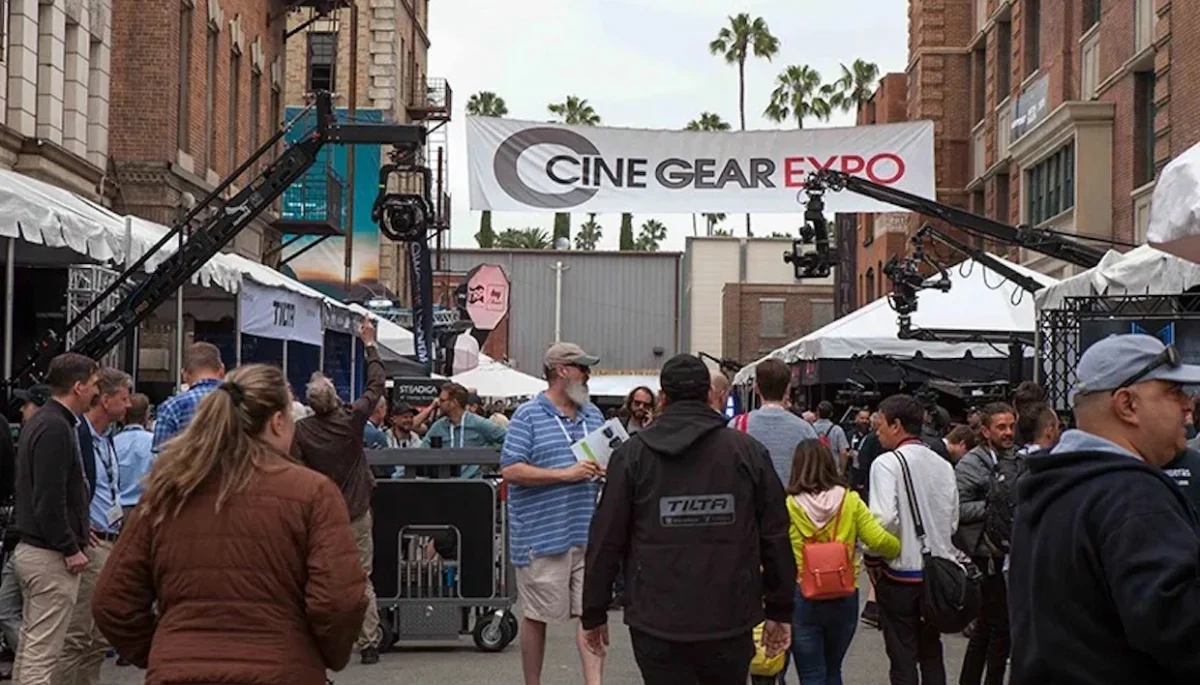
Main Facts: The Resurgence of Los Angeles’ Premier Cinema Gathering
The annual Cine Gear Expo returned to the historic Universal Studios Lot, offering a stark contrast to the existential corporate anxiety often found at broadcast-centric events like the NAB Show. While trade shows in Las Vegas frequently wrestle with cinema’s diminishing footprint against broader video and streaming sectors, Cine Gear remains unapologetically dedicated to the craft of feature filmmaking.
The two-day event drew a vibrant mix of Los Angeles-based cinematographers, Local 728 gaffers, lighting technicians, rental house executives, and film school hopefuls. Attendees crowded the lot to inspect the latest hardware, debate software developments, and reconnect over the industry’s shared camaraderie. This year’s expo captured an industry in transition—one furiously adopting rapid advancements in LED lighting and large-format digital capture while paradoxically harboring a deep, romantic nostalgia for 35mm film, vintage glass, and physical on-set mechanics.
Despite logistical hurdles on the Universal lot—such as the considerable distance between the seminar spaces and the vendor-packed backlot tents—the event served as a crucial bellwether for the tools that will shape upcoming studio features and independent projects alike.
Chronology: Navigating Two Days of Panels, Prototypes, and Pitches
Day One: The Backlot Vibe and the Youthful Energy of Independent Film
The expo kicked off on a Friday morning, an intentional timing that naturally courted a demographic of freelance filmmakers and film school undergraduates. Observers noted an immediate surge of youthful enthusiasm, influenced heavily by recent breakout successes in independent cinema.
Navigating the Universal Studios backlot required stamina. Attendees queued early in direct sunlight for buzzy panel discussions featuring veteran cinematographers, balancing the rigorous schedule with the collection of ubiquitous festival-style swag, most notably the oversized, bright yellow Insta360 tote bags that quickly populated the lot.
Day Two: The ASC Masterclass and Vendor Deep Dives
The second day began with the annual American Society of Cinematographers (ASC) panel, a massive gathering featuring 15 society members. The afternoon shifted to intensive floor evaluations, starting at Stage 17. Independent rental house founders and gaffers descended upon vendor booths to test new iterations of LED lighting and control software, concluding with a rush of evening events and panels. The weekend ultimately wound down far from the studio gates at the historic ASC Clubhouse in Hollywood, where attendees gathered for the organization’s annual barbecue.
Supporting Data: Breakthrough Technologies and Hardware Innovations
The expo floor was defined by significant hardware milestones, bridging the gap between traditional analog techniques and modern digital workflows.
1. The Cinelux Sixteen: Hybrid Film and Digital Capture
One of the most talked-about prototypes on display was the Cinelux Sixteen, a 16mm motion picture camera developed by Cinelux Cinema Tools and showcased at the CSLA rental house booth. Designed as a personal passion project by chief engineer Caz Voorhees and a small team over the past two and a half years, it represents the first newly developed film camera in recent memory.
- Key Feature: It is designed to shoot film and digital simultaneously, recording digital files to an SD card at 3.2K resolution.
- Workflow: The digital capture outputs proxies alongside a file embedded with a custom film-emulation LUT, designed to match the physical film footage. This dual-capture mechanism aims to assuage anxious producers wary of film timelines by instantly expediting dailies.
- Engineering Hurdles: While pairing a computer with a Sony digital sensor proved straightforward, perfecting the physical film magazine has been an uphill battle. The magazine requires moving film from one side to the other within a tight one-to-two-inch space with absolute zero friction.
- Open-Source Ethos: Voorhees stated an intent to make the magazine design open-source, allowing users to download specifications and 3D-print replacement components in a pinch. The team estimates the camera is still two iterations away from a commercial release targeted for mid-2027.
2. Zero Optik and Vintage Glass Restoration
Optics remained a massive focal point, heavily driven by Zero Optik. Operations manager Alex Baxter detailed how photography lenses previously relegated to basements and attics—such as Bausch & Loma Ultra Baltar lenses from the 1930s and ’40s—have found a second life in modern digital cinema.
Because these vintage photo lenses lack mirror shutter compatibility, they were unusable on older film cameras. Digital sensors changed everything. Zero Optik has built a thriving business rehousing vintage glass, including Canon FD lenses from the 1980s. Notably, the company partnered with the ASC to restore a rare set of 1950s Todd-AO 65mm prime lenses from the organization’s archives—lenses originally used on classics like Oklahoma! (1955) and The Sound of Music (1965). Working alongside cinematographer Greig Fraser, Zero Optik standardized the set for exclusive rental distribution through Keslow Camera.
3. Atlas Lens Co. and the Kaizen Series
Atlas Lens Co. co-founder Dan Kanes, whose career evolved from lighting technician to DIT, cinematographer, and tech inventor, showcased the company’s expanding footprint in anamorphic glass. Eschewing traditional luxury car purchases after selling his wireless video transmitter company Paralinx, Kanes poured his capital into anamorphics.
Debuting their first prototype at NAB 2017, Atlas lenses have since been utilized on major Hollywood productions, including Babylon (2022), Dune: Part Two (2024), and forthcoming blockbusters like Project Hail Mary (2026) and Dune: Part Three (2026).
- Design Philosophy: Atlas’s flagship Orion series trades the high field curvature typical of vintage anamorphic glass for a more parallel field curvature. This allows DPs to hold multiple actors in sharp focus across wide two-shots or four-shots without severe edge drop-off.
- The Kaizen Series: Designed for large-format sensors like the Fujifilm GFX Eterna 55, Arri Alexa 265, and Blackmagic Ursa Cine 17K, the Kaizen series officially began shipping following its earlier debut at the NAB Show.
4. Lighting Controls and LED Evolutions
On the lighting front, Local 728 gaffers Drew Moe and Jeffrey Taylor of rental house Canary Yellow evaluated the rapid evolution of LED technology. Unlike the slow historical transition from tungsten to HMIs and fluorescents, LED chipsets and attachments are updated annually. Moe praised Aputure for developments like their proprietary Blair CG color engine.
Concurrently, Ian Peterson walked technicians through V3, the upcoming software update for the Blackout Lighting Console. Moving beyond numerical-value inputs, V3 introduces fluid, intuitive visual control components via iPad, positioning itself to disrupt the lighting control software market upon its release.
Official Responses: Insights from the ASC Masters
The annual ASC panel provided rare, reflective sound bites from industry veterans regarding the psychology of cinematography.
- Steven Fierberg (Secretary, 2002) emphasized physical intuition on set: "I believe in body consciousness. When you’re standing on the set, where does your body want to go with that camera? Often you don’t know why."
- Natasha Braier (I Love Boosters, 2026) credited her upbringing under a military dictatorship in Argentina—where communication was heavily veiled in subtext—and her psychoanalyst parents for shaping her visual intuition: "Being the child of psychoanalysts has helped me tap into the unconscious… where everything was shrouded in subtext."
- M. David Mullen, during a technical seminar presented by RED Digital Cinema, offered a masterclass in blocking by breaking down a complex, multi-camera tracking shot from the third season of The Marvelous Mrs. Maisel (2019), detailing the precise choreography of four simultaneous camera positions.
Implications: Community, Camaraderie, and the Future of Independent Production
The underlying implication of Cine Gear 2026 is the growing symbiosis between hyper-advanced digital tools and tangible, analog craftsmanship. While manufacturers push boundaries with 17K digital sensors, open-source hybrid 16mm cameras, and spatial lighting control consoles, the driving force of the expo remains deeply personal.
In an industry shaken by recent labor strikes, shifting corporate slates, and the rise of virtual production alternatives, gatherings like Cine Gear provide a vital heartbeat. As DPs, gaffers, and rental houses crowded the historic backlot tents before finishing the weekend over barbecue chicken and ribs at the ASC Clubhouse, the message was clear: no matter how sophisticated the technology becomes, filmmaking remains fundamentally anchored in community, shared physical spaces, and the enduring human relationships built behind the lens.
