
Crafting the Mythos: Inside Christopher Nolan’s Groundbreaking Cinematic Adaptation of The Odyssey
By TREVOR HOGG
Introduction: The Master of Mind-Bending Ventures Into Myth
Few contemporary filmmakers possess the architectural ambition and commercial clout required to bring Homer’s foundational epic, The Odyssey, to the modern silver screen with uncompromising vision. Yet, for visionary writer-director Christopher Nolan, the leap from the cerebral dream-folding of Inception, the quantum mechanics of Interstellar, and the hyper-realistic grit of Dunkirk to the mythical realm of one-eyed cyclopes and six-headed monsters is not a jarring departure—it is a natural evolution.
Rooted in a missed opportunity to helm Wolfgang Petersen’s 2004 feature Troy, Nolan’s long-gestating adaptation of The Odyssey explores a recurring thematic anchor in his extensive filmography: the paramount importance of family. Just as Interstellar tracked a father’s cross-galaxy journey to reunite with his children, Nolan’s latest cinematic triumph follows Odysseus after the fall of Troy. The weary king spends a grueling decade fighting his way across treacherous seas to return home to his loyal wife, Penelope, and his son, Telemachus—navigating island labyrinths, wrathful deities, and mythological perils that have defined Western literature for nearly three millennia.
Rather than approaching the ancient Greek classic through a traditional, dusty historical lens, Nolan chose to deconstruct the material through a shockingly modern prism. “I’ve always enjoyed science fiction because it’s one of the most cinematic of genres,” Nolan states. “We treated The Odyssey like a science fiction film. We looked at the world-building and the fact that we had to create everything. Very little is known archaeologically and historically of the Bronze Age, so you had to do world-building in the manner of a science fiction film, utilizing visual effects and creatures. Similarly, with the methodology, it was not dissimilar. I’ve always enjoyed horror and the chance to try to use that language in the storytelling. I got to do that with The Odyssey.”
Main Facts: A Hybrid Approach to Mythological Filmmaking
At its core, The Odyssey represents a masterclass in hybrid filmmaking, blending practical scale with cutting-edge visual effects. Rather than relying entirely on computer-generated imagery (CGI) to construct his monsters and divine interventions, Nolan partnered with Visual Effects Supervisor Andrew Jackson and Special Effects Supervisor Scott Fisher to ground every fantastical element in tangible, physical reality.
Principal photography spanned an exhaustive international footprint, touching down across Morocco, Greece, Italy, Iceland, and Scotland. Under the guidance of Production Designer Ruth De Jong, each location was meticulously chosen not merely for historical accuracy—which is virtually impossible to map definitively across Homer’s geography—but for emotional resonance and visual contrast.
Crucially, the production sidestepped the aesthetic trap of confining the narrative strictly to the Mediterranean. By integrating rugged northern landscapes, such as the towering lodgepole pines of Scotland abutting the ocean, the filmmakers achieved a striking, otherworldly texture that avoided visual fatigue.
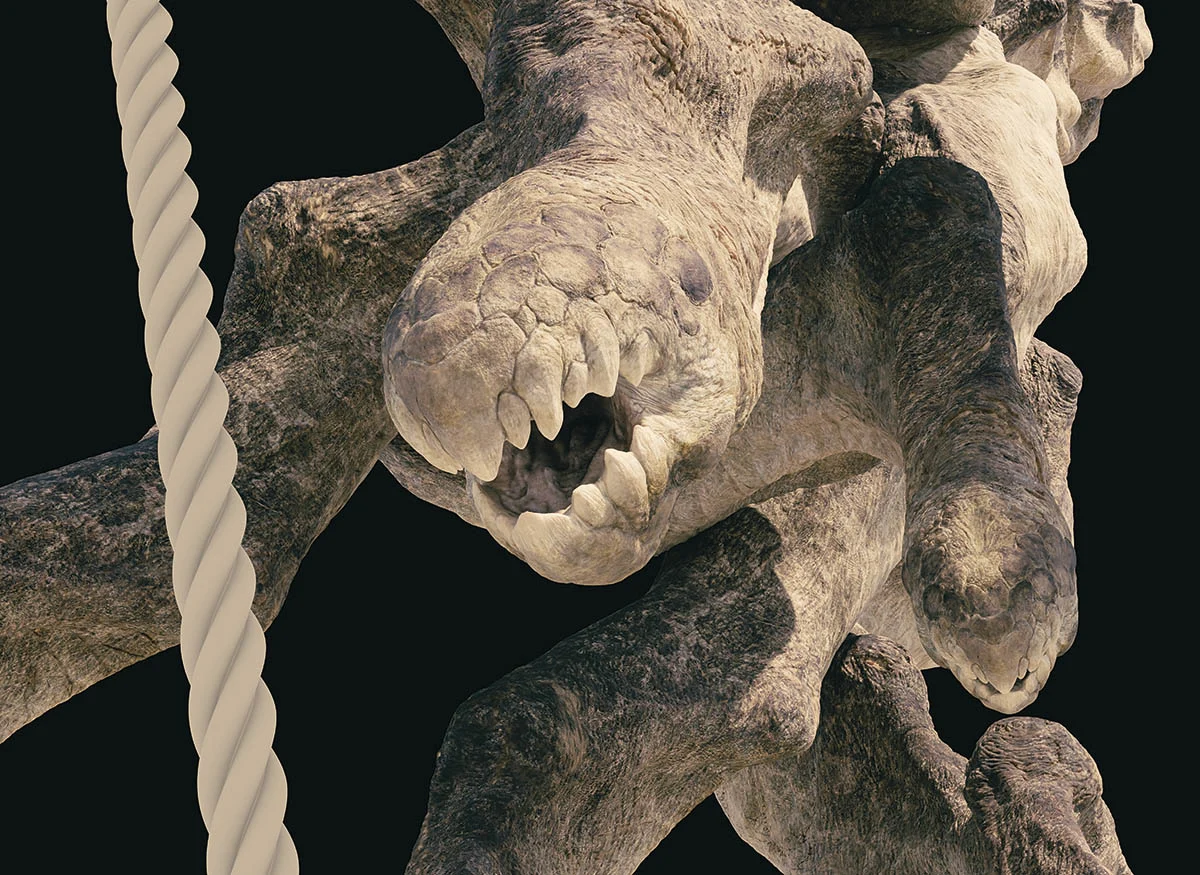
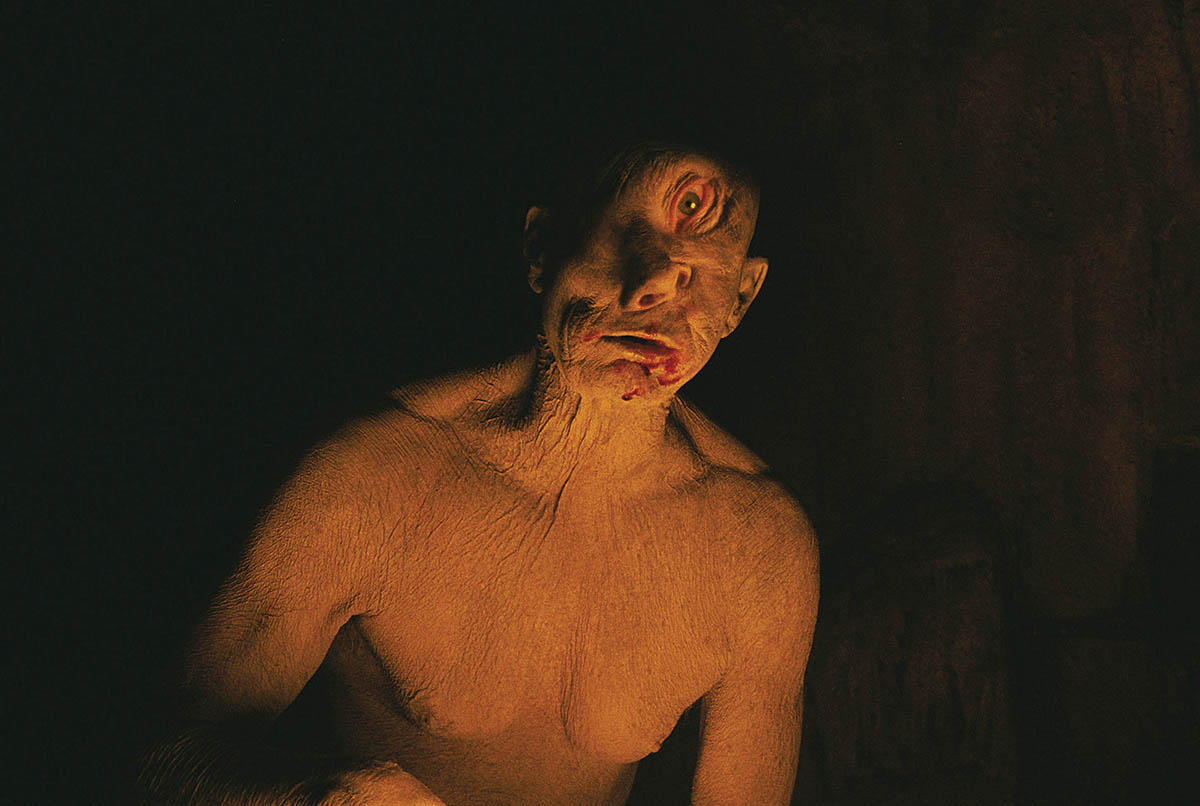
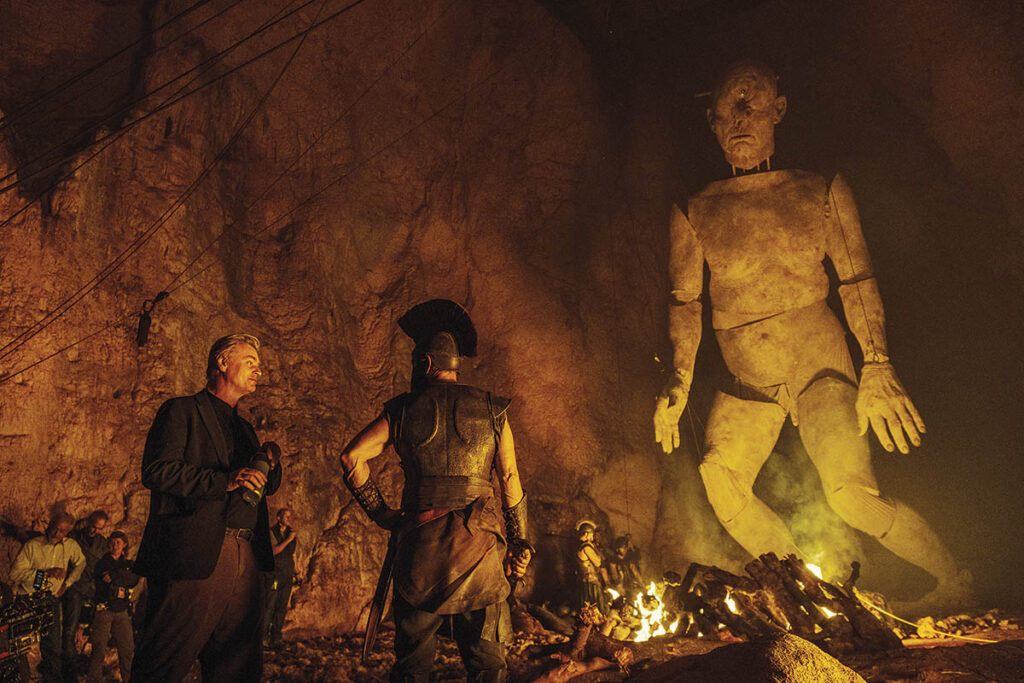
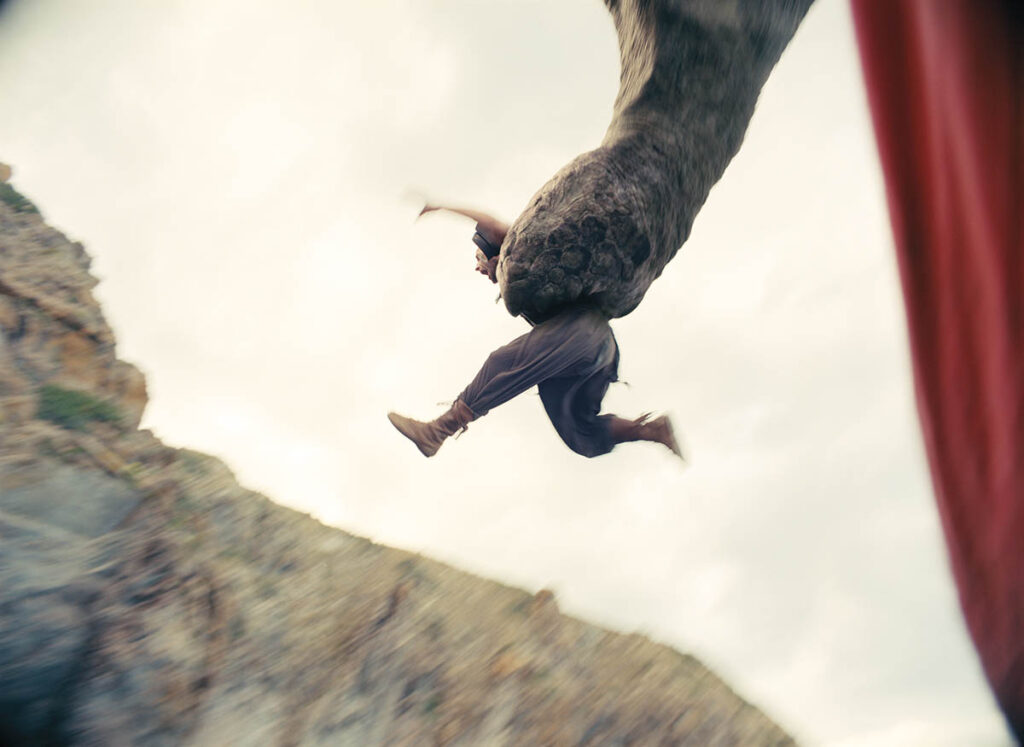
Furthermore, the production leaned heavily on physical craftsmanship. From a massive, shiplap Trojan Horse designed with the meticulous precision of ancient Greek shipbuilders to a 36-foot-tall puppet of the Cyclops powered by simple ropes, counterweights, and human puppeteering, Nolan’s production ethos remained steadfast: capture it practically first, then enhance it digitally.
Chronology of Production: From Concept to Cave
Bringing an epic of this magnitude to life required an intensely collaborative, highly compressed production timeline that tested the limits of every department.
Pre-Production and World-Building
Years before cameras rolled, Nolan, De Jong, Jackson, and Fisher convened to establish a unified aesthetic. Rejecting the clean, sanitized look often associated with ancient epics, the team drew inspiration from the tactile mastery of Ray Harryhausen’s stop-motion animation, Rick Baker’s practical creature makeups, and Rob Bottin’s sculptural creature design. The guiding philosophy was simple: audiences must be given a reason to believe in the physical reality of the world before them.
Location Scouting and the Greek Cave Pivot
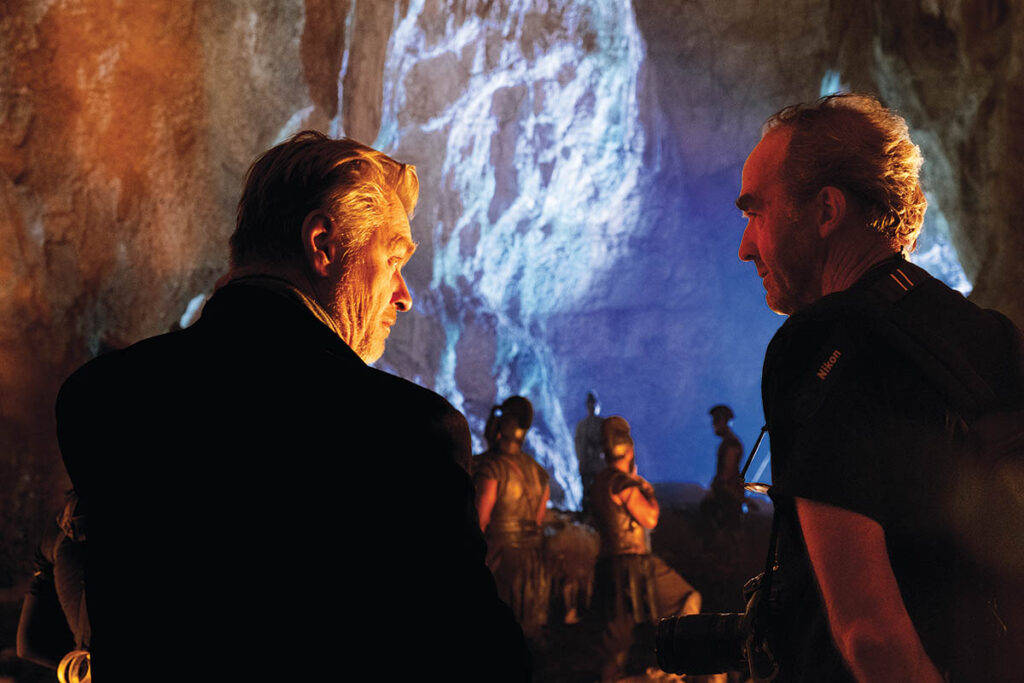
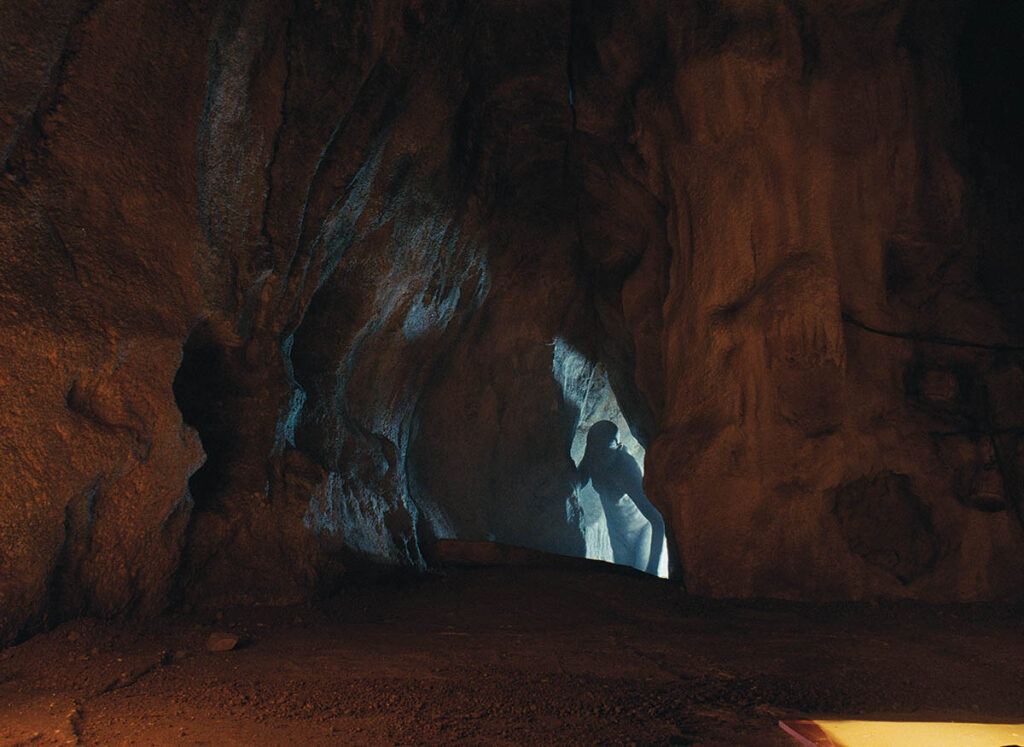
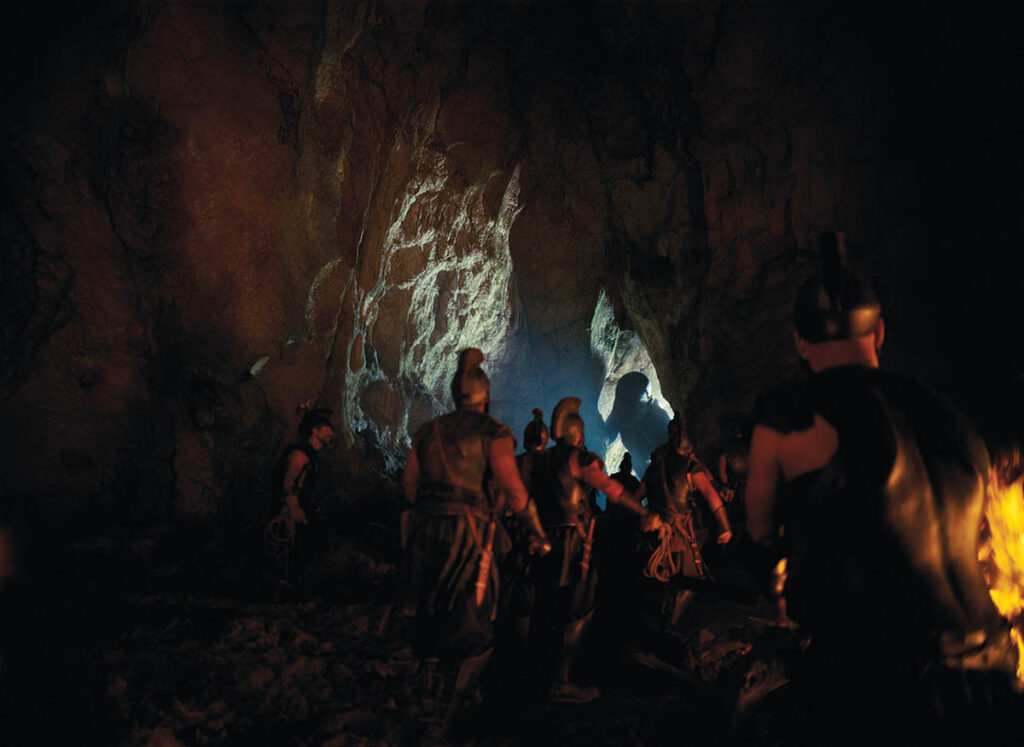
Originally, the terrifying sequence inside the Cyclops’ cave was scheduled to be filmed late in the production cycle on a controlled stage set in Los Angeles. However, during a late-stage location survey in Greece, Nolan discovered a natural coastal cave that he felt was undeniably authentic to the scene.
This discovery triggered a massive logistical scramble. Because shooting in Greece was slated for February, the timeline for designing, engineering, and building the giant Cyclops puppet was slashed from six or seven months down to a frantic two months.
“Everyone was freaking out and saying, ‘This couldn’t be done,’” recalls Visual Effects Supervisor Andrew Jackson. In hindsight, however, the compressed timeframe forced creative simplification. The resulting puppet was exceptionally lightweight with simple joints, allowing it to move with an organic fluidity that would have been nearly impossible to achieve with a heavy, fully animatronic rig.
On-Set Hybridization and Practical Stunts
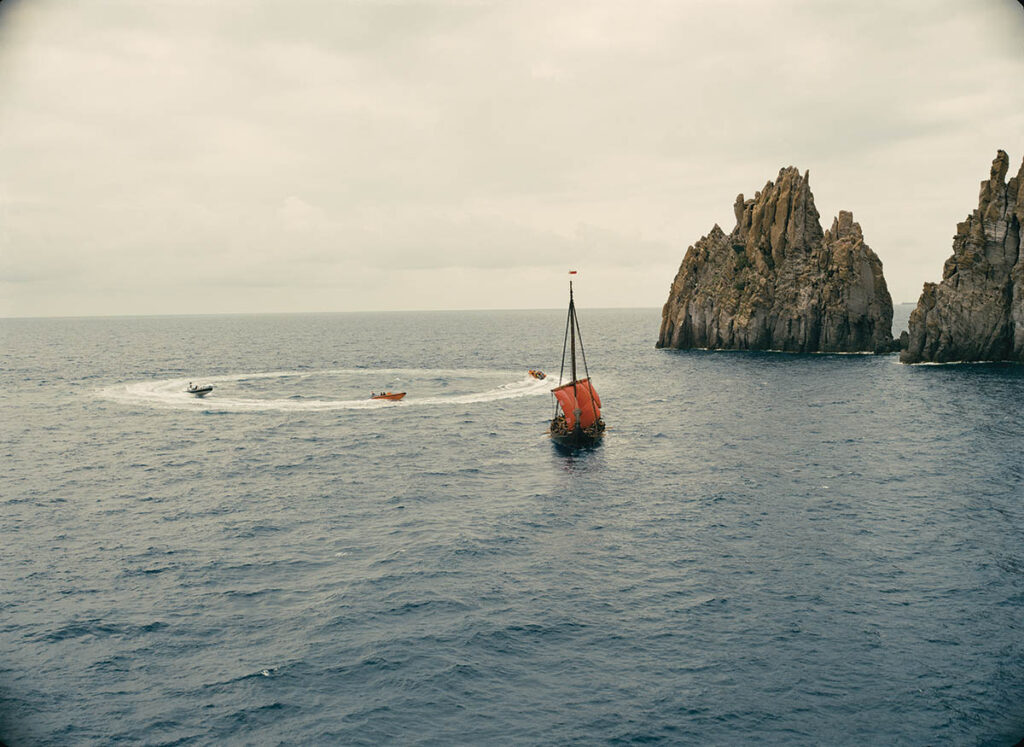
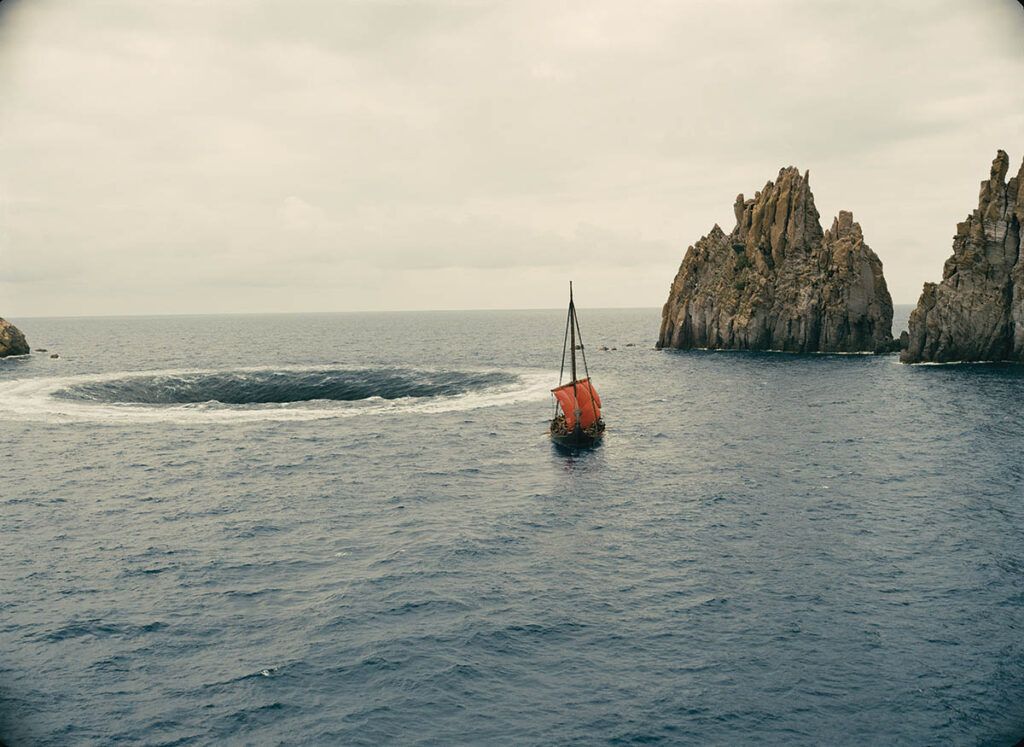
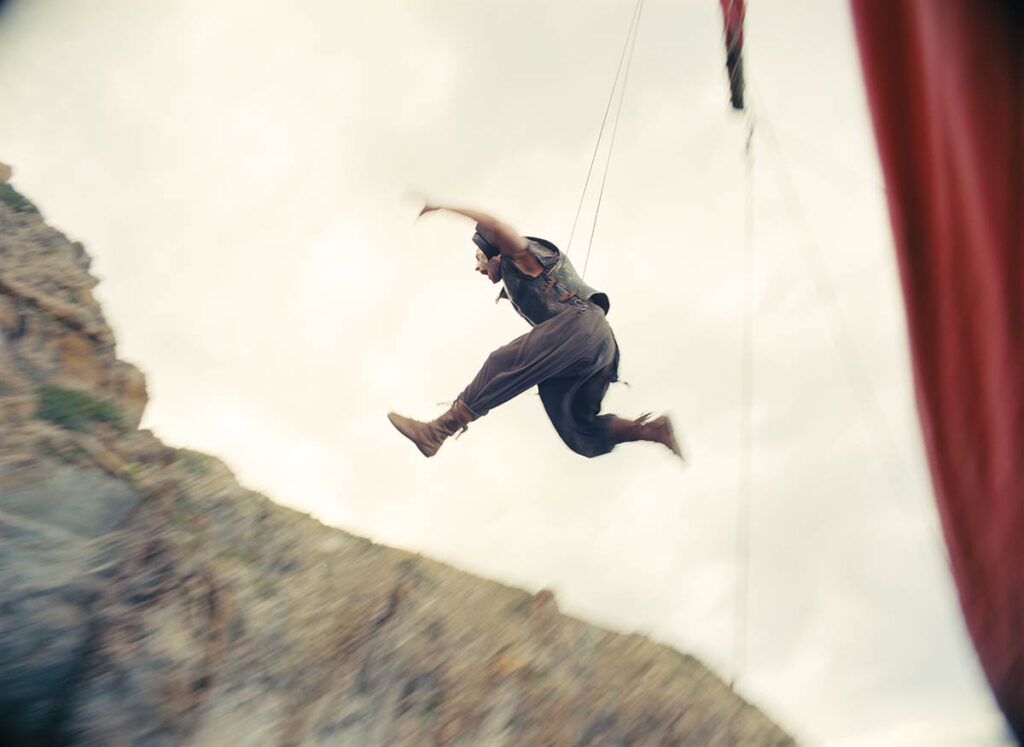
As principal photography shifted through Morocco, Iceland, Italy, and Scotland, stunts and special effects teams worked in lockstep. Practical components were engineered for every major set piece, including a massive foam-puppeteered head for Scylla used on wires to physically interact with actors and destroy breakaway set pieces. Similarly, Charybdis was realized using heavy-duty boat thrusters in the open ocean to generate massive, realistic surface water disturbances, augmented later by DNEG’s water simulations for the deep whirlpool shots.
Supporting Data: Behind the Scenes of the VFX and Practical Magic
- Visual Effects Shot Count: Approximately 400 visual effects shots appear in the final cut of the film, executed by DNEG with heavy reliance on rapid post-production visualization (postvis).
- The Cyclops Puppet: Built at a towering scale of 36 feet, the puppet utilized lightweight framing and classical counterweighting techniques inspired by traditional French parade puppets.
- The Trojan Horse: Abandoning the traditional wheeled horse stationed in front city gates, the production opted for a sunken, waterlogged sea-vessel aesthetic, constructed with fine wood-working techniques reflective of ancient Greek maritime prowess.
- Water & Storm Sequences: Tank work was executed on the six-axis motion base at Falls Lake on the Universal Studios Hollywood lot, paired with open-ocean footage utilizing industrial fireboats to simulate the Wrath of Zeus.
- Circe’s Transformation: Rather than relying on digital crowd simulations or post-production warping, the infamous transformation of men into pigs was achieved largely in-camera utilizing specialized half-man, half-pig facial prosthetics.
Official Responses: Cast and Crew Perspectives
The collaborative spirit of the production is a hallmark of Christopher Nolan’s sets, fostering an environment where practical artisans and digital artists operate as a singular unit.
Christopher Nolan on the Divine and the Natural
Nolan’s interpretation of the Olympian gods breaks sharply from cinematic tradition. Rather than casting physical actors as thunder-wielding deities descending from the clouds, Nolan chose to frame divinity through the subjective psychological lens of Bronze Age humans.
“When it came to the gods and the idea of the divine, what I found in the poem to be the most interesting approach for me was to look at it from the point of view of the human characters,” Nolan explains. “And the human characters encounter the divine in the world around them, in nature, the state of the sea, the wind blowing the pines, thunder and lightning… That relationship with the gods is part of the world that they live in. I wanted to try to have the audience look from the point of view of somebody at that time who is feeling the gods speaking through nature and is perhaps seeing gods represented in the people around them.”
Special Effects Supervisor Scott Fisher on Collaboration
For Fisher, working within Nolan’s practical-first mandate requires constant innovation. “Chris doesn’t like throwing everything to a CG solution,” Fisher notes. “It’s always, ‘Let’s see what we can come up with. Where can we get to practically, and then we’ll fix or expand or improve it with the CG option?’”
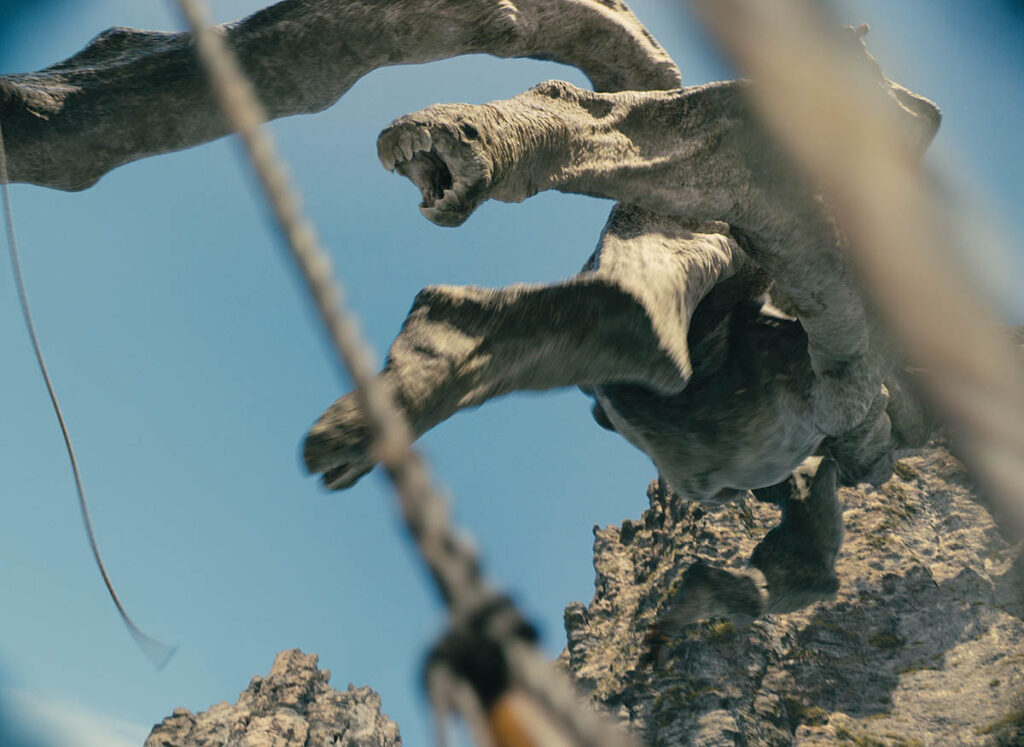
This philosophy extended to the massive marine and mechanical sequences. When working with Matt Damon on rough seas, the presence of industrial fireboats blasting water became a running joke on set—one that left the leading actor thoroughly soaked and relentlessly challenged.
Production Designer Ruth De Jong on Creative Liberties
Addressing potential purist critiques regarding geographical accuracy, Production Designer Ruth De Jong emphasizes that Nolan’s adaptation is an artistic re-imagining rather than a documentary cartography lesson.
“Chris wrote his Odyssey, and that is how we were able to come up with these creative freedoms to free us from any ‘We can’t leave the Med’ mindset,” De Jong points out. “Plus, that look for an entire movie would have gotten boring!”
Implications: Redefining the Epic for Modern Cinema
The release of The Odyssey carries profound implications for the future of blockbuster filmmaking. In an era dominated by wall-to-wall green screens and fully digital environments, Nolan’s relentless commitment to tactile, in-camera effects proves that physical weight, real atmospheric weather, and physical puppets still hold unmatched psychological power over audiences.
Furthermore, the film highlights the nuanced relationship between computer graphics and traditional visual effects. As Nolan himself noted, the modern tendency to conflate "CG" with "visual effects" overlooks a vast spectrum of optical artistry, rotoscoping, compositing, and practical hybrid methodologies.
By treating a foundational myth like a gritty, hard-edged science fiction and horror film, Nolan has not only modernized The Odyssey for a 21st-century audience but has also established a new benchmark for how classical literature can be adapted with artistic integrity, scale, and uncompromising cinematic truth.
