
Culinary Carnage in Neo-Los Angeles: How ‘Get Jiro!’ Redefines Dystopian Animation
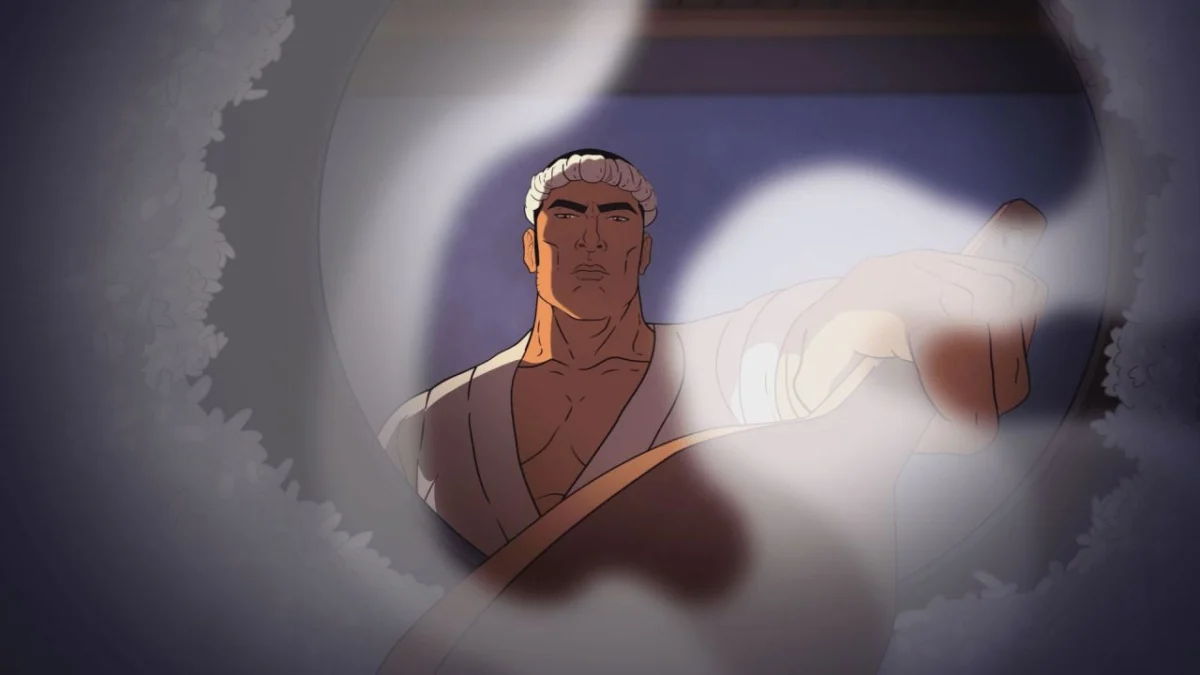
In a near-future Los Angeles, the social hierarchy isn’t dictated by wealth, celebrity, or political influence, but by the palate. In this dystopian sprawl, food is the ultimate currency, and those who command the kitchen hold the keys to the city. If you dare to insult a master sushi chef by adding soy sauce to his meticulously crafted creation, you aren’t just asking for a reprimand—you are signing your own death warrant.
This is the visceral, high-stakes world of Get Jiro!, the latest animated sensation from Adult Swim. Produced by Warner Bros. Animation and DC Studios, the series is an audacious adaptation of the acclaimed graphic novel co-authored by the late, legendary chef and storyteller Anthony Bourdain and writer Joel Rose. With a blend of culinary reverence and unrelenting, grindhouse-style gore, the series—starring Brian Tee as the titular, enigmatic Jiro—has arrived to challenge the boundaries of adult animation.
The Genesis of a Culinary Bloodbath
The journey of Get Jiro! from a cult-classic graphic novel to a television screen began with an unexpected email. For showrunners Brian Gatewood and Alessandro Tanaka, the project was initially just another pitch, but it quickly became an obsession.
“When we first got the email with Anthony Bourdain’s comic, we read the logline and were like, ‘Oh, this sounds interesting,’” Tanaka recounted during a panel at the SCAD AnimationFest. The connection proved serendipitous; Tanaka realized that Joel Rose, Bourdain’s co-author, had been his neighbor for years in New York City. “It was so weird. We had to read it, and we immediately fell in love.”

Gatewood, who serves as an executive producer alongside Tanaka, expressed genuine surprise that the material hadn’t been adapted sooner. “I’m honestly shocked we’d never heard of the story before. He’s Anthony Bourdain, and he did this great comic, but so few people seemed to know about it.”
For the duo, the source material offered the perfect playground. Bourdain’s intimate knowledge of the restaurant industry, famously chronicled in Kitchen Confidential, imbued the original text with an authenticity that transcended the standard dystopian tropes. The showrunners were eager to translate that expertise into a medium that could heighten both the beauty of the craft and the absurdity of the violence.
Culinary Authenticity Meets Animated Brutality
One of the most striking aspects of Get Jiro! is the visual juxtaposition between the exquisite depiction of food and the savage violence inflicted upon the characters. Whether it is a criminal mastermind forcing an underling into an air fryer or an eye being removed with an ice cream scoop, the gore is presented with a matter-of-fact brutality that feels ripped from a pulp horror film.
To ensure that the culinary elements remained grounded in reality—even within a world where food is a deadly weapon—the production team brought in Matt Goulding, a renowned figure in the culinary industry and a close colleague of the late Bourdain.

“Matt would read the script first, then we would talk about the food with him,” Gatewood explained. “We wanted to make sure everything was authentic. We would discuss certain recipes or dishes for specific episodes and themes. After the animatic, he would come in and start to look at it and say, ‘Okay, I think it needs to look a little bit more like this.’ We had him involved the whole way through the process.”
This dedication to detail pays off. The way the animators render Jiro’s knives slicing through salmon—capturing that specific, buttery texture of high-grade raw fish—is almost sensory. The vibrant colors of the ingredients serve as a stark, ironic contrast to the deep, viscous reds of the blood that frequently coats the screen. It is a balancing act of aesthetics that few other series have attempted with such confidence.
Breaking the Rules of Animation
For Gatewood and Tanaka, Get Jiro! was their first foray into the world of animation. While they admit that their initial naivety about the medium led to significant production challenges, they argue that this lack of experience ultimately served the show’s creative vision.
“We thought, ‘They’re just drawing it, so it’ll be easier than live-action filming,’” Tanaka admitted. “And then it turns out, no, it’s not easy.”

The showrunners frequently pushed the limits of what the animation team at Warner Bros. Animation considered feasible. Perhaps the most daunting request was a single-take, long-shot sequence. “We have a one-take episode where the camera doesn’t cut,” Tanaka shared. “We thought it would be simple. Well, it turns out that it was insanely difficult and it almost made our whole crew go crazy. But we only asked to try it because we didn’t really know what we were asking of people.”
Director Rick Morales, however, became the production’s unsung hero. Gatewood praised Morales’s refusal to stifle their ambition: “Rick Morales is amazing. When we pitched him that idea, he did not blink. He was like, ‘Okay. Yeah. That sounds good.’ And then later on he was like, ‘Yeah, it was crazy what you guys wanted to do.’ To his credit, he didn’t want to shut down any of our ideas.”
This collaborative spirit extended to the network. Adult Swim, celebrating its 25th anniversary, has a long-standing reputation for granting creators an unusual amount of creative freedom. According to the showrunners, the network rarely interfered with the level of violence, provided it served the narrative.
“They kind of let us do what we wanted,” Tanaka noted. “Maybe they just liked what we were doing, so they gave us free rein. But it’s also not just violence for violence’s sake. There’s a story, too.”

Cultural Specificity and Global World-Building
Beyond the gore and the gastronomy, Get Jiro! offers a fascinating look at a reimagined Tokyo. For Tanaka, who is half-Japanese and spent his formative summers in the country, the series provided a rare opportunity to inject personal history into the dystopian landscape.
“We have a whole episode that takes place in Tokyo, and it’s all in Japanese,” Tanaka said. “It was fun imagining how Japan would exist in that time and getting to include details we couldn’t have if we were filming in live-action. There were these sedan cars that I grew up with in Japan… the team was like, ‘Yeah, let’s add it in.’”
These small, intimate details—the specific model of a 1990s car, the way a restaurant is laid out, the nuances of the language—ground the show’s high-concept premise. It elevates the series from a simple revenge tale into something more culturally immersive, marking it as a unique entry in the American animation catalog.
The Adult Swim Legacy: Why ‘Get Jiro!’ Matters
As Adult Swim marks a quarter-century of defining adult-oriented animation, Get Jiro! fits perfectly into the network’s legacy of experimental, uncompromising television. From the surrealist humor of Aqua Teen Hunger Force to the cosmic nihilism of Rick and Morty, the network has consistently prioritized unique voices over mass-market appeal.

“On Adult Swim, there’s really nothing I can point to that’s the same,” Gatewood observed. “I watch all those great Adult Swim shows, and they all have interesting voices and come from totally left field. I also think there’s a certain freedom to those projects.”
Tanaka believes that the longevity of the network is rooted in its respect for the intelligence of its audience. “I think, sometimes, what gets lost about Adult Swim is that it’s not just about violence and gore. It’s one of the few networks that doesn’t talk down to an audience. I think it should get a lot of credit for that. And I think that’s why it’s still around after 25 years.”
With new episodes airing every Saturday at midnight on the Toonami block—and available to stream the following day on HBO Max—Get Jiro! stands as a testament to what happens when you combine the sharp, culinary wisdom of Anthony Bourdain with the limitless, chaotic potential of modern animation. It is a show that demands your attention, satisfies your hunger for unique storytelling, and perhaps, encourages you to be very, very careful about how you season your sushi.
