
The Blade Chronicles: Inside the Creative Meltdown of Marvel’s Most Troubled Reboot
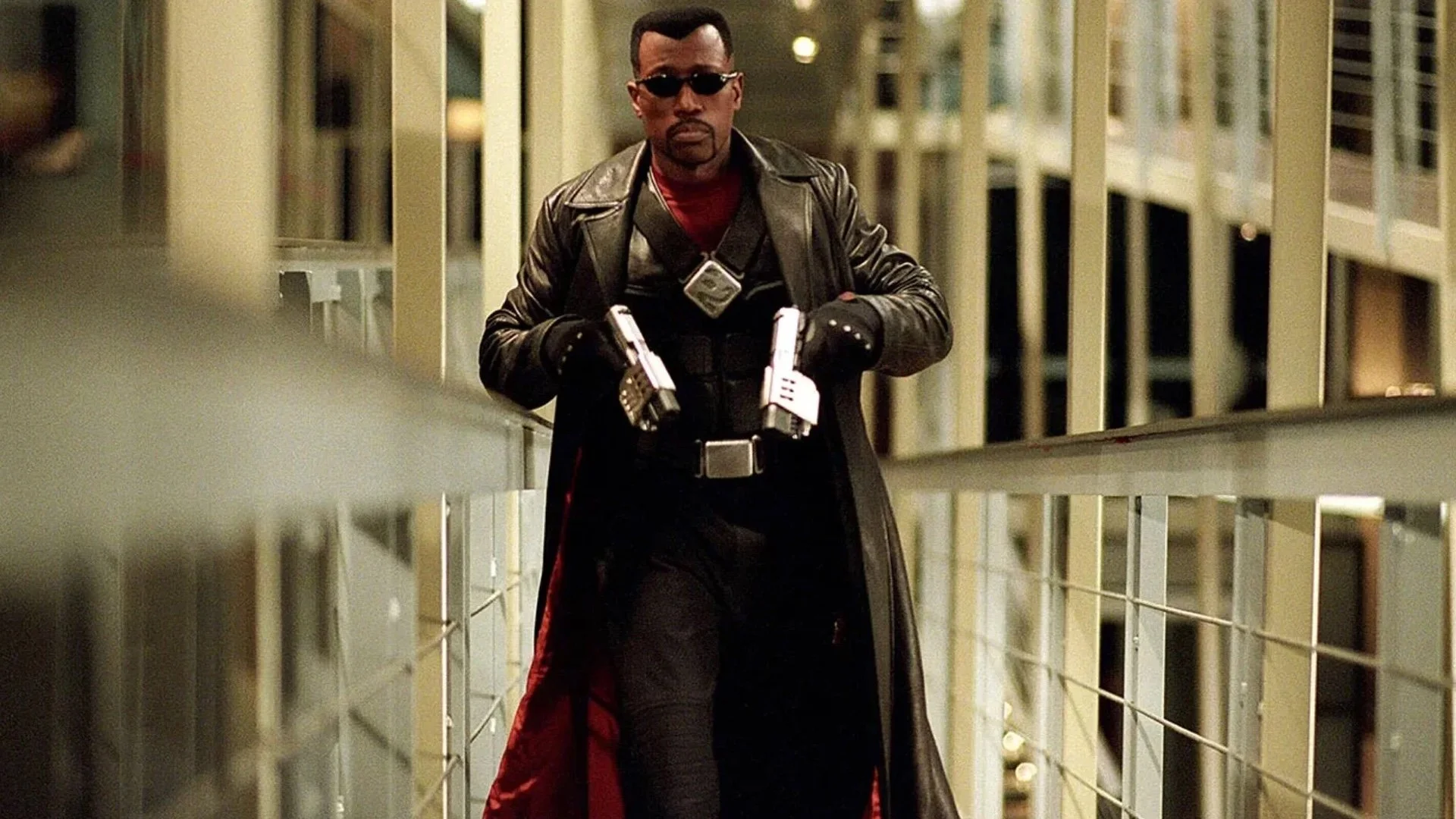
The path to bringing the Daywalker back to the big screen has been less of a production and more of a cautionary tale in modern blockbuster filmmaking. For years, Marvel Studios has struggled to launch its Blade reboot, a project that—on paper—should have been a slam dunk. However, as more details emerge regarding the film’s agonizingly slow development cycle, a clear picture of internal disarray has begun to surface.
Former director Bassam Tariq, who famously walked away from the project in September 2022, recently broke his silence on the ordeal. His revelations confirm what industry insiders had long suspected: Marvel Studios attempted to build a massive, expensive cinematic house without laying a single brick of a foundation.
The Fundamental Flaw: A House Without a Floor
At the heart of the Blade debacle lies a paradox of corporate ambition versus creative execution. While Marvel Studios is known for its meticulous planning and interconnected universe, the Blade production suffered from a fatal, elementary error: it began pre-production with no script.
"We didn’t have a script," Tariq stated candidly during a recent interview, stripping away the layers of corporate PR that often shield major studio failures. "That’s what happened."
For a studio accustomed to operating with machine-like efficiency, the lack of a screenplay represents a staggering departure from their standard procedure. Under normal circumstances, a film of this scale would spend years in the writing phase, with scripts refined, punched up, and locked long before a single set is built. In the case of Blade, the cart was placed firmly in front of the horse. Elaborate, high-budget sets—including a sprawling 1920s-era speakeasy and setups for complex, practical horse-chase sequences—were constructed in Atlanta, waiting for a narrative that simply did not exist.
Production designer Stefania Cella and her team were tasked with crafting an immersive, visually stunning world, only to watch their work sit idle as the studio struggled to finalize a story worth telling. This disconnect between physical production and narrative development highlights a growing sentiment among critics that Marvel’s output has become increasingly focused on spectacle rather than the soul of its stories.
A Legacy of Blood: The Shadow of Wesley Snipes
Even if the script had been perfect, the production faced an existential hurdle that no amount of writing could easily clear: the shadow of Wesley Snipes. When the original Blade hit theaters in 1998, it did more than just introduce a cool vampire hunter; it proved that R-rated, stylized comic book adaptations could be box-office gold.
Snipes’ performance as Eric Brooks was nothing short of definitive. He brought an enigmatic, cool, and physically imposing energy to the role that fundamentally altered the public’s perception of the character. For a generation of fans, Wesley Snipes is Blade.
Tariq acknowledged this daunting reality during his time at the helm. "We also had this impossible task of trying to compete with the first superhero movie, which is Wesley Snipes’s iconic Blade," he admitted. Attempting to recast such an iconic performance is always a perilous endeavor, but it is made significantly harder when the creative team is struggling to find a unique angle that justifies the reboot’s existence in the first place.
The looming presence of Snipes, who has recently been rumored to potentially return for a cameo in the MCU’s Avengers projects, created a standard of "cool" that the reboot struggled to replicate. When your predecessor set the bar for the genre’s aesthetic, any attempt at a reimagining is destined to be judged against a nearly impossible benchmark.
Scaling the Mountain: The Disparity in Scope
To understand the pressure surrounding Blade, one must consider the jump in scale that director Bassam Tariq faced. Before being tapped for the Marvel project, Tariq was best known for his indie sensibilities, specifically his work on the critically acclaimed drama Mogul Mowgli. That film was a scrappy, intimate piece of storytelling produced for roughly $1.2 million.
Moving from a $1.2 million budget to a Marvel-sized blockbuster budget is not just a change in scale; it is a change in the entire philosophy of filmmaking. Tariq noted that the budget for the Blade set alone was roughly equivalent to the entire budget of ten Mogul Mowgli productions.
"So, of course the word should go to Kevin [Feige]," Tariq explained, defending the studio’s top executive. "It makes perfect sense. We just never really had a script."
This admission serves as a defense of the studio hierarchy. Many fans have taken to social media to demand Kevin Feige’s resignation or blame him for the perceived decline in Marvel’s post-Endgame quality. However, Tariq paints a picture of a man who is simply over-leveraged. The sheer volume of content Marvel is producing has created a bottleneck where creative oversight is spread too thin, and directors—even talented ones—are finding themselves lost in the machinery of a studio that values the "Marvel formula" over the unique vision of the filmmaker.
Chronology of a Production Crisis
The timeline of the Blade reboot is a roadmap of missed opportunities and stalled momentum:
- July 2019: Marvel Studios makes the shock announcement at San Diego Comic-Con that Mahershala Ali will star as Blade, marking the character’s official entry into the MCU.
- 2020-2021: The search for a director and a writer begins. The project is touted as a gritty, character-driven story.
- July 2021: Bassam Tariq is officially hired to direct.
- September 2022: With pre-production in full swing and massive sets built in Atlanta, the film is suddenly paused. Bassam Tariq officially exits the project, citing "continued shifts in our production schedule."
- Late 2022-2024: The film undergoes multiple rounds of writers, including Stacy Osei-Kuffour and Michael Green, as the studio struggles to lock in a tone. The film’s release date is delayed indefinitely multiple times, falling off the studio’s immediate slate.
Implications for the Future of the MCU
The Blade situation is not an isolated incident; it is a symptom of a broader issue within the Marvel Cinematic Universe. Since the conclusion of the Infinity Saga, the studio has struggled to balance its rapid release schedule with the need for quality control.
When a production as high-profile as Blade falls apart because of the absence of a script, it sends a troubling signal to both investors and fans. It suggests that the studio is prioritizing release dates and "content pipeline" requirements over the essential task of storytelling.
Furthermore, the public defense of Kevin Feige by Tariq offers a nuanced look at the state of the industry. It is easy for the public to cast the studio head as a villain, but the reality is a complex web of logistics, budget management, and creative fatigue. The "Marvel machine," which once seemed unstoppable, is now grappling with the reality that you cannot simply "buy" a great movie with massive sets and high-concept action sequences.
Conclusion: Lessons for the Daywalker
As Marvel Studios continues to recalibrate its approach—recently signaled by a renewed focus on quality over quantity—the Blade reboot remains a ghost of a project. It serves as a reminder that even in an era of CGI and massive corporate budgets, the most important piece of equipment on any set remains the screenplay.
If Marvel is to successfully integrate the Daywalker into its pantheon, it must move past the distractions of set design and casting rumors and return to the basics. Until a script exists that can stand toe-to-toe with the legacy left by Wesley Snipes, the project will remain in the shadows. For now, the most important takeaway from this saga is clear: ambition without a plan is just a recipe for a very expensive, very empty soundstage.
