
Unpacking the Blood-Drenched Finale: Mike Flanagan’s ‘Carrie’ Series Ending Explained and How It Rewrites Stephen King
By Entertainment Desk
Published: May 2026
Major spoilers for Mike Flanagan’s Prime Video adaptation of Stephen King’s "Carrie" follow.
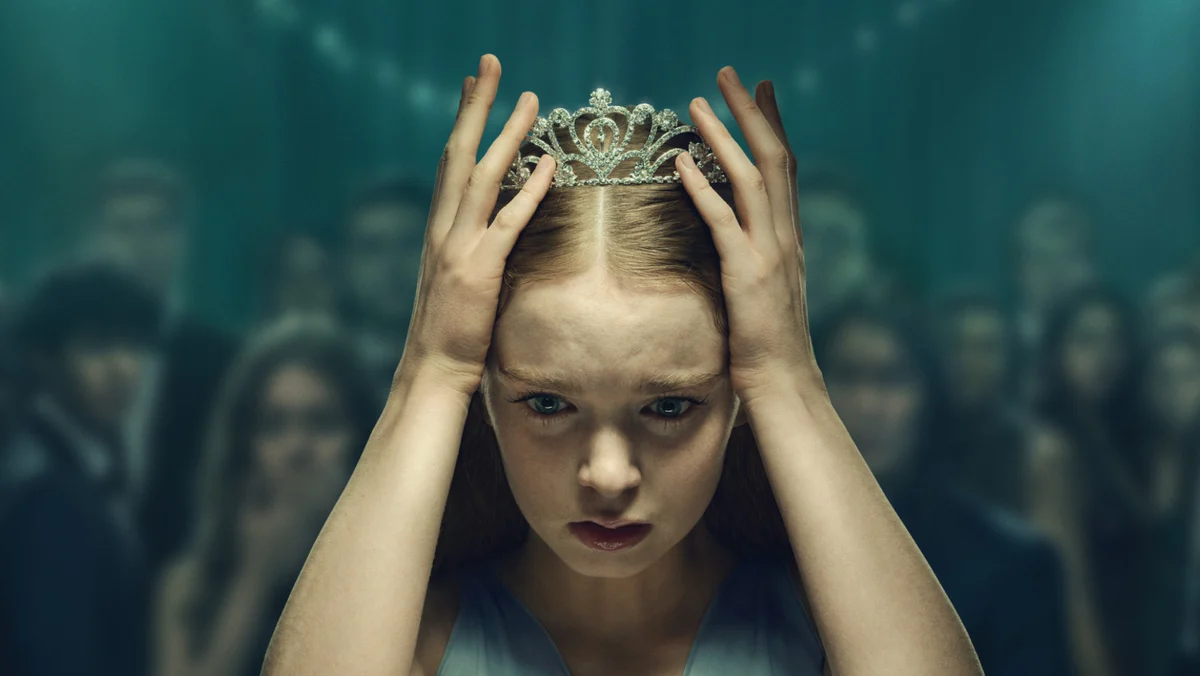
For decades, the cultural memory of Stephen King’s 1974 epistolary masterpiece Carrie has been inextricably bound to a single, explosive image: a terrified, traumatized teenager standing drenched in porcine blood, her eyes wide with a terrifying awakening of telekinetic fury. Whether through the ink of King’s debut novel, Brian De Palma’s iconic 1976 feature film, or subsequent adaptations, the story has always marched toward an inevitable, fiery, and tragic conclusion. Carrie White destroys her classmates, goes home to face her zealot mother, and dies amidst the rubble of a collapsing house.
Enter master horror auteur Mike Flanagan. Known for his deeply human, character-driven approach to Stephen King adaptations—including Gerald’s Game and Doctor Sleep—Flanagan’s new Prime Video series adaptation of Carrie subverts expectations from its very first scene. Rather than a straightforward retelling, Flanagan has crafted a sprawling, complex reinvention of the telekinetic tragedy. By the time the credits roll on the final episode, virtually every major plot point, character dynamic, and traditional milestone of the classic narrative has been completely overhauled.
Here is a comprehensive, deep-dive breakdown of how Flanagan’s Carrie alters Stephen King’s legendary source material, what the shocking finale truly means, and where the story could possibly go next.
Main Facts: Deconstructing Flanagan’s Bold Reimagining
The core premise of Carrie remains nominally intact, yet the narrative architecture built by Flanagan introduces sweeping changes designed to challenge viewer loyalties and expand the scope of the universe.
At the center of the series is Summer H. Howell as Carrie White, supported by Siena Agudong as Sue Snell, Samantha Sloyan as Margaret White, and a rotating cast of high school tormentors and enigmatic newcomers. However, the foundational rules of Carrie’s powers—and her autonomy—are radically rewritten.
Key deviations from King’s novel and De Palma’s film include:
- The "Other" Victims: The series opens with documentary-style interviews of prom night survivors, establishing early on that the massacre was not solely Carrie’s doing.
- The Presence of Emaline: Carrie is accompanied throughout the show by a companion named Emaline (Thalia Dudek), initially mistaken for an imaginary friend, but later revealed to be an active telekinetic utilizing astral projection.
- The Prom Massacre: While the infamous pig’s blood drop still occurs (courtesy of bully Chris, played by Alison Thornton, and her boyfriend Billy, played by Arthur Conti), Carrie herself may not be pulling the trigger—or rather, floating the bodies. Emaline asks to "take over" during the height of the humiliation.
- The Fate of Margaret White: In a complete reversal of the traditional ending, Margaret White (Samantha Sloyan) possesses latent telekinetic abilities inherited by Carrie, survives the initial house collapse alongside her daughter, and is later hunted by a mysterious organization.
- Carrie Survives: Most shockingly, Carrie does not die in the wreckage of her childhood home. She escapes alongside Emaline, leaving the door wide open for a multi-season arc.
Chronology of Chaos: How the Finale Unfolds
To understand the magnitude of Flanagan’s changes, one must trace the precise sequence of events that lead to the series’ earth-shattering conclusion.
Act I: The Seeds of Collective Guilt
In the series premiere, viewers are introduced to a framing device featuring a mysterious film crew interviewing prom survivors. Sue Snell drops a chilling thesis statement that immediately sets a different tone: "It wasn’t just Carrie."
As the narrative progresses, Carrie’s isolation is seemingly alleviated by Emaline, a girl only Carrie can interact with. Viewers are led to believe Emaline is a psychological defense mechanism—a figment of a deeply abused teenager’s imagination. As it turns out, Emaline is very real. She is a fellow psychic who has been communicating with Carrie via astral projection. Furthermore, a shadowy organization of government or corporate operatives is revealed to be monitoring individuals with extraordinary mental abilities.
Act II: The Prom Night Subversion
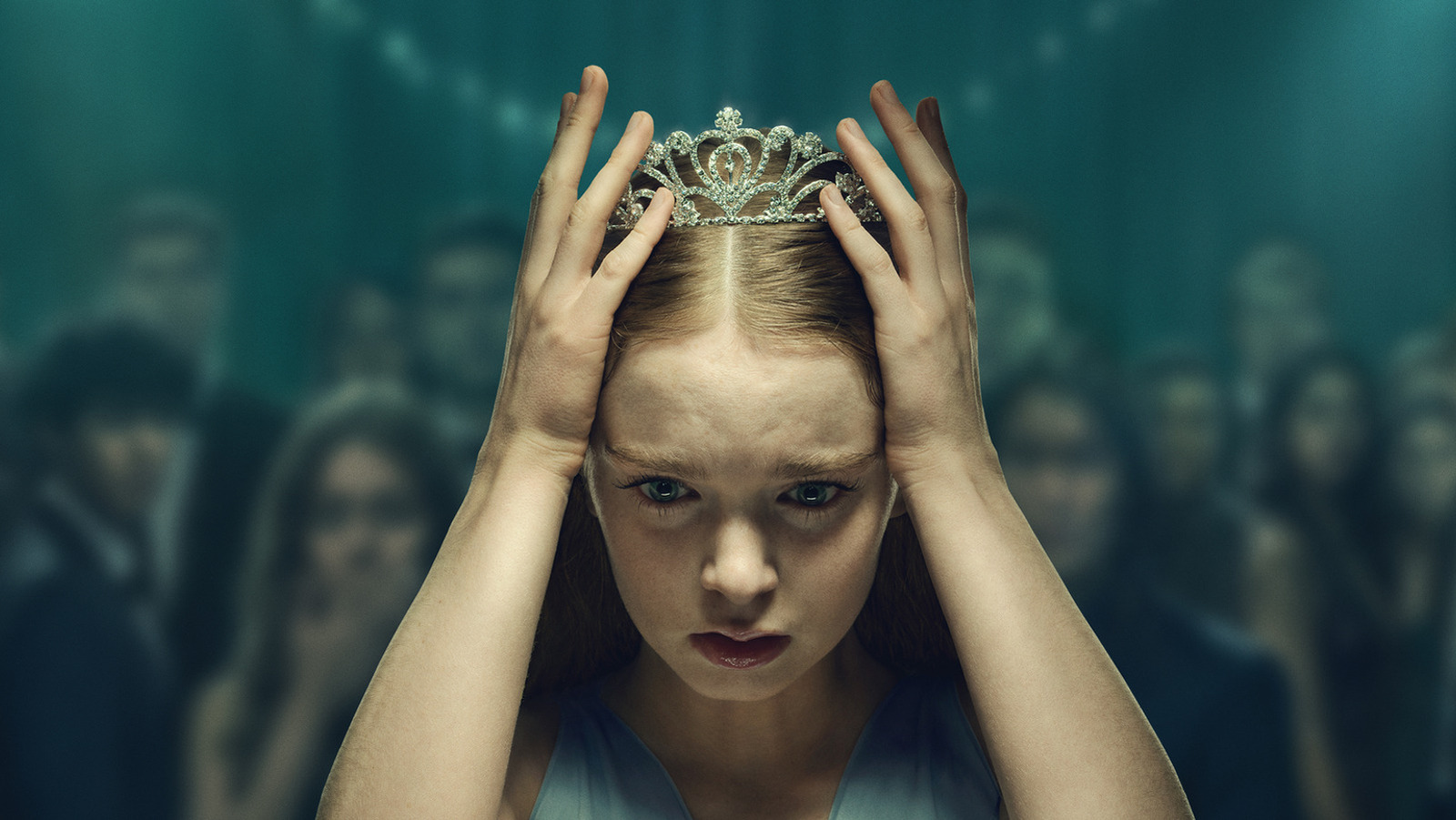
The climax arrives on prom night. The narrative beats briefly echo tradition: Carrie is voted prom queen through a rigged ballot, ascends the stage, and is humiliated when Chris and Billy dump a bucket of pig’s blood over her head. The gymnasium erupts into mocking laughter.
In the book and the 1976 film, this is the precise moment Carrie snaps, locking the doors and bringing down fiery, lethal retribution on her peers. In Flanagan’s version, however, agency is stripped away from Carrie in a fascinating twist. While the auditorium bursts into mockery, Emaline whispers to Carrie, asking if she can "take over."
The implication is heavy and deliberate: Carrie is not the sole executioner of the prom massacre. Instead, Emaline uses Carrie’s physical vessel to enact a devastating counter-attack, crushing Chris and Billy to death inside Billy’s car and leaving a trail of carnage in her wake.
Act III: The Survival of the Whites
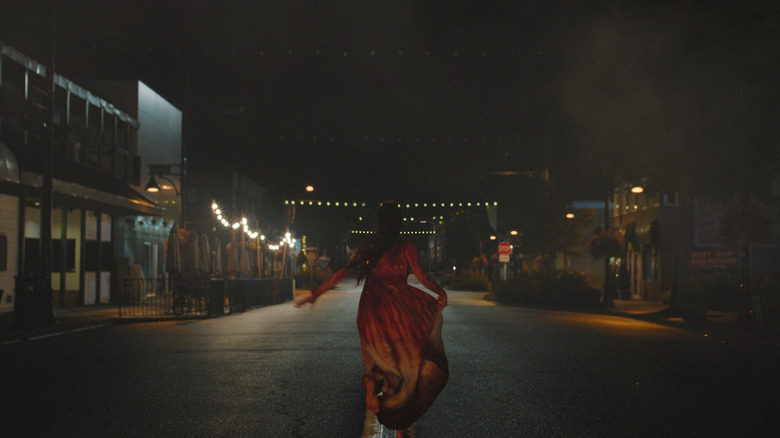
Following the prom nightmare, Carrie flees back to her home on Winnemucca Road, splitting the earth beneath her feet with seismic telekinetic force. She confronts her mother, Margaret.
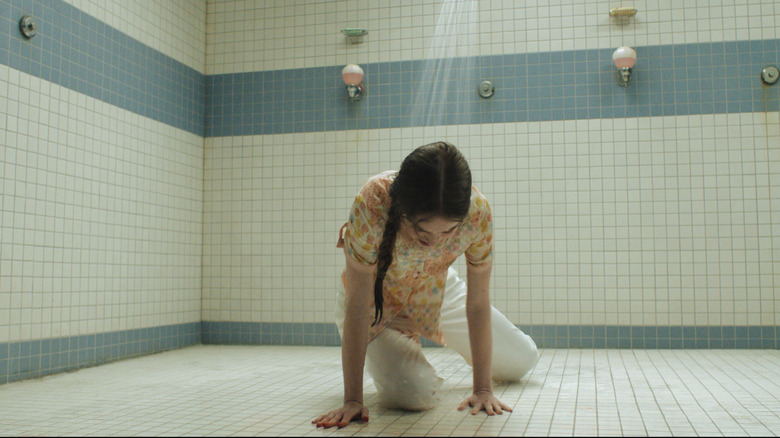
In King’s book, Margaret views her daughter as a witch and stabs her, prompting a dying Carrie to stop her mother’s heart before succumbing to her own injuries. De Palma’s film amps up the gothic horror, showing Carrie crucifying Margaret with kitchen knives before pulling the house down upon them both.
Flanagan honors the visual motif of the collapsing house, but allows both mother and daughter to survive the destruction. Carrie manages to escape the ruins with Emaline. Margaret, meanwhile, crawls out of the wreckage only to encounter the mysterious film crew from the series opener.
Revealed to be operatives of a clandestine telekinetic monitoring organization—led by a character played by Kate Siegel—the group executes Margaret to silence her and cover up the supernatural phenomenon. Carrie, however, vanishes into the night.
Supporting Data & Production Insights
The decision to let Carrie White survive and to frame the prom massacre as a shared or manipulated event represents one of the most radical departures in Stephen King screen adaptation history.
Mike Flanagan has long been celebrated for his reverence for King’s catalog, making these bold swings calculated artistic choices rather than careless revisions. By introducing an overarching conspiracy—reminiscent of clandestine government entities like "The Shop" from King’s Firestarter—Flanagan has transformed a self-contained tragedy into an expansive, serialized sci-fi horror thriller.
- Character Agency: By suggesting Emaline pulled the strings during the prom slaughter, Flanagan attempts to absolve Carrie of unmitigated mass murder, reframing her as a manipulated instrument rather than a pure monster of vengeance.
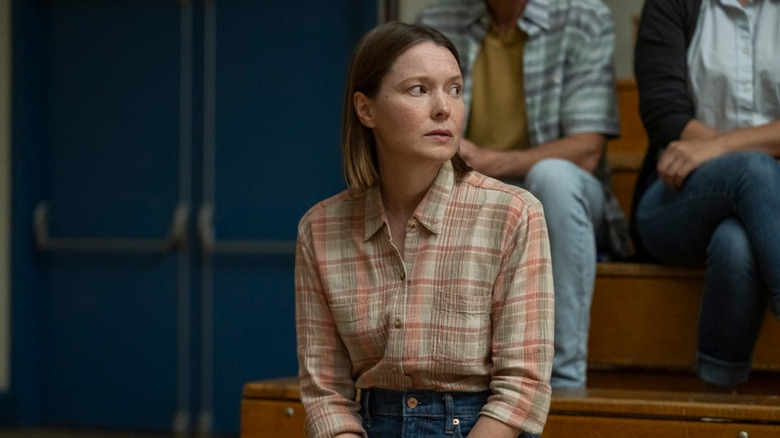
- The Mother-Daughter Dynamic: Samantha Sloyan’s portrayal of Margaret is given more psychological nuance than previous iterations. While still fanatical and abusive, her genuine underlying love for her daughter—and the revelation of her own latent telekinetic abilities—adds layers of tragedy to her ultimate demise at the hands of the shadow organization.
- Casting and Creative Team: Spearheaded by Flanagan’s trusted creative circle, including Kate Siegel anchoring the clandestine organization, the production leverages familiar faces to build an interconnected sense of dread and mystery.
Official Responses and Creator Intentions
Speaking on the motivations behind expanding the classic tale into an episodic format, Mike Flanagan has been vocal about his long-term vision for the property. In interviews surrounding the series launch, Flanagan outlined a dream scenario spanning a three-season trilogy.
"When you look at a story like Carrie, the tragedy is so finite that people often wonder how you stretch it into a series," Flanagan noted in recent promotional press. "The key was not to just pad the runtime, but to look at the wider world these characters inhabit. What happens when a town like Chamberlain isn’t just an isolated bubble of cruelty? What happens when larger, unseen forces are watching these children wake up to terrifying abilities?"
While purists of Stephen King’s 1974 novel have expressed mixed reactions regarding Carrie’s absolution from the direct murders and her ultimate survival, television critics have praised the series for finding entirely new narrative terrain in a story that has been adapted multiple times before.
Implications: Where Does the Story Go From Here?
The narrative implications of Flanagan’s Carrie finale are vast. By keeping Carrie alive, introducing an evil shadow organization tracking psychics, and establishing that other powerful individuals like Emaline exist in the world, the Prime Video series has effectively transitioned from a gothic horror tragedy into a sprawling cinematic universe-style setup.
1. A Potential Resistance Arc
With Carrie on the run and fully cognizant of the forces hunting people like her, future seasons could pivot into a battle for survival. Rather than a victim hiding from small-town bullies, a surviving Carrie could evolve into a reluctant leader, fighting back against the clandestine agency that murdered her mother and exploits telekinetics.
2. The Stephen King Shared Universe Connection
Fans online have already begun speculating about potential crossovers with other King properties. Given the thematic similarities to Firestarter—where a young girl with extraordinary pyrokinetics is hunted by a sinister government faction known as The Shop—some wonder if Flanagan’s mysterious organization could serve as a modern reimagining of The Shop. Could a future season bridge the gap between Carrie White and Charlie McGee? While purely speculative, Flanagan’s deep affinity for King’s interconnected multiverse makes such thematic nods entirely plausible.
3. Redefining the Monster
For fifty years, Carrie has served as the ultimate cautionary tale about the devastating cost of bullying and the terrifying peak of unbridled adolescent rage. By complicating who is truly responsible for the bloodbath at the prom, Flanagan forces the audience to reevaluate the nature of victimhood. Carrie White is no longer a doomed lamb led to slaughter, nor a merciless demon consumed entirely by her own wrath. She is a survivor in a much larger, more dangerous game.
As Prime Video weighs the future of the series, one thing is certain: the era of simply dumping pig’s blood on Carrie White and letting the story end in ashes is officially over. Carrie has lived to fight another day, and the horror has only just begun.
