
Three Decades in the Making: Brad Bird Finally Unveils Retro-Future Noir Passion Project ‘Ray Gunn’
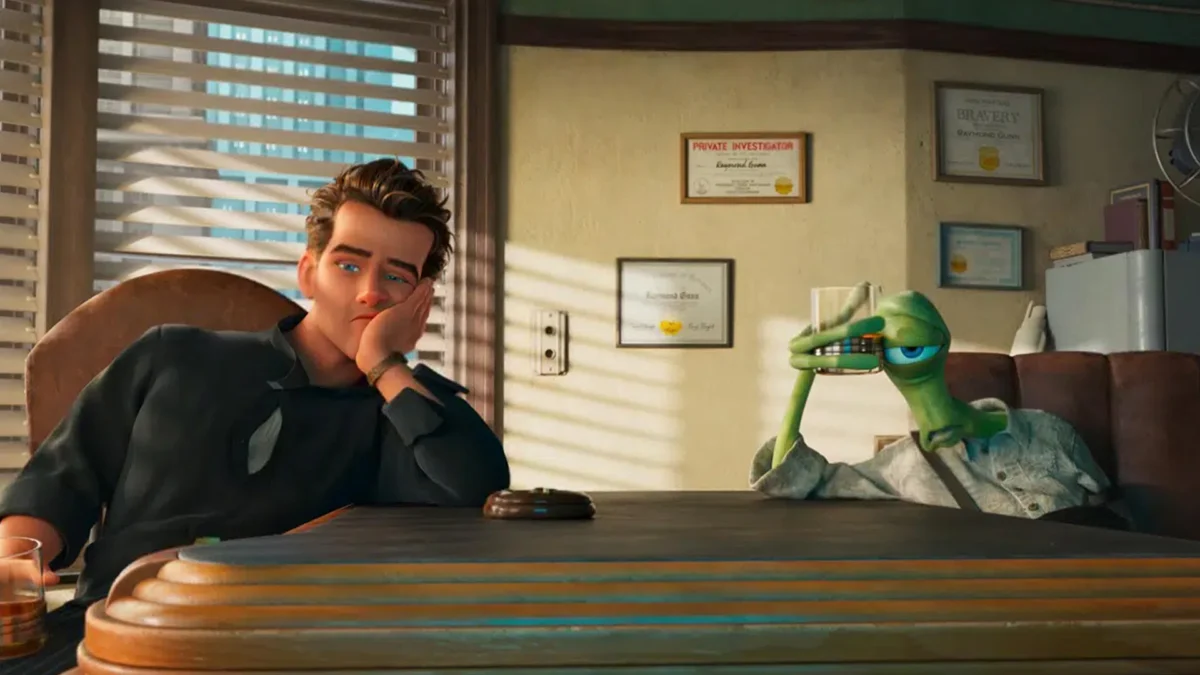
Main Facts: A Sci-Fi Noir Labor of Love Hits the Screen
After a gestation period spanning a staggering three decades, Oscar-winning filmmaker Brad Bird has finally brought his ultimate passion project to life. Titled Ray Gunn, the retro-future animated film noir made its splashy world premiere at the London Film Festival, instantly positioning itself as a major contender for the upcoming 2027 awards season.
A co-production between Skydance Animation and Netflix, Ray Gunn marks several major milestones for Bird. It is only his fifth animated feature film and his first outside of Pixar since his universally acclaimed 1999 feature directorial debut, The Iron Giant. The film drops audiences into a richly imagined, stylized world of tomorrow—specifically, an alternate-future metropolis seen through a 1939 noir lens. At the center of the mystery is the titular private eye, voiced by Sam Rockwell, who navigates a dangerous underworld populated by classic femme fatales (voiced by Scarlett Johansson), extraterrestrials (voiced by Tom Waits), and plenty of ray guns.
The film serves as a notable reunion for key animation heavyweights. It was produced for Netflix via Skydance Animation, a studio currently spearheaded by former Pixar chief John Lasseter. Lasseter previously oversaw Bird’s two Academy Award-winning animated features, The Incredibles and Ratatouille.

Following its festival debut, Ray Gunn is slated for a limited theatrical run on December 4, followed by its global streaming premiere on Netflix on December 18. Early critical responses have pushed the film to a respectable 90 percent "Fresh" rating on Rotten Tomatoes, though major awards-season tracking continues as widespread reviews roll in.
Chronology: The 30-Year Journey of ‘Ray Gunn’
The road to getting Ray Gunn onto movie screens is a Hollywood epic in its own right, highlighting the perseverance required to shepherd an original, high-concept animated property through the studio system.
- The Mid-1990s (Inception): Long before he began work on The Iron Giant or joined the ranks at Pixar, Brad Bird conceptualized Ray Gunn. Conceived as a gritty fusion of classic 1930s hardboiled detective fiction and outer-space sci-fi, the project languished in development hell.
- The Pixar Era (2000s–2010s): Bird set the project aside as he embarked on a legendary run of critical and commercial triumphs, directing The Incredibles (2004), Ratatouille (2007), and Incredibles 2 (2018), alongside live-action forays like Mission: Impossible – Ghost Protocol (2011). During this time, Ray Gunn was widely considered a legendary unmade "what-if" project.
- The Resurrection (2020s): Skydance Animation picked up the torch, providing Bird with the technological and financial backing necessary to bring his retro-future vision into the modern era of computer animation. Partnering with Netflix, the film finally entered full production.
- October 2026 (World Premiere & Release Schedule): Ray Gunn debuted at the London Film Festival on a Saturday, capturing the attention of international film critics. The premiere kicked off a final countdown toward its December theatrical and streaming debuts, alongside an aggressive push toward the 2027 Academy Awards.
Supporting Data: Critical Reception and Box Office/Streaming Strategy
As Ray Gunn enters the crowded late-year awards corridor, early critical responses highlight a deeply polarized division among film reviewers. While the film’s visual splendor and technical achievements have earned widespread praise, some critics have pointed to narrative and emotional shortcomings.

Box Office and Critical Metrics
- Rotten Tomatoes Score: 90% "Fresh" (based on early festival and pre-release critic screenings).
- Metacritic: Pending comprehensive major-outlet score integration.
- Release Model: Limited theatrical release on December 4, followed by a worldwide Netflix streaming release on December 18.
- Target Demographic: Positioned as an all-ages animated feature with heavy cross-over appeal for adults nostalgic for classic noir and sci-fi cinema.
Official Responses: What Brad Bird and the Critics Are Saying
Speaking with journalists ahead of the film’s premiere, Brad Bird reflected on the sheer length of time it took to realize his vision.
"This one took way longer than I ever imagined it would," Bird shared in a recent interview. "I had given it up, too, and the fact that it came back to life and got realized is amazing. It was a big bite and I had less experience, so it worked out."
Critics, however, have offered a wide spectrum of perspectives on whether the three-decade wait was entirely worth it.

The Positive Take
Several prominent critics praised the film’s bold stylistic choices and its rare appeal to older audiences in an animation landscape dominated by family-friendly fare.
- Pete Hammond (Deadline): Lauded the film as "the kind of smart, visually sumptuous and clever ‘toon that is ripe for the Best Animated Feature category," noting that Bird successfully merges two disparate centuries into a cohesive, viable universe.
- Kristy Puchko (Mashable): Drew comparisons to Who Framed Roger Rabbit?, arguing that while the film is entirely appropriate for children, "it’ll be older audience members who can best appreciate the influences Bird is bringing into play."
- Drew Taylor (The Wrap): Called the project "a doozy" and a "thematically rich masterpiece that pushes the boundaries of Western animation with wit and verve," declaring that it is "better than we could have possibly imagined."
The Critical Take
Conversely, other reviewers expressed disappointment, suggesting that the film’s protracted development cycle may have left it feeling underdeveloped or overly reliant on genre clichés.
- Guy Lodge (Variety): Argued that the film lacks emotional resonance, writing, "It’s never quite as funny as it should be, while its characters… want for texture and soul… after a fairly long two hours in their company, we don’t feel terribly attached to them."
- Angie Han (The Hollywood Reporter): Delivered a harsher critique, calling Ray Gunn "a blandly palatable jumble of sci-fi and neo-noir clichés" and a "forgettable entry in an otherwise rich career." Han added that despite touching on themes of xenophobia, corporate corruption, and artificial intelligence, the film "has not much to say about any of them beyond that they’re bad."
- Siddhant Adlakha (The A.V. Club): Noted that while Michael Giacchino’s jazzy score and the action sequences are thrilling, "these delights have a low ceiling, since the opaque plot never hints at why any of this really matters."
Implications: What ‘Ray Gunn’ Means for the Future of Animation
The release of Ray Gunn carries significant implications for both Brad Bird’s career and the broader landscape of original, adult-leaning Western animation.
- A Test for Original Animated Sci-Fi: For years, major studios have relied heavily on established intellectual property and sequels for animated features. As a high-budget, wholly original sci-fi noir geared toward older audiences, Ray Gunn serves as a high-stakes test case for whether streaming platforms like Netflix can successfully cultivate original prestige animation that bypasses traditional family demographics.
- The Skydance-Netflix Pipeline: With John Lasseter at the helm of Skydance Animation, the partnership with Netflix is solidifying itself as a major incubator for auteur-driven animated projects. The commercial and critical reception of Ray Gunn will likely influence how much creative freedom and financial backing studios are willing to extend to veteran directors taking massive, decades-long swings.
- The 2027 Oscar Race: Positioning Ray Gunn for a late-year theatrical rollout followed by a global streaming debut is a classic awards-season strategy. Despite mixed reviews from certain critics regarding its narrative depth, the film’s stunning visual execution, veteran voice cast, and Brad Bird’s industry clout ensure it will be a major talking point in the upcoming Best Animated Feature race.
