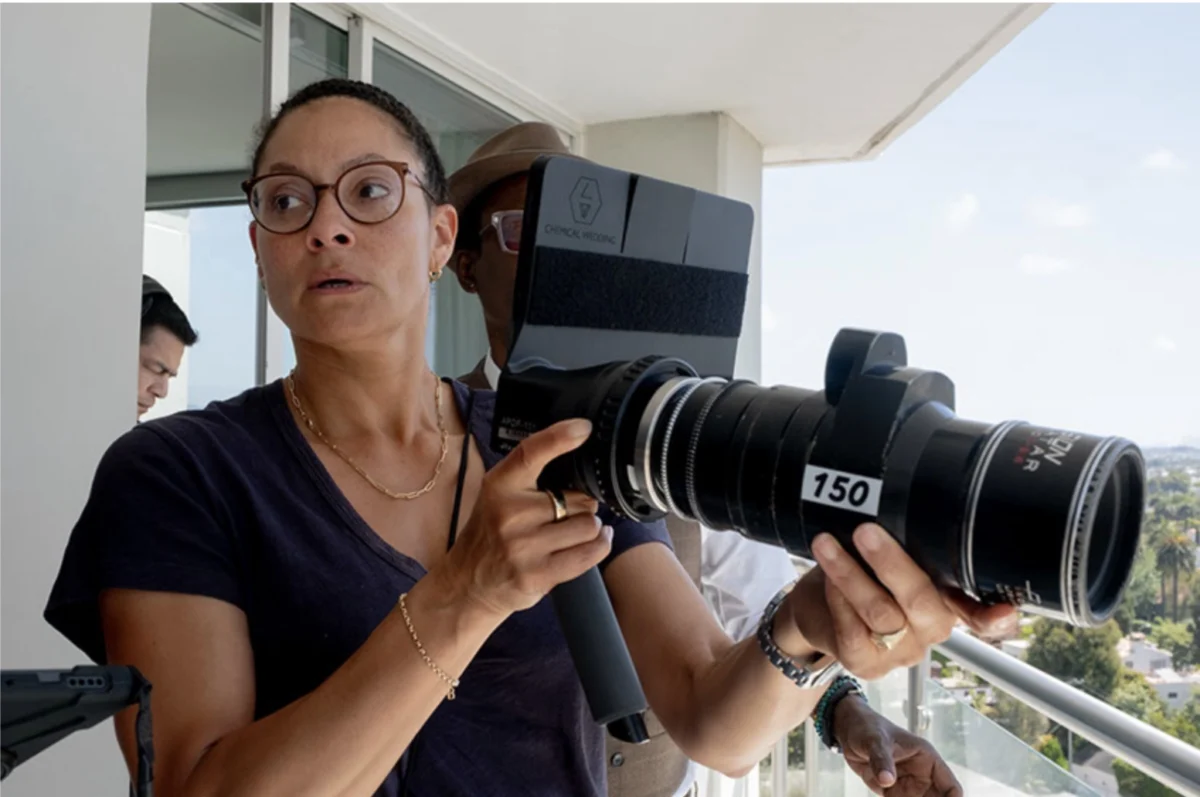
Inside the Glass and Sensors: Cinematographers Reveal the Gear and Craft Behind Fall’s Biggest Festival Hits
The autumn film festival circuit—spanning the rugged vistas of the Telluride Film Festival, the sprawling urban hubs of the Toronto International Film Festival (TIFF), and the prestigious cultural epicenter of the New York Film Festival (NYFF)—serves as the ultimate testing ground for cinematic storytelling. Beyond the red carpets, the critical discourse, and the early Oscar buzz, these festivals represent a massive technical showcase. They offer a rare, unfiltered look at the tools shaping contemporary cinema.
In one of the most comprehensive camera surveys ever conducted, IndieWire reached out to the creative minds behind the features lighting up the fall festival screens. Asking three foundational questions—What format did you shoot? What cameras and lenses did you use? Why?—the publication gathered insights from 58 different Directors of Photography (DPs). Their responses reveal not merely a list of technical specifications, but a masterclass in problem-solving, artistic restraint, and the myriad creative paths that lead contemporary filmmakers to trusted industry standards like the ARRI ALEXA 35.
Main Facts: The 2026 Fall Festival Camera Survey
The data and qualitative responses gathered from this year’s cohort of cinematographers paint a vivid picture of modern production workflows. While digital sensors continue to dominate, the conversation has largely shifted away from raw resolution toward questions of texture, emotional resonance, and optical character.
Scope of the Survey: Fifty-eight cinematographers representing feature films screened at Telluride, Toronto, and New York participated.
The Dominant Workhorse: While a multitude of formats and sensor packages were deployed, the ARRI ALEXA 35 reaffirmed its status as an industry benchmark, proving that diverse artistic roads frequently converge on this particular digital cinema camera.
Philosophical Divides: DP approaches ranged wildly from old-school, tactile lens experimentation and low-tech diffusion (including the strategic use of Vaseline) to austere, conceptual black-and-white framing and strict visual restraint.
Core Takeaway: Equipment selection is rarely just a technical checkbox; it is an active narrative participant designed to combat the unique constraints of tight schedules, archival blending, and low-light environments.
Chronology: From Festival Selection to Technical Breakdown
To understand how these cinematic visions came to life, it is necessary to examine the pipeline from pre-production conceptualization to the final projected image on festival screens.
Pre-Production and Camera Selection
Months before locking in their festival debuts, directors of photography sat down with their respective directors to translate scripts into visual languages. For some, like Gerald Kerkletz working on Rose, the choice was made before a single frame was shot: bypass color entirely to unearth a stark, uncompromising emotional truth. For others, like Alexandre Lampron on Ladies and Gentlemen, Bryan Mulroney, the approach required balancing a compressed multi-day shooting schedule against extensive historical archive footage.
Principal Photography and On-Set Adaptation
During the shoot, theory met immediate reality. Lampron’s crew had to move with lightning speed, relying on vintage tricks to unify newly captured footage with retro materials. Meanwhile, in Japan, Sean Price Williams navigated the sensory overload of Vintage Violence, fighting the urge to lean into regional gear clichés like Kowa lenses in favor of a cleaner, more direct aesthetic.
Post-Production and Festival Premieres
Once wrapped, the footage was graded and finalized, taking into account the massive projection screens of Telluride, TIFF, and NYFF. The ultimate test of these technical choices occurred in darkened festival theaters, where audiences and critics alike weighed the visual efficacy of these calculated risks.
Supporting Data: Navigating Constraints Through Technical Choices
The true value of the IndieWire survey lies in the granular details provided by the cinematographers. Their accounts highlight how technical parameters are manipulated to serve narrative goals.
1. Tactical Texture: Ladies and Gentlemen, Bryan Mulroney
Operating under severe time constraints, cinematographer Alexandre Lampron and director Matthew Rankin faced the daunting task of blending contemporary cinematography with extensive archival photography. Their secret weapon wasn’t a high-end digital filter suite, but unapologetic, old-school analog trickery.
"I’ve shot a couple of projects with Matthew Rankin, and on each of them we used special diffusion filters, even great quantities of Vaseline, but mainly the now infamous star filter (10 spikes), which is, to my surprise, so underrated," Lampron explained.
Beyond adding a distinct visual flair, the star filter performed heavy lifting in the camera’s optical chain. According to Lampron, it successfully lifted contrast and softened the digital edge of the image’s overall sharpness. This created a harmonious visual bridge when paired with Patricia McNeil’s elaborate, custom-built costume constructed from thousands of shimmering rhinestones.
2. The Purist’s Paradox: Rose
For Rose, director Markus Schleinzer and cinematographer Gerald Kerkletz deliberately rejected contemporary color palettes to engage audiences on a deeper psychological level. Eschewing the safety net of color, they leaned entirely into black-and-white cinematography.
"[Director] Markus Schleinzer and I weren’t interested in a ‘historical’ or a ‘period’ look. For me, the first is an illusion, while the second usually says more about the era a film was made in than the one it is set in," Kerkletz noted.
Kerkletz emphasizes that removing color does not mean surrendering information; rather, it forces visual elements to condense. What remains on screen carries immense weight, rendering black-and-white an intensely demanding, unforgiving medium that strips away superficial distractions to expose raw human truths.
3. The Power of Restraint: Vintage Violence
Choosing glass for a feature can easily fall into the trap of fetishization. Sean Price Williams, DP of Vintage Violence, experienced this firsthand while shooting on location in Japan alongside director Eugene Kotlyarenko.
“It’s usually a whim, not a strategy. I knew our leads are pretty people, so I picked pretty lenses. I am sure I was tempted to use Kowa lenses since we were in Japan, and Eugene and I definitely considered anamorphic, but I think it would have been a choice of fetish," Williams admitted.
By exercising strict restraint and resisting the urge to over-engineer the optical package, Williams ensured that the film maintained a simple, classic, and unpretentious visual rhythm that honored its punk-rock character portraits without distraction.
Official Responses and Industry Insights
The collective feedback from the festival circuit’s leading cinematographers underscores a broader industry evolution. While camera manufacturers continue to push the envelope with higher resolutions, broader dynamic ranges, and advanced low-light capabilities, the artistic community remains deeply focused on character—the optical imperfections, flares, diffusion artifacts, and formatting choices that give digital cinema a pulse.
Across the board, the survey illustrates that gear selection is not a one-size-fits-all endeavor. Whether navigating the logistical hurdles of a fast-paced indie shoot, capturing the stark poetry of black-and-white framing, or reigning in gear fetishism in favor of pure narrative clarity, today’s DPs treat every piece of glass and silicon as an extension of the script’s emotional core.
What do these festival surveys mean for the broader landscape of independent filmmaking?
First and foremost, they democratize technical knowledge. By laying bare the exact methodologies used by top-tier DPs to solve complex production hurdles—such as low-light shooting, rapid location moves, and seamless archival blending—aspiring filmmakers gain a roadmap for their own projects.
Second, the trend toward tactile, organic image manipulation (as seen in Lampron’s use of star filters and Vaseline) signals a strong counter-movement against clinical, hyper-sharp digital perfection. As cameras become increasingly capable of pristine capture, cinematographers are increasingly finding their artistic voice in how they intentionally disrupt, soften, and shape that light before it ever hits the sensor.
Ultimately, the fall festival camera survey proves that while cameras like the ARRI ALEXA 35 provide a reliable foundation, the magic of cinema continues to live in the choices made in front of the lens.