
Inside the Creative Engine of ‘Hazbin Hotel’: Vivienne Medrano on Scaling Hell’s Most Profane Musical Comedy
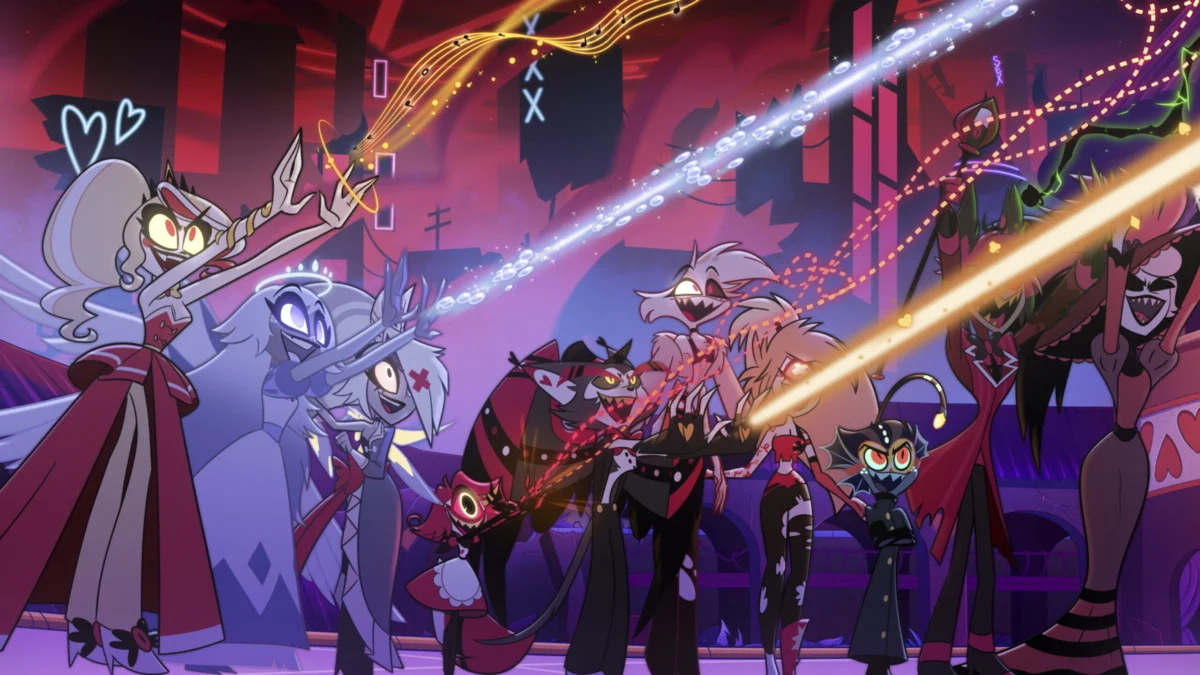
For any independent creator, the chasm between a fully realized vision in one’s head and the practical execution on screen is vast. It requires resources, institutional backing, and an army of talented collaborators. When that vision happens to be Hazbin Hotel—a profane, profoundly funny, and occasionally deeply poignant animated musical about Lucifer’s daughter attempting to rehabilitate damned souls while battling the administrative and militant forces of both Heaven and Hell—the challenge multiplies exponentially.
What began as an independent pilot uploaded to YouTube by creator Vivienne Medrano has blossomed into a juggernaut of adult animation. Following the conclusion of its second season on Prime Video—part of a robust four-season order—the series has firmly cemented itself as a cultural touchstone. Balancing heavy action, theatrical musical numbers, body horror, and unabashed queer romance, Hazbin Hotel occupies a unique space in contemporary television. As the creative team looks ahead to the remaining seasons greenlit by Amazon, Medrano reflects on the arduous animation pipeline, the evolution of the characters through their voice actors, and the delicate tonal balancing act that defines Hell’s premier rehabilitation facility.
The Evolution of the Animation Pipeline: From YouTube Pilot to Prime Video Titan
The production ecosystem behind Hazbin Hotel is a complex, multi-tiered machine. The animation pipeline is a collaborative effort between Medrano’s independent studio, Spindlehorse Toons, and Bento Box Entertainment, backed by prestige studio A24. While the pipeline shares structural similarities with Spindlehorse’s sister series, Helluva Boss (which shares the same fictional universe), the sheer scale of Hazbin Hotel presents unprecedented hurdles.
"It’s a very complicated show, and the studio that took it on had never really done a show like ours before, so there’s been a lot of learning, a lot of growth," Medrano explained in an interview with IndieWire. "Because obviously, the scope of the show just keeps growing. I have to give a shoutout to the incredible board artists who’ve worked on the show, both past and present, because it’s not easy. And it shows on the screen."
This growing scope has transformed how the series is constructed from the ground up. While Season 1 was a high-stakes gamble to prove that the internet-born concept could sustain a full television format, Season 2 benefited from a more established runway.

"I will forever be obscenely proud of Season 1. We pulled off something really fucking hard," Medrano said. "With Season 2, I think what’s very cathartic for me is it was given more leeway. We had more time, in the runtime, to tell this story. Because I knew there was a future for the show, it was able to allow this story to be more focused, and we found the creative team that really meshed with and made the show better. So for all those reasons, I feel like Season 2 is kind of the bar now for the show. Like, it just looks and feels the way I always wanted the show to look and feel."
Chronology of a Dream: From Early Internet Concepts to Prime Video Success
To understand where Hazbin Hotel is heading after the cliffhanger ending of the Season 2 finale, "Curtain Call," it is essential to trace the project’s unconventional trajectory through the entertainment landscape:
- The Independent Era (2019): Vivienne Medrano releases the Hazbin Hotel pilot independently on YouTube, utilizing years of character designs and lore cultivated on platforms like Tumblr. The pilot becomes an overnight viral sensation, amassing tens of millions of views and building a fiercely loyal fanbase.
- The A24 Pickup (2020): Following the massive success of the pilot, indie powerhouse A24 options the property for television development, pairing Medrano with production partners to build a formal series pipeline.
- Prime Video Debut and Season 1 (2024): Hazbin Hotel premieres globally on Prime Video, breaking streaming records for new adult animated series. The show immediately secures a historic early renewal for a second season.
- Season 2 Expansion (2025–2026): Buoyed by guaranteed longevity, Season 2 airs with expanded runtimes and deeper narrative focus, culminating in a dramatic finale ("Curtain Call") that sets up major stakes for the previously confirmed Seasons 3 and 4.
Character Evolution Through Voice Performance
One of the most fascinating aspects of Hazbin Hotel’s production is the symbiotic feedback loop between Medrano’s original character archetypes and the actors cast to voice them. While characters often begin as broad conceptual sketches, the casting process fundamentally alters how Medrano writes and boards them.
"The voice just does so much to bring a character to life," Medrano notes. A prime example of this dynamic is Lucifer Morningstar, voiced by Broadway star Jeremy Jordan.
Initially, the Ruler of Hell was conceived as a very specific type of theatrical showman. "He was always meant to be this kind of goofy dad who was a big dreamer and like The Greatest Showman’s P.T. Barnum," Medrano explained. "I originally envisioned somebody for the role who was very silly, had comedy music at the forefront, very zany, but also very clean."

However, once Jordan stepped into the recording booth, the character shifted organically into something more vulnerable, vulgar, and affectionately melancholic.
"He has now become my favorite character, due partially to Jeremy Jordan’s incredible characterization of him," Medrano said. "He just came in, and when he is in that booth, he is that character. I have no idea how he can come up with such fun line reads and such character-filled moments. It’s really amazing. So now we know how he performs Lucifer, I’m able to write him much more naturally… I really do think the cast helps dictate a lot of how we’re writing these characters, and I really love that."
Supporting Data: The Musical Architecture of Hell
Music is the lifeblood of Hazbin Hotel, separating it from standard adult animation fare by leaning heavily into Broadway-caliber composition. The writing room operates on a deliberate structural matrix regarding musical numbers, dividing them into three distinct categories:
- "Wants": Character-driven exploratory pieces that establish personal desires (e.g., Niffty’s chaotic spotlight in Season 2).
- "Needs": Narrative-advancing songs required to move characters through emotional breakthroughs or plot turns (such as the beloved Season 1 duet "Loser, Baby").
- "Original Vision": Long-conceived showpiece songs that Medrano has envisioned since her early days developing the universe’s lore.
As the series progresses into its later seasons, the writers increasingly get to deploy these long-awaited "original vision" numbers, blending them with spontaneous room prompts. For instance, the decision to give Kimiko Glenn’s Niffty a dedicated musical sequence in Season 2 stemmed from a simple room prompt: How can Niffty hijack a plot to make the hotel look bad while weirdly praising it? The resulting song showcases the collaborative firepower of the songwriting team meeting Medrano’s specific comedic prompt.
Balancing Tone: Cartoony Violence Meets Earnest Drama
Tonally, Hazbin Hotel walks a tightrope. Influenced by early Nickelodeon, Disney, and Warner Bros. animation styles mashed together through an alternative, edgy web-creator sensibility, the show balances graphic violence and mature themes with a distinctly bright, expressive aesthetic.

Medrano acknowledges the creative friction of working within this visual style when dealing with truly dark subject matter.
"There are times where I’m like, ‘I wish we could go darker.’ I just don’t know if my style is effective with it, especially in the violence. Like, I would love to push that further. But I am mindful that my style is inherently a lighter look," she noted. Comparing Hazbin to unsparingly visceral series like Invincible or Rick and Morty, Medrano points out that those shows possess styles inherently tailored to bodily disturbance, whereas Hazbin Hotel finds its unique flavor precisely in that tonal contrast.
This dichotomy extends to Medrano’s own perspective as an auteur. "I’m somebody who takes my world and my characters and my story obscenely seriously, but I don’t take myself that seriously," she said. "Like, ultimately, I know that just one person, with my edgy Tumblr OCs that I came up with when I was young… at the end of the day, this is a cartoon. That level of ‘we take ourselves seriously but we also don’t’ is baked into the DNA of tone and style of the show."
Industry Implications and Future Outlook
The trajectory of Hazbin Hotel marks a significant milestone in the evolution of modern animation distribution. By successfully bridging the gap between independent web-animation fandoms and major studio prestige production (via A24 and Prime Video), the series has established a viable roadmap for creator-driven properties.
Furthermore, the show’s massive engagement—spanning viral musical tracks, extensive merchandise, intense shipping communities (such as the devoted "Huskerdust" fandom), and critical awards conversations—proves that adult animation with serialized musical structures can capture mainstream cultural dominance.

As Prime Video supports the series through its previously ordered subsequent seasons, the creative team at Spindlehorse Toons faces the enviable task of landing the intricate narrative arcs set up by Charlie Morningstar’s mission. With a solidified production pipeline, a deeply integrated voice cast, and a clearer-than-ever artistic vision, Hazbin Hotel has successfully transformed from a passionate internet experiment into a definitive pillar of modern television animation.
‘Hazbin Hotel’ Seasons 1 and 2 are currently streaming globally on Prime Video.
