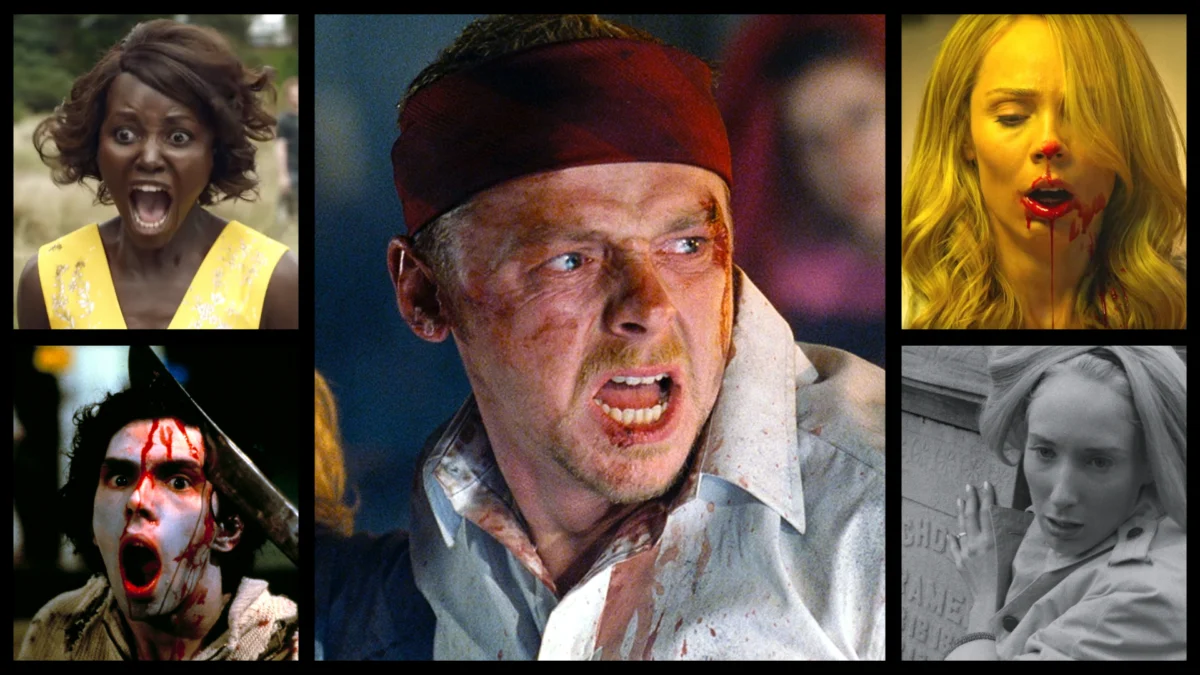
Beyond the Grave: Why the Zombie Movie Endures as Cinema’s Ultimate Cultural Mirror
LOS ANGELES — In Western culture, few subjects remain as thoroughly avoided as mortality. Despite the inevitable horizon awaiting every living human, modern society operates on an unspoken, obsessive belief that death can be outrun, dieted away, or technologically conquered.
From expensive superfood regimens and multi-billion-dollar anti-aging industries to intense fitness cultures, the underlying message is clear: if we try hard enough, we might just live forever.
Enter the zombie. The cinematic undead do not just terrorize the silver screen; they shatter the fragile illusion of human invulnerability. By confronting audiences with the animated, decaying versions of their own future corpses, zombie films strip away denial and force viewers to look death directly in the eye—often while running for their lives.
Yet, beneath the visceral thrills, flying limbs, and apocalyptic chaos, the zombie genre has proven to be far more than cheap B-movie shock value. Over the decades, filmmakers have utilized the undead as a razor-sharp canvas for socio-political commentary, exploring everything from systemic racism and colonial exploitation to mindless consumerism and hyper-connected isolation.
As IndieWire updates its definitive ranking of the 24 greatest zombie films ever made, critics and historians are taking a closer look at how a genre built on rotting flesh managed to develop such profound cultural brains.
Main Facts: The Anatomy of the Undead Genre
To understand the enduring appeal of zombie cinema, one must first dismantle the mechanics of the monster itself. Unlike vampires, who retain a seductive, aristocratic allure, or slashers, who represent repressed human psychopathy, zombies are the ultimate leveler. They are democratic monsters: anyone, regardless of status, wealth, or background, can become one.
The modern cinematic zombie traces its philosophical roots to folklore and Caribbean traditions—specifically Haitian voodoo, where a "zabi" or zombie represented a soulless body trapped in forced servitude. Early Hollywood adaptations tapped into these anxieties, but it was not until the late 20th century that the genre found its modern footing as both a terrifying monster feature and an incisive social mirror.
Today, the genre is broadly divided into two stylistic camps:
The Romero-esque Shufflers: Slow, methodical, and relentless corpses popularized by George A. Romero, where the true horror often stems not from the monsters themselves, but from how surviving humans tear each other apart.
The Modern Sprinters: Fast, adrenaline-fueled, hyper-aggressive infected humans (seen in films like 28 Days Later or the Dawn of the Dead remake) that mirror the accelerated, frantic pace of contemporary life.
Despite these shifts in velocity, the core appeal remains unchanged: the zombie serves as a visceral reminder of human fragility and societal decay.
Chronology: The Evolution of the Living Dead
The trajectory of zombie cinema is a fascinating timeline of cultural anxiety, evolving alongside the political and social shifts of the 20th and 21st centuries.
1. The Early Roots and Colonial Anxieties (1940s)
Long before the flesh-eating ghouls of the color era, cinema explored the walking dead through the lens of psychological mystery and colonial dread. Jacques Tourneur’s 1943 classicI Walked With a Zombie stands as a watershed moment for the genre. Set on a Caribbean sugar plantation, the film explicitly tackled the legacies of slavery, colonization, and racial oppression. Rather than relying on graphic violence, the movie used atmospheric dread to explore how historical trauma haunts the living.
2. The Romero Revolution and the Birth of Modern Horror (1968–1978)
If the 1940s established the template, George A. Romero shattered it. With 1968’s micro-budget masterpiece Night of the Living Dead, Romero fundamentally reinvented horror. The film introduced flesh-eating ghouls and, crucially, cast Duane Duane—a Black actor—in the lead role, culminating in a devastating, racially charged final scene that reflected the raw civil rights tensions of late-1960s America.
A decade later, Romero doubled down on his satirical bite with 1978’s Dawn of the Dead. Relocating the apocalypse to a suburban shopping mall, Romero transformed the mindless horde into a brilliant, biting critique of all-American consumer capitalism, portraying shoppers as literal zombies seeking out retail havens.
3. International Expansion and the Digital Age (2000s–Present)
As the new millennium dawned, the zombie genre exploded globally. British cinema injected panic back into the formula with Danny Boyle’s 28 Days Later (2002), introducing terrifyingly fast-moving infected subjects. Simultaneously, comedies like Edgar Wright’s Shaun of the Dead (2004) used the genre to satirize the numbing effects of modern routine and post-internet isolation, where people shuffle through their daily lives entirely detached from reality.
International entries like South Korea’s Train to Busan (2016) further revitalized the genre by infusing high-octane action with deeply emotional family dynamics and sharp class critiques.
Supporting Data: By the Numbers
While box office figures fluctuate, the economic and cultural footprint of zombie media remains staggering across film, television, and video games:
24 Films: The scope of IndieWire’s newly updated definitive ranking of the greatest zombie movies ever made, curated with contributions from top film critics including Christian Blauvelt, Alison Foreman, Tambay Obenson, Eric Kohn, Ryan Lattanzio, and Leonardo Adrian Garcia.
Decades of Commentary: Spanning over 80 years of cinematic history—from 1943’s I Walked With a Zombie to modern streaming sensations.
Cultural Saturation: According to entertainment data analysts, zombie-themed television properties (such as AMC’s The Walking Dead franchise) have generated billions of dollars in global merchandising and streaming revenue over the past fifteen years, proving that audiences never truly tire of the apocalypse.
Official Responses and Critical Consensus
Industry experts and film historians have long championed the genre for its unexpected intellectual depth. Far from being dismissed as a transient fad, zombie cinema has earned a permanent seat at the table of serious film scholarship.
"When you look at the history of the genre, these movies have brains," notes IndieWire’s editorial staff in their retrospective analysis. "Zombies have long been a tool for filmmakers for satire and contemporary critique. Whether tackling the legacy of slavery or the emptiness of consumerism, the walking dead tell us profound truths about who we are."
Filmmakers themselves have frequently echoed this sentiment. George A. Romero famously noted in interviews that his monsters were never just about gore; they were blank slates onto which society could project its deepest collective fears, from nuclear annihilation to racial division.
Modern directors continue to find fresh angles within the tropes. As isolation, political polarization, and digital addiction define the 2020s, contemporary horror creators are utilizing the zombie metaphor to explore how modern humans are increasingly cut off from one another—sharing physical spaces while remaining utterly disconnected.
Implications: Why We Keep Coming Back to the Apocalypse
What does the persistent fascination with zombie movies reveal about the human condition in the 21st century?
First and foremost, the genre offers a strange form of catharsis. In an era defined by overwhelming global crises—ranging from political instability to climate anxiety and rapid technological shifts—the zombie apocalypse represents a simplified, albeit terrifying, scenario. In a fictional wasteland, the rules are clear: survive, protect your loved ones, and identify the enemy. Complex bureaucratic and societal issues are reduced to a tangible physical threat that can be confronted head-on.
Furthermore, zombie films remind us of the value of our shared humanity. The most compelling stories in the genre—from Night of the Living Dead to Train to Busan—invariably focus on how human beings treat one another under extreme pressure. Often, the true monsters are not the reanimated corpses shambling down the street, but the paranoid survivors hoarding resources and turning on their neighbors.
Ultimately, as IndieWire’s updated rankings demonstrate, zombie cinema is not about celebrating death; it is a celebration of life through the lens of its absolute opposite. By looking at what happens when humanity is stripped away, these films remind us of what it means to be truly alive.
So, before making your final funeral arrangements or panicking over the next health trend, take a moment to appreciate the cinematic undead. They may want to eat your brains, but they just might help you use them, too.
Related posts:
Beyond the Veil of Wakanda: How Black Panther: Wakanda Forever Redefined Grief, Cinema, and Craft