
Behind the Laughter and the Madness: Re-Examining Martin Scorsese’s Masterpiece The King of Comedy
Main Facts: A Cinematic Collision of Icons
Released in 1982 and hitting theaters in early 1983, The King of Comedy stands as one of the most daring, darkly prophetic, and uncomfortable viewing experiences in American cinema. Directed by Martin Scorsese—an AFI Life Achievement Award honoree—the film brings together a powerhouse of cinematic royalty. It stars Robert De Niro, another esteemed recipient of the American Film Institute’s highest honor, in a chilling performance as Rupert Pupkin, a desperate, delusional aspiring stand-up comic. Opposite De Niro is screen legend Jerry Lewis, playing talk show host Jerry Langford, a man whose real-life mastery of comedy anchors the film’s tense, unsettling atmosphere.
Behind the scenes, the film was meticulously shaped by Scorsese’s frequent collaborator, Academy Award-winning editor and AFI Honorary Degree recipient Thelma Schoonmaker. While initially a commercial disappointment upon its initial theatrical run, The King of Comedy has grown over the decades into a critical darling. It is widely recognized as a pioneering exploration of celebrity obsession, media sensationalism, and the blurred lines between fame and notoriety—themes that resonate even more fiercely in the era of social media influencers and 24-hour news cycles.
Chronology: From Script Conception to Cultural Re-Evaluation
The Genesis and Production (Early 1980s)
The journey of The King of Comedy began with scriptwriter Paul D. Zimmerman, a former Newsweek film critic who penned the screenplay in the late 1970s. Initially, director Bob Fosse and comic actor Johnny Carson were linked to the project. However, after reading the script, Robert De Niro championed the material, bringing it directly to Martin Scorsese following their triumphant collaboration on Raging Bull (1980).
Scorsese, who had just completed the brutal black-and-white biopic of Jake LaMotta, was initially hesitant to dive straight into another feature. Yet, the script’s unique tonal blend of pitch-black comedy and psychological drama proved irresistible. Production commenced in the summer of 1981, largely shot on location in New York City. The shoot was noted for its disciplined rehearsal process, where De Niro and Scorsese meticulously mapped out Pupkin’s awkward posture, twitchy mannerisms, and terrifyingly delusional optimism.
The 1983 Theatrical Release and Initial Reception
Distributed by 20th Century Fox, The King of Comedy premiered in February 1983 to a largely baffled public and mixed critical reception. Audiences accustomed to the slick entertainment of the early ’80s—or expecting a broad comedy given the presence of Jerry Lewis—found themselves deeply unsettled by the film’s lack of traditional catharsis.
Box office returns were notoriously dismal, failing to recoup its modest budget. Critics like Pauline Kael championed the film’s audacity, but mainstream reviewers struggled to categorize a dark satire that lacked a moral compass or a sympathetic hero. For years, the film remained an overlooked outlier in Scorsese’s otherwise celebrated filmography, often overshadowed by blockbusters and gritty crime dramas like Taxi Driver (1976) and GoodFellas (1990).
The Critical Renaissance and Legacy (21st Century)
As decades passed, the cultural landscape began to catch up to The King of Comedy. With the explosion of reality television, internet celebrity culture, and parasocial relationships, Rupert Pupkin’s desperate quest for "better to be king for a night than schmuck for a lifetime" transformed from an aberration into a modern social blueprint.
By the 2010s and 2020s, retrospectives by the American Film Institute and film festivals worldwide cemented the movie’s status as a masterpiece. Its DNA could be explicitly traced in modern cinematic psychological studies of alienation, most notably Todd Phillips’ 2019 blockbuster Joker, which directly homaged the narrative framework and casting dynamics of Scorsese’s classic.
Supporting Data: Production Metrics and Critical Standing
While The King of Comedy struggled commercially upon release, its historical metrics and critical re-evaluation paint a striking picture of a film ahead of its time:
- Box Office Performance: Made on an estimated budget of roughly $19 million, the film grossed a meager $2.5 million domestically, making it one of the most significant financial misfires of Scorsese’s career at the time.
- Rotten Tomatoes Consensus: Over the years, the film has achieved critical acclaim, holding a high approval rating on aggregate review platforms, frequently cited by modern critics as one of the best films of the 1980s.
- AFI Accolades: The project serves as a convergence point for American Film Institute royalty. Martin Scorsese received the AFI Life Achievement Award in 1997, Robert De Niro received the same accolade in 2003, and editor Thelma Schoonmaker—whose cut gives the film its brisk, rhythmic unease—was honored with an AFI Honorary Degree.
- Award Recognition: Despite its initial box office failure, the film won the BAFTA Award for Best Original Screenplay (Paul D. Zimmerman) and was nominated for several other international awards, including the prestigious Palme d’Or at the 1983 Cannes Film Festival, where it served as the opening night film.
Official Responses and Creative Insights
The unique nature of The King of Comedy drew fascinating reflections from its primary creators, who recognized early on that they were making something fundamentally disruptive.
Martin Scorsese often discussed how the film was a deliberate stylistic departure from his previous works. Rather than utilizing sweeping camera movements and frantic pacing, The King of Comedy relies on static, formal framing that mimics the look of television broadcasts and late-night talk shows. Scorsese noted in retrospective interviews that he wanted to strip away the glamour of show business to expose the hollow desperation underneath.
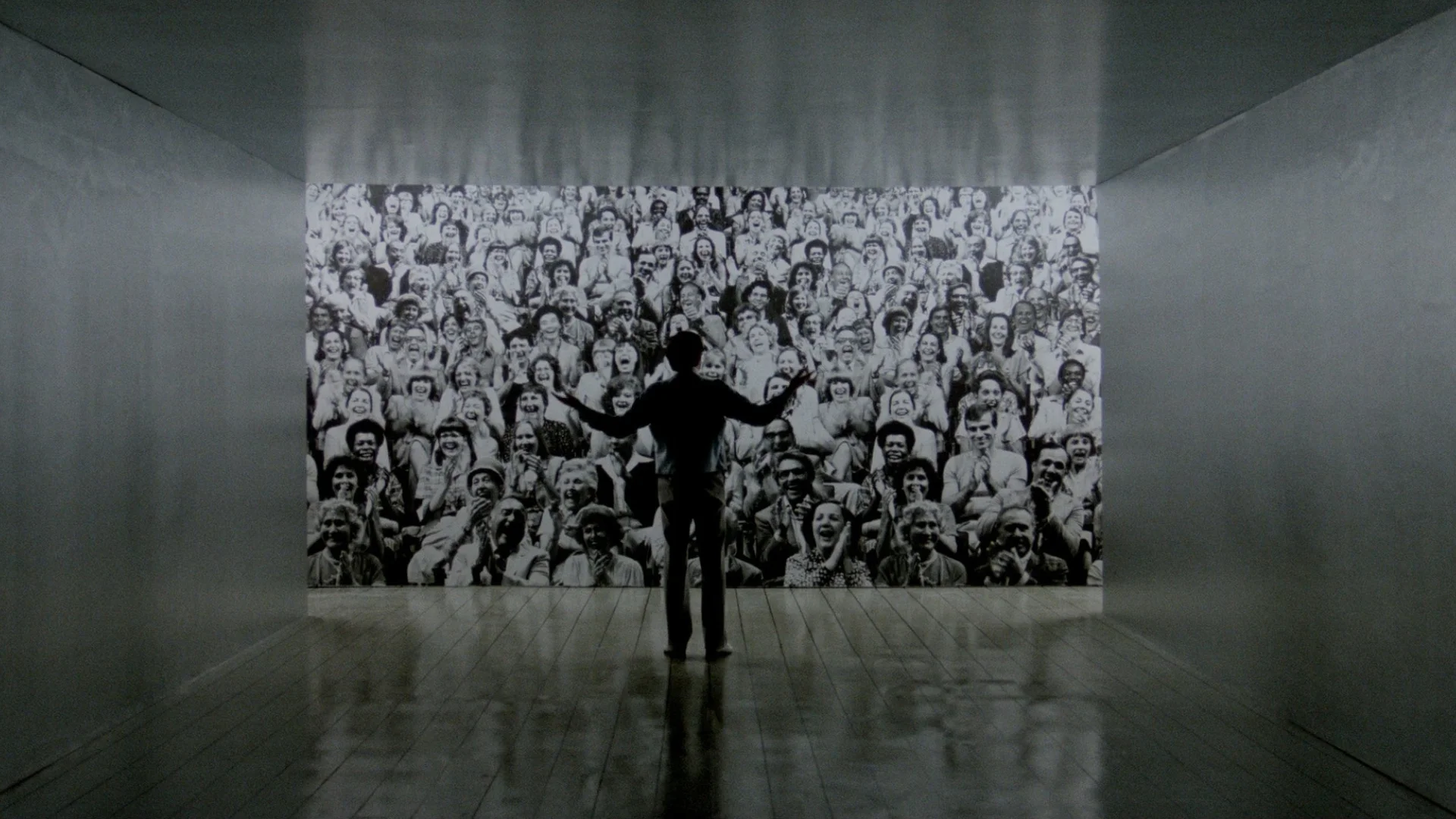
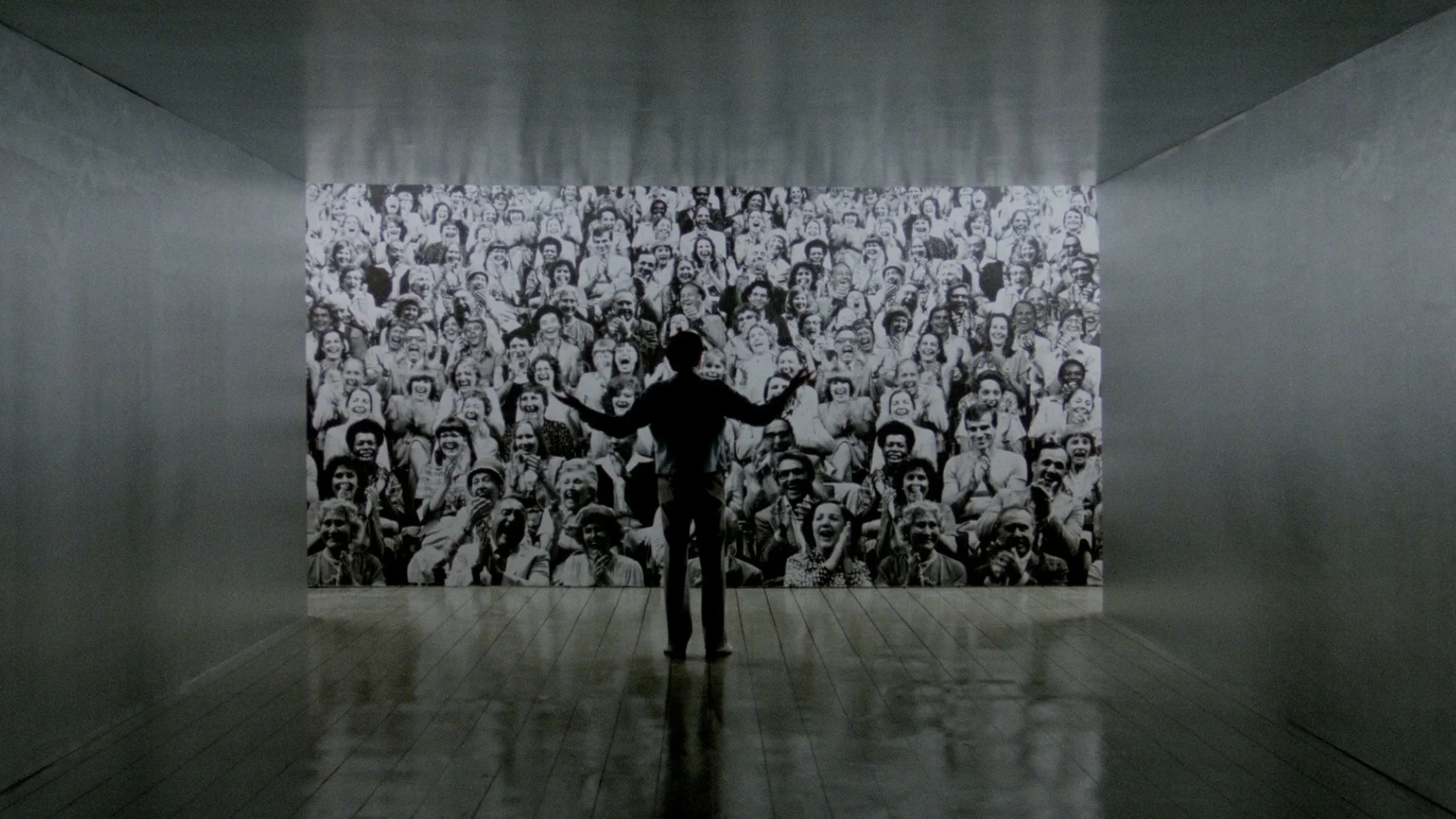
Robert De Niro’s preparation for the role involved studying real-life celebrity stalkers and obsessive fans to understand the psychological mechanisms of delusional grandeur. De Niro’s portrayal of Rupert Pupkin—who practices his stand-up routine in a basement cardboard cutout of a TV studio audience—remains one of the actor’s most meticulously crafted character studies.

Jerry Lewis, who played the straight man to perfection, brought a wealth of authentic personal experience to the role of Jerry Langford. As a genuine icon of television and comedy, Lewis drew upon his own exhaustion with intrusive fans and the relentless demands of public life. His performance is a masterclass in controlled exasperation, providing a stark, grounded anchor against De Niro’s manic delusions.
Implications: A Prophetic Vision of Modern Media
The true weight of The King of Comedy lies in its chillingly accurate prediction of 21st-century media culture. Long before the advent of social media, viral fame, and influencer culture, Scorsese and Zimmerman understood the intoxicating allure of the spotlight.
The Democratization of Infamy
In the film, Rupert Pupkin famously declares that he would rather be infamous than a nobody, famously stating that being "king for a night" justifies any destructive means necessary. Today, this sentiment is echoed across digital platforms where notoriety is frequently monetized, and the boundaries between private individuals and public celebrities have completely collapsed. The film anticipated an era where the public no longer just wants to consume entertainment; they demand to be the entertainment, regardless of the ethical or psychological cost.
Parasocial Relationships and Mental Health
Furthermore, The King of Comedy serves as an early cinematic exploration of severe parasocial delusions. Rupert Pupkin’s inability to distinguish between the persona Jerry Langford projects on television and the actual human being highlights the psychological dangers of modern media consumption. As audiences grow increasingly isolated in digital ecosystems, the themes of loneliness, unearned entitlement, and the desperate cry to be "seen" by a faceless mass audience remain profoundly relevant.
Ultimately, The King of Comedy endures not merely as a dark satire of the television age, but as a timeless cautionary tale about the perils of ambition without boundaries—a brilliant, unsettling masterwork that continues to challenge, captivate, and disturb audiences worldwide.
