
Yashica Revives the Budget Point-and-Shoot Era with the $168 "Crew" Compact Camera
Main Facts
The digital photography market is witnessing a fascinating paradox. While flagship mirrorless cameras routinely cross the multi-thousand-dollar threshold, boasting complex computational photography engines and massive full-frame sensors, a parallel grassroots movement is championing the aesthetic imperfections of early-2000s compact digital cameras. Capitalizing on this booming nostalgic trend, the historic imaging name Yashica has returned with its latest pocket-sized offering: the Yashica Crew.
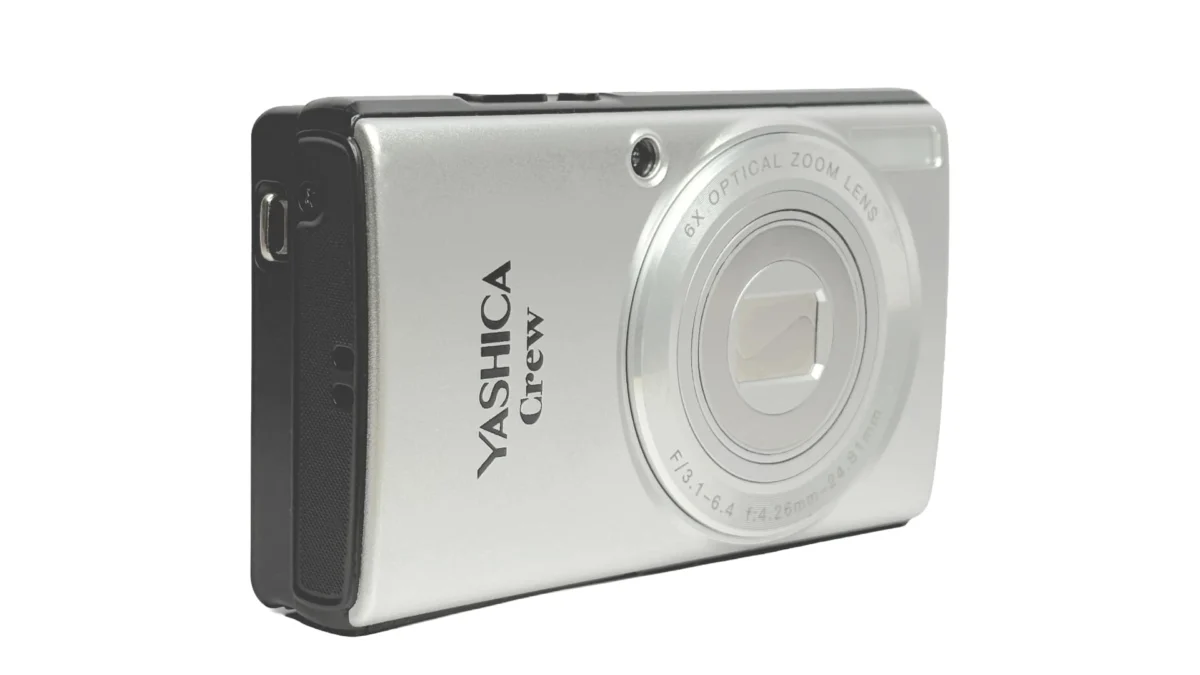
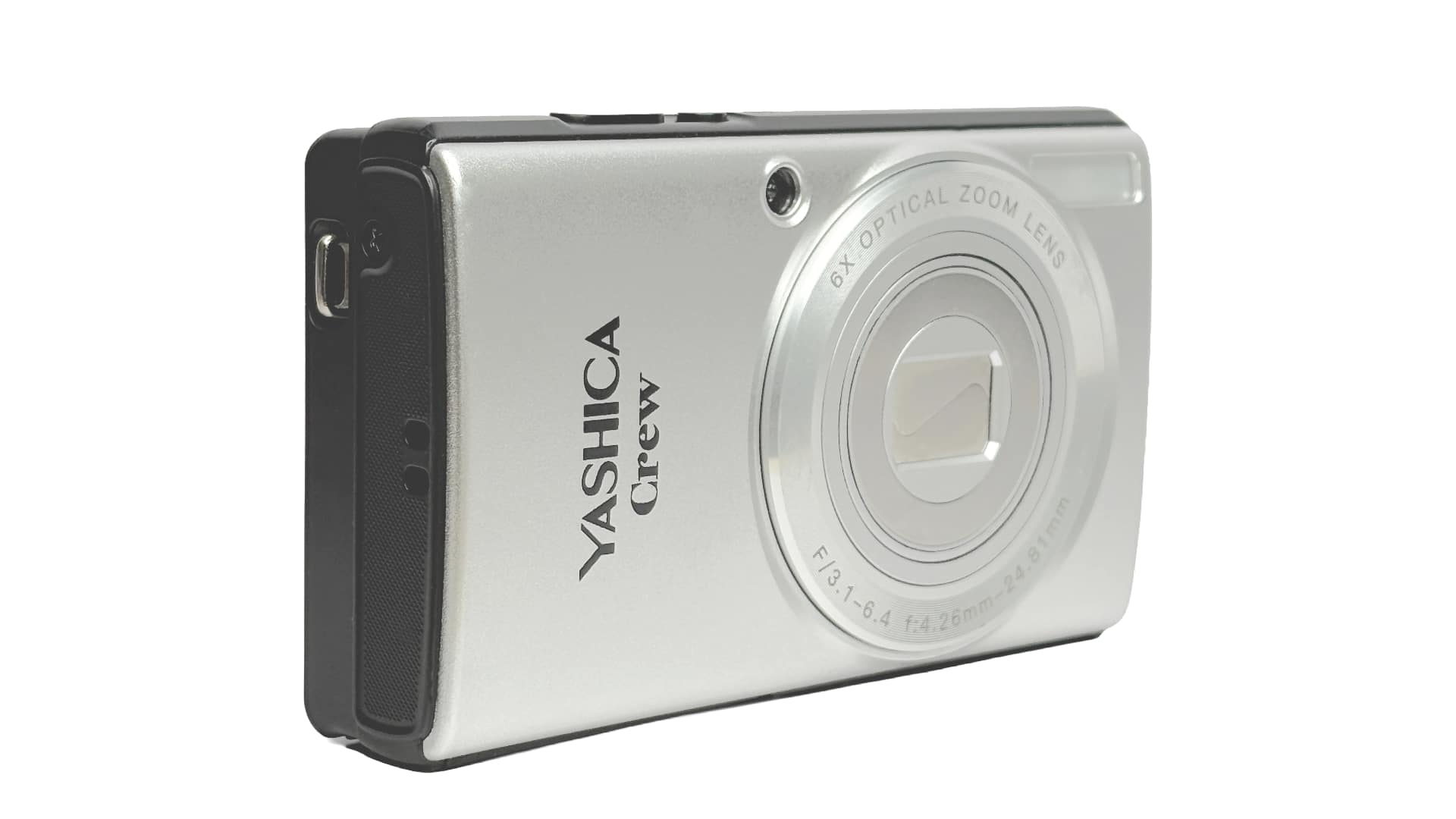
Priced aggressively at $168, the Yashica Crew is designed to emulate the golden era of point-and-shoots pioneered by legendary models like the Canon PowerShot and Nikon CoolPix series. Despite its budget-friendly positioning, the camera manages to squeeze an impressive array of modern specifications into its diminutive frame. The device features a retractable 6x optical zoom lens (paired with an additional 3x digital zoom), a flexible 3.0-inch 180-degree flip screen tailored for content creators and casual vloggers, and video recording capabilities that stretch up to 4K resolution at 60 frames per second.
Measuring a mere 10 x 2.6 x 6 cm (3.9 x 1 x 2.4 inches) with its lens fully retracted and weighing an ultra-light 126 grams (4.4 ounces) without its battery, the Crew easily slips into a pocket or small bag. It is powered by a removable 700 mAh lithium-ion battery—a practical inclusion that separates it from disposable or completely sealed budget alternatives—and recharges conveniently via a modern USB-C port.
Currently offered in two classic colorways, Black and Silver, the Yashica Crew is available for pre-order directly through the official Yashica website, with the first wave of global shipping slated to commence in late October.
Chronology
To fully understand the arrival of the Yashica Crew, it is necessary to examine the winding, often unpredictable historical timeline of the Yashica brand itself—a journey marked by optical brilliance, corporate decline, and a modern digital resurrection.
The Golden Era of Film and Zeiss Collaboration
Founded in Japan in 1949 as Yashica-muri Seisakusho, the company initially manufactured electronic components before pivoting to cameras. Throughout the 1950s, 60s, and 70s, Yashica built a stellar global reputation for producing reliable, high-quality twin-lens reflex (TLR) cameras, rangefinders, and 35mm film cameras like the iconic Yashica Electro 35.
In 1983, the brand was acquired by the prominent ceramic and electronics corporation Kyocera. This era birthed some of Yashica’s most revered achievements, most notably the collaboration with legendary German optics manufacturer Carl Zeiss. Cameras bearing the Yashica and Contax monikers, equipped with Zeiss T* lenses, became the gold standard for street and travel photographers, cementing the brand’s legacy in the annals of photographic history.
Decline, Sale, and the Kickstarter Era
As the photography market rapidly transitioned to digital in the late 1990s and early 2000s, Kyocera struggled to maintain profitability in the hyper-competitive imaging sector. In 2005, Kyocera officially ceased production of Contax and Yashica-branded cameras, effectively shelving a legendary name.
The brand’s trademark changed hands multiple times before being acquired by the Hong Kong-based enterprise MF Jebsen Group under the umbrella of Yashica International. In a bid to re-establish relevance, the revitalized brand made its public return in 2017 via a heavily publicized Kickstarter campaign for the "Y35" digital camera—a conceptual device that used physical "digi-film" canisters to simulate the analog shooting experience. While the campaign successfully raised millions of dollars, the product itself received a lukewarm reception from critics who felt the execution fell short of the nostalgic premise.
The Modern Pivot and the Launch of the Crew
Following the lessons learned from niche conceptual products, Yashica shifted its commercial strategy toward the volume end of the consumer market. Recognizing that younger generations—particularly Gen Z—were driving a massive cultural obsession with early digital camera aesthetics on social media platforms like TikTok and Instagram, the company began rolling out affordable, retro-styled point-and-shoots. The introduction of the Yashica Crew represents the latest, most refined step in this strategy, attempting to marry vintage-inspired styling with modern technical conveniences.
Supporting Data
A closer examination of the Yashica Crew’s technical datasheet reveals a device carefully engineered to balance cost, performance, and modern expectations, though certain compromises become apparent under scrutiny.
Optics, Sensor, and Imaging Performance
The optical heart of the Yashica Crew is its retractable lens, featuring an aperture range of F3.1 to F6.4 and a focal length of f=4.26-25.56mm. When powered on, the lens extends smoothly from the chassis; upon shutdown, it retracts flush with the body, protecting the glass during transport.
At the capture end, the camera houses a 13-megapixel, 1/3.06-inch image sensor. Interestingly, the device’s marketing materials highlight video recording capabilities up to 4K (3840 x 2160) at 60 fps, alongside native 2.7K video support. For still photography, the camera claims to capture images up to 36 megapixels, alongside intermediate 24-megapixel and native 13-megapixel options. Photographic experts note that these higher resolution figures for both stills and video are almost certainly the result of onboard digital upscaling, given the physical limitations of a 13-megapixel sensor of this size class.
Power, Connectivity, and Hardware Limitations
Practicality is a strong suit for the Crew. The inclusion of a removable 700 mAh Li-ion battery is a welcome feature, allowing users to swap in a spare during extended outings rather than being tethered to a portable power bank. Modern USB-C connectivity ensures fast recharging and straightforward data offloading.
However, industry reviewers have quickly pointed out one notable departure from the vintage cameras the Crew seeks to emulate: its flash system. Rather than featuring a traditional xenon flash bulb—which produces the harsh, high-contrast, direct-flash aesthetic that has become the signature look of the current Y2K compact camera revival—the Crew relies on an LED flash. While functional in low-light environments, the LED source lacks the distinct punch and character of historical xenon units, potentially leaving nostalgic purists wanting.
Official Responses
As the Yashica Crew opens for pre-orders, initial feedback from the photographic community and independent tech journalists has highlighted a mix of excitement and cautious skepticism.
Industry publications, including a detailed evaluation by PetaPixel, have praised Yashica for successfully hitting a very accessible price point while delivering features that modern consumers expect—such as a flip-screen for content creation and USB-C charging. Critics note that the camera easily matches the physical charm and portability of historical point-and-shoots, filling a physical void left by smartphone-dominated pockets.
At the same time, reviewers have been quick to temper expectations regarding image quality. Tech commentators emphasize that while the Crew offers a fun, tactile shooting experience and a distinct break from computational smartphone photography, its hardware cannot compete with modern smartphone sensors or dedicated, high-end mirrorless systems. The reliance on digital upscaling for high-resolution modes and the substitution of xenon for LED flash have been frequent points of discussion among photography enthusiasts analyzing the product’s market positioning.
Yashica, for its part, positions the Crew as an accessible entry point for everyday creators, street photographers, and casual users who want to disconnect from their smartphones and enjoy a dedicated, lightweight physical camera experience without financial strain.
Implications
The launch of the Yashica Crew carries broader implications for the photography industry, consumer electronics manufacturing, and the ongoing cultural phenomenon of retro nostalgia.
The Democratization of Retro Aesthetics
The viral resurgence of early-2000s compact digital cameras—often colloquially referred to as "digicams"—has driven used-market prices for vintage models from brands like Canon, Olympus, and Sony to unprecedented heights. Devices that once sat collecting dust in thrift stores or garage sales now command steep prices on online marketplaces. By introducing a brand-new, modernly produced compact camera for under $170, Yashica is offering an alternative to inflated vintage market prices. If the Crew proves commercially successful, it could pave the way for other legacy brands to manufacture budget-friendly, retro-styled digital cameras tailored specifically to younger demographics.
The Content Creator Economy
The inclusion of features like a 180-degree flip screen and 4K60 video recording underscores how deeply modern consumer electronics are shaped by social media culture. The Yashica Crew is not marketed solely as a traditional stills camera; it is positioned as a versatile content-creation tool. By combining a classic aesthetic look with modern vlogging necessities, Yashica is tapping into the massive pool of influencers and lifestyle creators looking for a unique visual signature that separates their content from standard smartphone footage.
A Counter-Movement to Computational Photography
Ultimately, the enduring appeal of cameras like the Yashica Crew reflects a growing consumer fatigue with hyper-processed, algorithmically perfected smartphone images. Modern smartphones rely heavily on artificial intelligence, multi-frame stacking, and computational smoothing to create technically flawless photographs. In contrast, simpler sensors and modest optics offer a more organic, raw, and nostalgic visual character. Devices like the Yashica Crew remind the market that photography is as much about the tactile experience of shooting and a distinct aesthetic point of view as it is about clinical optical perfection.
