
The Intellectual Pulse of Global Cinema: A Comprehensive Overview of Cinema Scope Issue 97
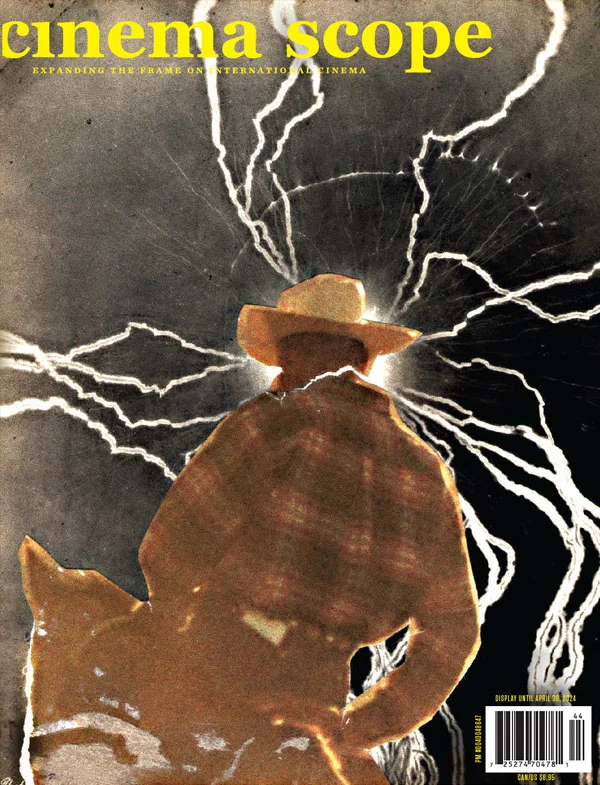
In the landscape of contemporary film criticism, few publications hold the prestige and intellectual rigor of Cinema Scope. As the magazine releases its 97th issue, it reaffirms its commitment to bridging the gap between high-theory film analysis and the visceral, often messy reality of the modern movie industry. This latest installment is a sprawling survey of the medium, covering everything from the meditative nature of Japanese auteurism to the mournful acknowledgments of lost legends.
For cinephiles and scholars alike, Issue 97 functions as both a time capsule and a roadmap, dissecting the films that defined the current cultural moment while providing a necessary historical lens through which to view them.
The Main Facts: A Diverse Editorial Scope
The core mission of Cinema Scope has always been to provide deep-dive analysis that eschews the ephemeral nature of daily "hot takes." In Issue 97, editor Mark Peranson curates a collection that spans four primary categories: Interviews, Features, Columns, and Currency.
The issue is characterized by its international breadth. It engages with the work of acclaimed directors like Ryusuke Hamaguchi and Frederick Wiseman, while simultaneously platforming experimental voices and historical retrospectives. The magazine does not merely review films; it interrogates them, exploring the mechanics of filmmaking, the politics of distribution, and the aesthetic philosophies that inform the most important works of our time.
Chronology of Content: From Vision to Legacy
The architecture of Issue 97 moves fluidly between the immediate and the eternal. The chronological flow of the magazine is designed to guide the reader through a multi-layered experience of cinema.
The Interrogative Approach: Interviews
The issue opens with a series of high-profile conversations that get to the heart of the creative process.
- Beatrice Loayza’s sit-down with Ryusuke Hamaguchi regarding Evil Does Not Exist offers a rare glimpse into the mind of one of Japan’s most precise filmmakers.
- Adam Nayman explores the intersection of music and media with Alex Ross Perry, focusing on Videoheaven and Pavements.
- Jordan Cronk examines the genre-defying nature of The Delinquents in a discussion with Rodrigo Moreno, while Antoine Thirion provides a dense, critical investigation into Dimitris Athiridis’ exergue – on documenta 14.
Historical Features and Roundtable Discussions
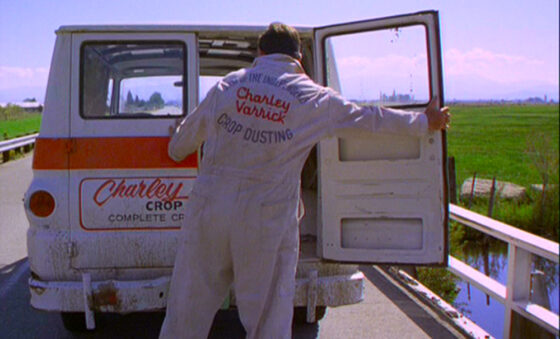
The feature section acts as the intellectual anchor of the issue. A standout is the roundtable discussion on Don Siegel’s Charley Varrick, where Veronika Franz and Severin Fiala join Christoph Huber to dissect the craft of independent crime cinema. This section also highlights critical archival work, such as Erika Balsom’s look at the First International Women’s Film Seminar and Thom Andersen’s observations on the shifting geography of "film tourists" in Los Angeles.
Supporting Data: The "Currency" of Modern Cinema
Perhaps the most accessible section for the average reader is "Currency," which provides a rigorous analysis of the films dominating the current discourse. By dedicating space to these titles, Cinema Scope provides a critical counterweight to the often-polarized opinions found on social media platforms.

| Film | Critic | Primary Focus |
|---|---|---|
| The Killer | Adam Piron | Aesthetic violence and character study |
| Killers of the Flower Moon | Robert Koehler | Historical weight and Scorsese’s late-period style |
| Menus-Plaisirs – Les Troisgros | Jay Kuehner | Wiseman’s observational documentary technique |
| Poor Things | Deragh Campbell | Gender, performance, and Yorgos Lanthimos’ world-building |
| The Practice | Haden Guest | Argentine narrative structures |
| Priscilla | Manuela Lazic | Sofia Coppola’s intimate biography |
These reviews are not mere plot summaries. They are thematic deep-dives that analyze the formal techniques—color palette, editing rhythm, sound design—that allow these films to resonate with modern audiences.
Official Responses and Editorial Philosophy
In his Editor’s Note for Issue 97, Mark Peranson addresses the inherent tension in writing about cinema during a time of rapid industry change. The editorial stance remains one of "informed skepticism." The magazine is not interested in the commercial viability of a film; it is interested in the truth of the film.
The "Deaths of Cinema" column serves as a poignant reminder of the fragility of the medium. By dedicating space to the late Terence Davies (written by Lawrence Garcia) and Vincent Grenier (written by Michael Sicinski), the magazine honors the legacy of those who shaped the language of film. This is not just a tribute; it is a pedagogical effort to ensure that the innovations of the past are carried forward into the future.
Implications: The State of Critical Discourse
The publication of Issue 97 carries several implications for the future of film criticism and consumption.
1. The Preservation of Long-Form Analysis
In an era where the average attention span is increasingly fractured, Cinema Scope remains a bastion for the long-form essay. The depth of analysis provided in features like "Deep Cuts: The First International Women’s Film Seminar" suggests that there is still a significant audience for dense, academic, and deeply researched film writing.
2. Globalism vs. Localization
The range of films covered—from Argentine dramas to American studio projects—demonstrates a rejection of the "Hollywood-centric" view. By platforming directors from diverse geographical backgrounds, the magazine forces the reader to confront cinema as a truly global language.
3. The Digital Transition
The inclusion of columns like "TV or Not TV," where Kate Rennehbohm discusses the work of Joe Pera, signals a critical evolution. The magazine is effectively acknowledging that the boundary between "cinema" and "television" is increasingly porous. This suggests that the future of critical discourse will not be defined by the medium of delivery, but by the artistic intent of the creator.
4. Pedagogical Value
The inclusion of experimental work, such as Phil Coldiron’s piece on the films of Ross Meckfessel and Chuck Stephens’ "Exploded View" of Will Hindle’s Chinese Firedrill, serves an important pedagogical purpose. It introduces mainstream readers to the avant-garde, ensuring that these experimental techniques remain part of the broader conversation about what film can and should be.
Conclusion: Why Issue 97 Matters
Cinema Scope Issue 97 is more than just a periodical; it is a vital organ of the film community. It serves as a check-and-balance system against the commercialization of film critique. By providing a platform where established masters like Wiseman and emerging experimentalists can be discussed with equal gravitas, the magazine upholds a standard of excellence that is rare in the digital age.
As the industry faces the challenges of streaming, artificial intelligence, and a shifting box office, the need for a publication that can contextualize these changes becomes paramount. Issue 97 succeeds because it refuses to panic. Instead, it observes, it analyzes, and it celebrates the enduring power of the moving image. For anyone looking to understand not just what movies are worth watching, but why they matter to the human condition, this issue is essential reading.
The contributors to this issue—ranging from Jonathan Rosenbaum’s global DVD discoveries to Jesse Cumming’s analysis of Tulapop Saenjaroen—demonstrate that the "death of cinema" is a myth. Cinema is not dead; it is merely evolving. And through the pages of Cinema Scope, we are given the tools to witness that evolution in real time.
