
The Global Scramble: U.S. Indie Filmmakers Turn to International Subsidies Amid Market Crisis
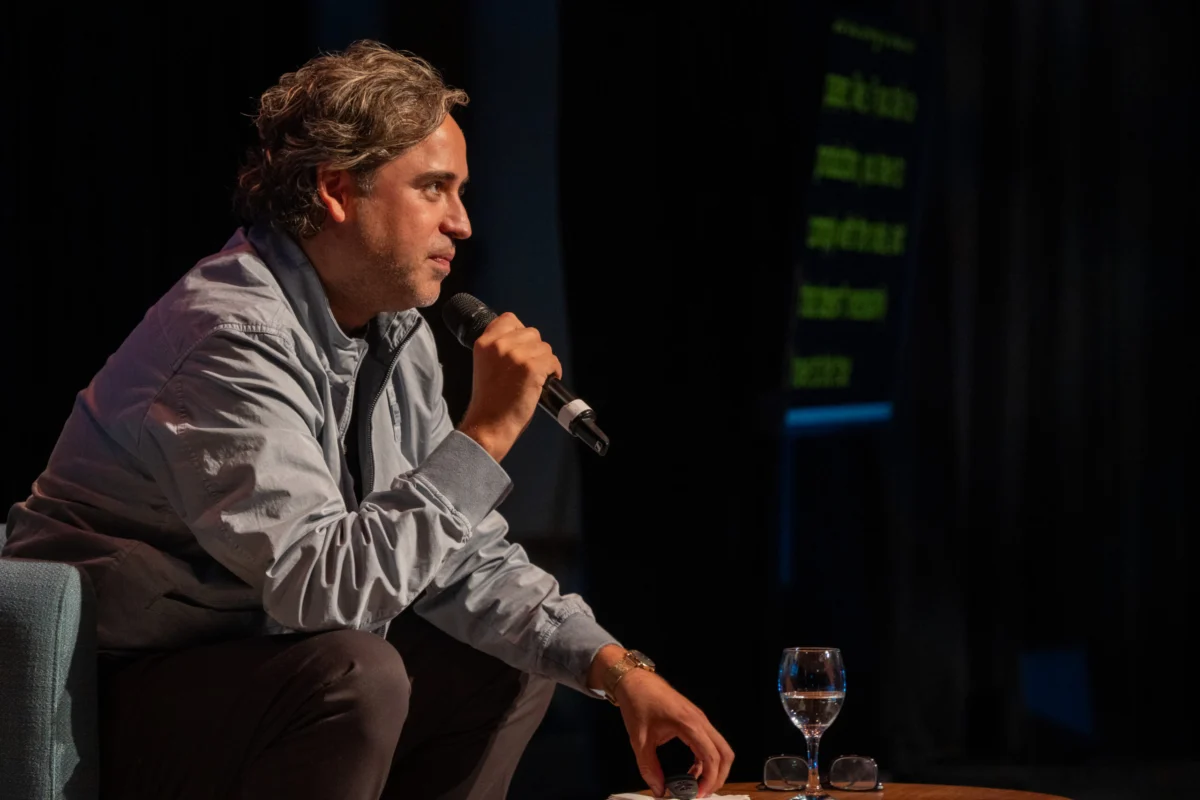
The landscape of independent cinema is undergoing a seismic shift. As the traditional U.S. theatrical model falters under the weight of superhero franchises and horror-heavy programming, domestic filmmakers are increasingly looking beyond their own borders to keep their projects alive. At the Vancouver International Film Festival (VIFF), Chilean producer and intellectual property attorney Giancarlo Nasi painted a stark picture of this new reality: for the modern independent producer, securing international public funding is no longer an exotic luxury—it is an existential necessity.
The Shrinking Domestic Horizon
During his Industry Masterclass, "Exploring the Art and Strategy of International Co-Productions," Nasi highlighted a growing trend that has caught many industry observers off guard. Even filmmakers who once operated comfortably within the U.S. independent system are now aggressively pursuing subsidies from Canada, Europe, and Latin America.
The impetus for this shift is a deepening crisis in U.S. independent film distribution. According to Nasi, the theatrical marketplace has become increasingly bifurcated, leaving little room for the mid-budget, auteur-driven, or challenging narratives that once formed the backbone of the indie circuit.
"In America, many folks, especially independent filmmakers, really want to co-produce," Nasi explained. "They really want to get public money from other countries of the world because private financing is drying up."
The data supports his assessment. Nasi pointed to the recent Cannes Film Festival as a canary in the coal mine, noting that a significant number of films in official competition—a position that would have guaranteed distribution a decade ago—failed to secure a North American buyer. Furthermore, a substantial percentage of titles at the festival’s "Directors’ Fortnight" lacked even a sales agent, a sobering indicator of how difficult it has become to monetize non-studio, non-horror content in the current climate.
A Chronology of Necessity: From Niche to Standard
For producers like Nasi, the reliance on international funding is not a reaction to a recent trend but the culmination of years of market contraction. Based in Los Angeles and the founder of Quijote Films, Nasi has produced 29 features, many of which were built on complex, multi-national financing structures.
The evolution of this strategy can be traced through his own filmography. His recent project, the South African production The Smell of Apples—a co-production involving the Netherlands and Chile—represents the modern standard for independent film finance.
However, the most illustrative case study remains Felipe Gálvez’s 2023 debut, The Settlers. A lauded period Western set in the rugged terrain of southern Chile, the film took eight years to finance. While officially a three-country co-production, the sheer scale of the project required what Nasi calls "informal" support from eight or nine additional territories, including France, Argentina, the U.K., Taiwan, Sweden, Denmark, and Germany, alongside U.S. equity.
"It becomes complicated," Nasi acknowledged. "Nine countries is a lot. But we were very desperate. It was a first feature, a period piece, and very ambitious."
This chronology demonstrates that for ambitious, non-commercial stories, the "national" cinema model is dead. To make a film that transcends the limited financial capacity of a single small market like Chile, producers must treat the globe as their source of capital.
The Mechanics of International Co-Production
Securing international funds is not merely a matter of transferring wire payments; it is a complex negotiation of sovereignty, labor, and creative autonomy.
Treaty vs. Non-Treaty Funds
Canada, for instance, maintains one of the world’s most robust networks of co-production treaties. These treaties allow for "official" co-production status, which grants the film national status in both countries—a massive advantage for accessing specific subsidies. However, these treaties come with strings attached: mandatory quotas for local crew, post-production requirements, and, in some cases, casting stipulations.
Nasi warns that not all funding sources are created equal. He distinguishes between treaty-based funding and more flexible schemes available in places like Luxembourg, the U.K., or Germany. "You need to know if you want that," he said regarding the obligation to hire a specific Canadian DP or editor. "The best co-productions are those that make creative as well as financial sense."
Spending Rules and Financial Logistics
Before entering any partnership, Nasi insists that producers perform a deep dive into the specific rules of the funding body. Different regions have vastly different expectations regarding the "economic return" on their investment:
- The "Spend" Requirement: France may require 50% of the budget to be spent within its borders, while certain German funds may demand a spend of up to 150% of the grant amount.
- The Cash-Flow Gap: Public money is rarely an upfront grant. It is often distributed in installments tied to production milestones—start of production, wrap, and theatrical release. This creates a dangerous "valley of death" where producers must secure bridge financing or gap loans to keep the cameras rolling while waiting for government tranches that might not arrive for up to two years.
The Politics of "Soft Power"
Perhaps the most unpredictable variable in international financing is political instability. Nasi’s experience provides a cautionary tale for those who view public money as a stable foundation.
He noted that in Brazil and Argentina, systemic political changes have effectively frozen the distribution of funds, even for projects that had already been officially awarded grants. "I’m waiting for my $500,000 from Brazil," he shared. "Where’s my money?"
He contrasted these experiences with Chile, which he described as relatively reliable, and Italy, which became notoriously quiet following the administration change under Giorgia Meloni. Despite these risks, Nasi remains optimistic. He argues that governments continue to provide these funds because cinema is a premier tool of "soft power"—a way for nations to project their culture and values onto the global stage.
"Call it geopolitical bullshit if you want," Nasi joked. "But I mean, it’s great for us."
Implications: The Future of the Indie Filmmaker
The move toward internationalized production has profound implications for the future of cinema. As U.S. independent filmmakers begin to rely on foreign state support, the "American" nature of these films may become increasingly diluted.
The Creative Trade-Off
When a producer accepts money from five different countries, they are often accepting five different sets of cultural, creative, and logistical requirements. The film becomes a product of international consensus rather than a singular vision. While this can lead to richer, more globally resonant storytelling, it also risks a "homogenization" of indie film, where projects are designed to satisfy the specific bureaucratic criteria of various funding bodies.
The Rise of the "Global Producer"
The industry is seeing the rise of a new type of professional: the producer-lawyer, like Nasi, who is as comfortable navigating treaty law and international tax codes as they are scouting locations or casting talent. The traditional role of the "independent producer" is being replaced by the "global architect," a figure capable of assembling a project like a jigsaw puzzle, where every piece—be it a grant from Germany or a tax incentive in Canada—is meticulously placed to ensure the film reaches completion.
Conclusion: A Necessary Evolution
The crisis in the U.S. independent film market is, for many, an invitation to innovate. By looking outward, filmmakers are not just finding money; they are tapping into a global infrastructure designed to preserve culture in the face of mass-market entertainment.
As Giancarlo Nasi emphasized, the process is fraught with administrative nightmares, political instability, and the constant threat of creative compromise. Yet, for the filmmaker who refuses to abandon their vision in favor of the superhero industrial complex, the international co-production route remains the only viable path forward. The era of the "American Indie" is fading, replaced by a more complex, borderless, and politically engaged form of filmmaking that acknowledges one fundamental truth: if you want to make a movie that matters, you can no longer afford to make it alone.
