
The Meta-Documentary That Broke the Rules: Why "You Can See Everything" Demands an Oscar Rethink

The documentary landscape has been fundamentally altered by the arrival of You Can See Everything, the three-hour cinematic investigation directed by Nathan Fielder and Lance Oppenheim. Centered on the final days of Elizabeth Holmes before the commencement of her 11-year prison sentence, the film has bypassed the typical buzz associated with high-profile documentaries, instead achieving a status that borders on the mythical.
While the film is currently dominating critical discourse for its unprecedented access to the disgraced Theranos founder and her partner, Billy Evans, it is simultaneously forcing a conversation about the rigid boundaries of the Academy Awards. As the film garners momentum, a growing contingent of critics is making an audacious argument: not only does You Can See Everything deserve a Best Picture nomination, but its secret weapon—Amanda Seyfried—is worthy of a Best Supporting Actress nod that the current system is ill-equipped to grant.
The Core Investigation: A Descent into the Theranos Saga
You Can See Everything is not a traditional retrospective. Rather than relying on archival footage or talking-head interviews with former employees, the film operates in the present tense. Fielder and Oppenheim spent weeks documenting the surreal, cloistered existence of Elizabeth Holmes as the reality of her legal situation set in.
The film captures the peculiar intimacy between the filmmakers and their subject. Fielder, acting as both director and on-screen investigator, manages to elicit moments of profound vulnerability—and, conversely, chilling detachment—from Holmes. The result is a portrait of a woman who, even on the precipice of incarceration, remains an enigma. The film’s narrative structure is unconventional; it eschews a chronological history of the Theranos fraud in favor of a psychological study of the days leading up to her imprisonment. This decision elevates the film from a standard true-crime exposé to a philosophical exploration of truth, perception, and the performative nature of guilt.
Chronology of a Production Phenomenon
The project was shrouded in secrecy from its inception. Rumors of a "Nathan Fielder-Elizabeth Holmes project" began circulating in industry trade papers months ago, but the scope of the film remained unknown until its premiere.
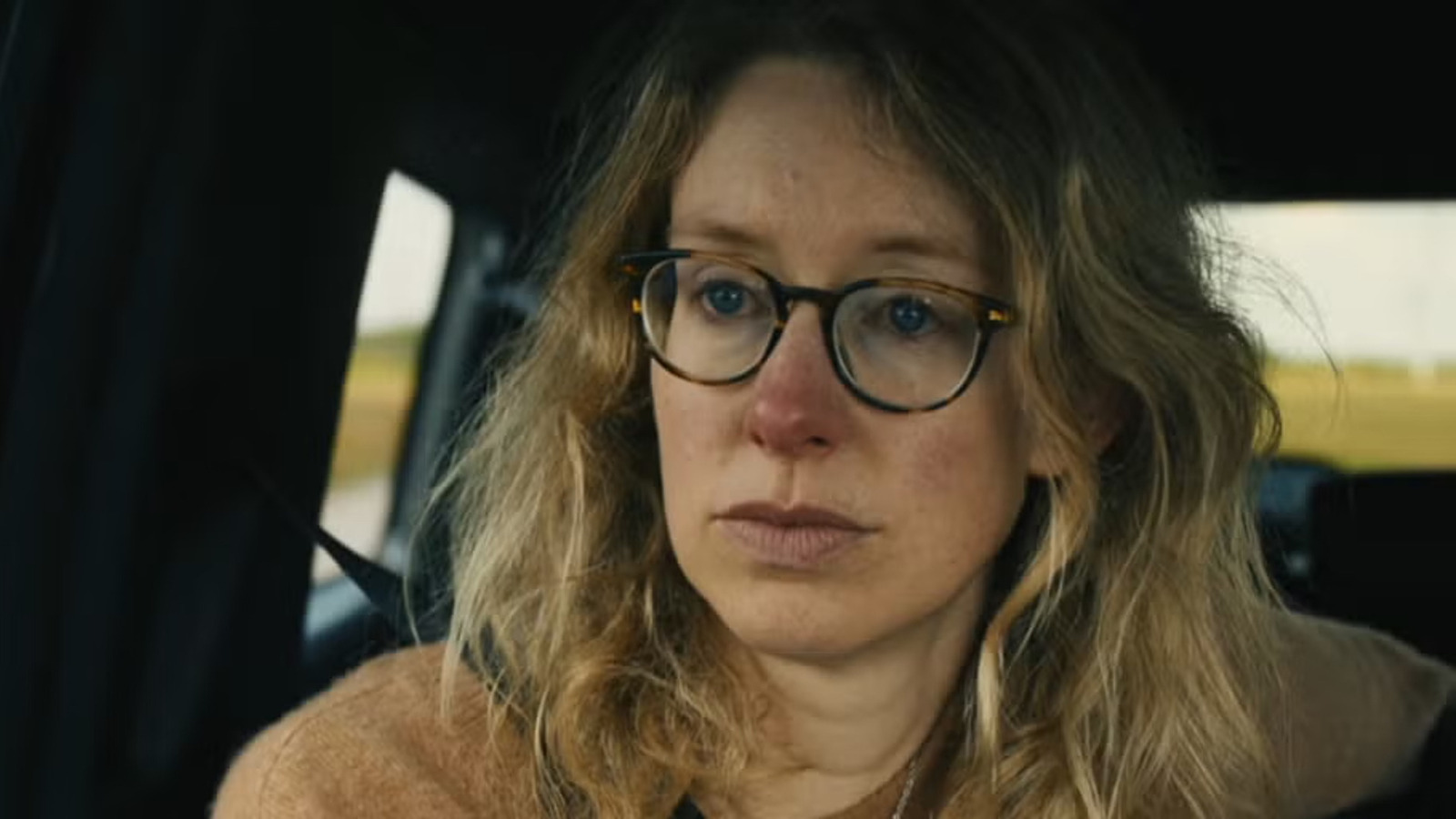
- Pre-production: Fielder and Oppenheim initiated contact with the Holmes camp, likely leveraging the cultural fascination surrounding the Theranos trial.
- The Access Period: The filmmakers were granted exclusive access to Holmes and Billy Evans. During this time, Fielder’s presence evolved from observer to participant.
- The Meta-Turn: Approximately one hour into the film, the production takes a sharp turn. Recognizing the limitations of "pure" documentary footage, Fielder introduces Amanda Seyfried.
- The Re-enactment Phase: Seyfried, who previously portrayed Holmes in Hulu’s The Dropout, is not merely an actor in this film. She serves as a lens through which the audience is invited to re-examine the "character" of Elizabeth Holmes.
- The Climax: The film concludes with the final, haunting days of Holmes’ freedom, juxtaposed against the critical analysis provided by Fielder and Seyfried.
The Seyfried Factor: Beyond the Cameo
The inclusion of Amanda Seyfried is perhaps the most divisive and brilliant stroke in modern documentary history. Her role transcends the traditional concept of a "cameo." Seyfried serves as a co-investigator, a mirror, and a sounding board.
In the film, Seyfried participates in elaborate, high-fidelity re-enactments of moments that Fielder could not capture in reality. However, her contribution goes deeper. She sits with Fielder, reviewing the raw footage of the real Holmes. Her commentary is surgical; she identifies patterns of manipulation, micro-expressions of insincerity, and the underlying power dynamics between Holmes and Billy Evans.
Where Fielder often maintains a posture of detached, sometimes sympathetic inquiry, Seyfried provides the audience with a necessary "voice of reason." Her background as an actor who has already studied the mechanics of Holmes’ personality allows her to see through the facade in a way that the filmmakers—and perhaps the audience—cannot. She acts as an unofficial private detective, cracking the case of Holmes’ psyche in real-time.
The Academy’s Dilemma: Can You Nominate a Documentary Performance?
The central friction of this awards season will be the Academy’s inability to reconcile the "truth" of a documentary with the "artifice" of acting. Historically, the Academy separates acting awards into categories that imply scripted, fictionalized performances.
However, You Can See Everything is a hybrid. By forcing the audience to acknowledge the artifice of the medium, the film makes a compelling case for the necessity of performance. If a documentary claims to show the "truth," but uses re-enactments to bridge the gaps of that truth, is the person performing those gaps not an actor? And if that actor elevates the film’s narrative integrity, why should they be excluded from the honors reserved for their peers in narrative cinema?
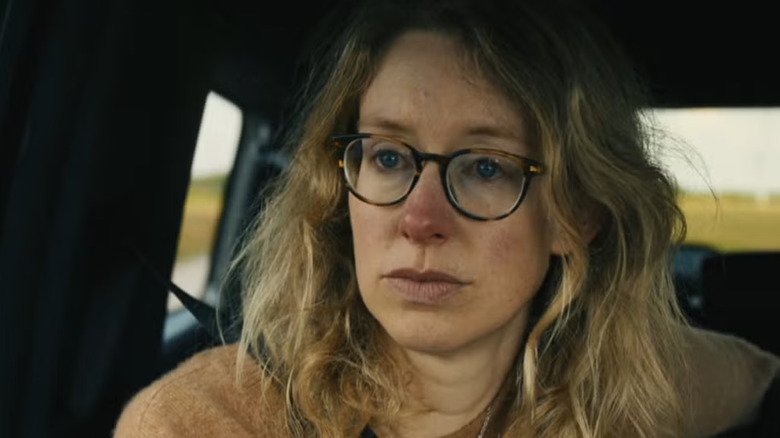
To deny Seyfried a nomination on the grounds that she is in a "documentary" is to ignore the evolving nature of the craft. Her work in the film is not merely mimicry; it is an interpretive performance that adds layers of intellectual rigor to the documentary. She is essentially playing two roles: the version of Elizabeth Holmes that the public believes they know, and the critical analyst looking at the subject from the outside.
Implications for Future Filmmaking
If the Academy were to break precedent and acknowledge Seyfried, it would signal a seismic shift in how we categorize film. We are entering an era of "post-truth" filmmaking, where the line between the subject and the observer is becoming increasingly blurred.
You Can See Everything challenges the viewer to question the reliability of the camera itself. By including a known actor to provide meta-commentary, Fielder and Oppenheim are essentially telling the audience: "You cannot trust what you are seeing, so we are going to show you how the illusion is constructed."
If the Oscars continue to adhere to the traditional, rigid categorization of documentaries, they risk becoming obsolete in the face of a new generation of filmmakers who see these boundaries as mere suggestions. The success of this film—and the potential for award recognition—is not just about the specific story of Elizabeth Holmes. It is about the future of the medium.
The Villainy of the Ordinary
While Seyfried’s performance is the artistic highlight, the film’s portrayal of Billy Evans provides the necessary friction to drive the narrative. The film paints Evans not as a mustache-twirling villain, but as something far more dangerous: the enabler.
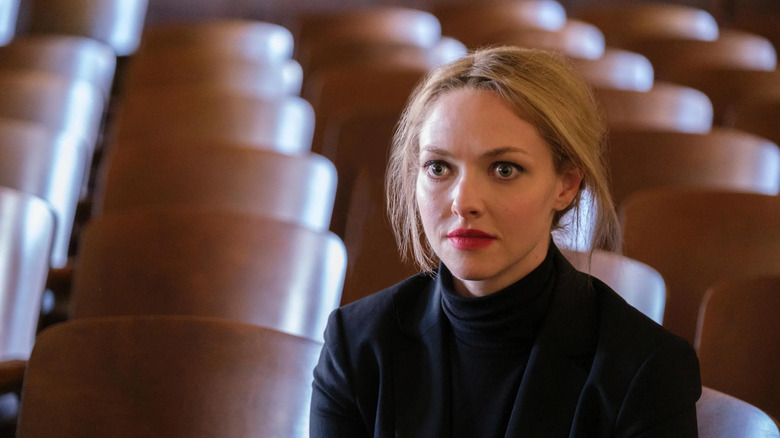
The film’s, and by extension Seyfried’s, focus on Evans serves to ground the high-concept elements of the documentary. It reminds the viewer that for all the media circus surrounding Elizabeth Holmes, there is a very real, very mundane human tragedy occurring. Seyfried’s ability to highlight the banality of this evil, while maintaining the tension of a thriller, is a testament to her range.
Conclusion: A Call for Recognition
The Academy Awards have long prided themselves on honoring the pinnacle of cinematic achievement. Yet, by ignoring the hybrid, meta-performances that are currently defining the most exciting work in the industry, they risk excluding the very films that are doing the most to push the medium forward.
You Can See Everything is a masterpiece of modern documentary filmmaking. It is intelligent, unnerving, and deeply layered. Amanda Seyfried’s contribution is not just a high-concept gimmick; it is the heartbeat of the film. To ignore her work because it falls under the "documentary" label is a failure of imagination.
The Academy has the opportunity to adapt, to recognize that the definition of a "supporting role" has shifted in an era where the camera is both a weapon and a witness. It is time for the voters to look past the genre tags and acknowledge the brilliance of what has been achieved here. Give Amanda Seyfried an Oscar nomination, not because the rules require it, but because the art demands it.
