
The Art of Fire and Blood: Rodeo FX Unveils the Technical Mastery Behind House of the Dragon Season 3
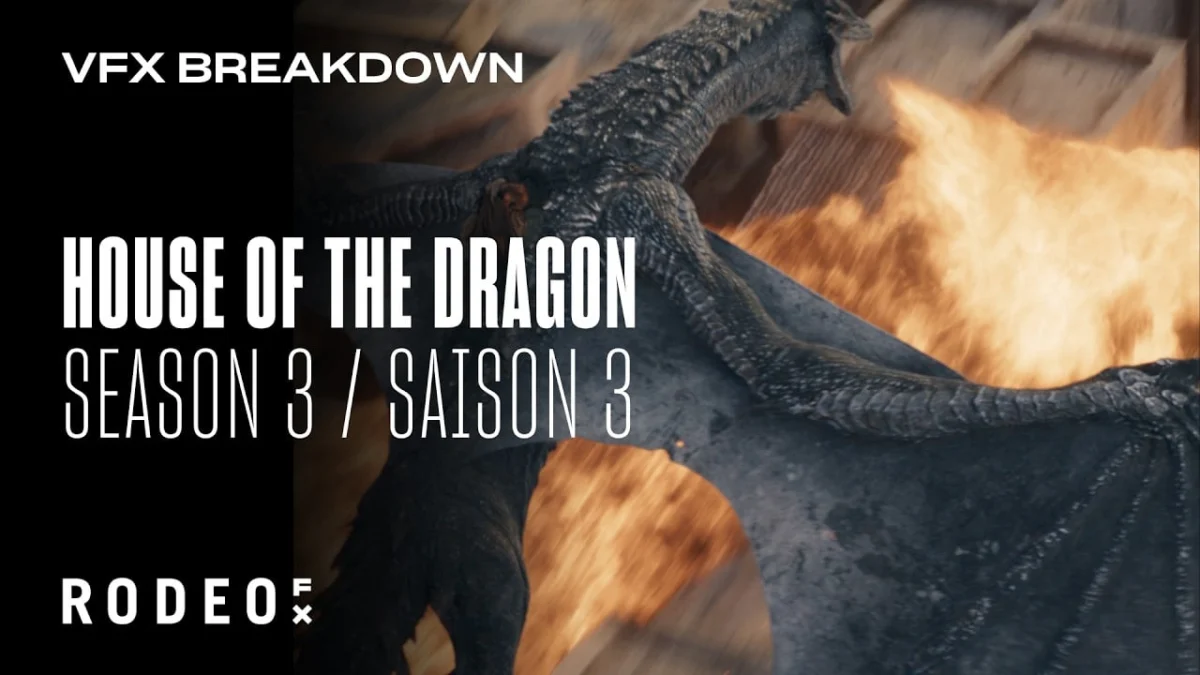
The world of Westeros has never felt more tangible, more dangerous, or more visually expansive than it does in the third season of HBO’s House of the Dragon. As the fires of the Dance of the Dragons consume the Seven Kingdoms, the visual effects (VFX) industry has been tasked with translating the high-fantasy carnage of George R.R. Martin’s source material into a visceral, cinematic reality. At the heart of this technical achievement is Rodeo FX, the Montreal-based studio that has once again proven its prowess in the realm of high-end creature animation and environment creation.
Following the release of a comprehensive VFX breakdown reel, Rodeo FX has pulled back the curtain on its significant contributions to the show’s third season—a mandate that involved 394 shots across 66 distinct sequences, executed by a dedicated team of 133 artists and technicians.
The Magnitude of the Mandate: A Chronology of Collaboration
Rodeo FX’s journey with House of the Dragon has been one of increasing scale. While their work on Season 2 established a baseline for quality, Season 3 represented a substantial escalation in complexity. Led by VFX supervisor Sébastien Francoeur, the studio’s involvement was not merely a matter of volume, but of creative evolution.
The production timeline for Season 3 required a synchronized effort between Rodeo FX and the show’s leadership, including showrunner Ryan Condal, overall VFX supervisor Dadi Einarsson, and overall VFX producer Tom Horton. The collaboration began with the pre-production planning of the new stronghold, Tumbleton, and moved into an intensive period of post-production that culminated in the explosive, dragon-fire-drenched finale.
Throughout the season, the workflow was structured into clear phases: character development for six unique dragons, the "invisible" environment work for King’s Landing, and the massive, crowd-heavy tactical choreography required for the Tumbleton siege. As the season progressed toward its June premiere, the technical requirements shifted from character-driven performance—such as the nuanced movements of Tessarion—to the large-scale simulation of destruction and warfare.
Anatomy of the Dragons: Crafting Personality and Power
The centerpiece of any Game of Thrones property is, invariably, the dragons. For Rodeo FX, the challenge was to imbue these fire-breathing apex predators with distinct temperaments, ensuring that each creature felt like an individual rather than a recycled digital asset. The studio was responsible for six dragons: Tessarion, Silverwing, Moondancer, Caraxes, Vermithor, and Seasmoke.
Tessarion: The Performance Challenge
According to the studio’s technical analysis, Tessarion required the most rigorous attention to detail. The animators were tasked with striking a delicate balance: the dragon needed to oscillate between a puppy-like, inquisitive curiosity and the lethal, cold-blooded instincts of a combat-ready beast. Achieving this required a deep understanding of avian and reptilian anatomy, manipulated to express emotion without crossing into the uncanny valley.

Vermithor and the Physics of Weight
While Tessarion tested the team’s ability to animate personality, Vermithor tested their mastery of physics. The landing sequences for the massive dragon necessitated complex creature FX (CFX) simulations. To "sell" the weight of a dragon that is effectively a flying mountain, the team focused on ground contact, displacement of debris, and the subtle tremors of the earth. Every dust cloud and rock shift was calibrated to communicate the creature’s immense scale.
Silverwing: The Return of the Flame
Silverwing, a familiar presence introduced in the studio’s work in Season 2, returned with a more aggressive role. Following a scene with Ulf beneath the streets of King’s Landing, Silverwing was elevated to a primary combatant. The studio’s work focused on the visual language of fire—specifically, the tactical use of dragon fire as a weapon of war raining down upon the armies of the Seven Kingdoms.
Environmental Realism: The Duality of Design
VFX work is often divided into the "spectacular" and the "invisible." Rodeo FX mastered both in Season 3 by treating King’s Landing and the new stronghold of Tumbleton with entirely different philosophies.
Invisible Extensions in King’s Landing
In the capital, the objective was total integration. The studio utilized "invisible" street extensions designed to blend seamlessly into the existing photographic plates. The goal was to expand the geographic scope of the city without the viewer ever questioning the architecture. This involved meticulous lighting matching, color grading, and perspective alignment to ensure that the digital extensions were indistinguishable from the physical sets.
Tumbleton: A Masterclass in Asset Management
Tumbleton represented a different challenge. As a new location, it was built entirely from scratch. Drawing on lessons learned from the more laborious matte-painting-heavy approach used in previous seasons, the environment team adopted a more efficient layer-based structure.
"Tumbleton was genuinely well built," said Francoeur. "We had the layers we needed to finish it straight in comp, so the environment team really nailed that setup." By building the stronghold with a logical, modular workflow, the team was able to minimize the need for post-production cleanup, allowing for more time to be spent on the fine-tuning of textures and atmospheric effects.
The Finale: Scaling the Chaos of War
The season finale served as the studio’s "biggest lift." The climactic battle at Tumbleton was a massive undertaking, characterized by a complex layering of digital elements. Roughly 100 of the season’s shots were dedicated to crowd work, which required the synchronization of digital soldiers with the destructive path of dragons.

The choreography of the finale was a testament to the studio’s pipeline efficiency. Integrating crowd simulations with large-scale fire effects and structural destruction required the team to manage a massive amount of data while maintaining the visual integrity of the battle. Every flame, every falling stone, and every digital combatant had to react to the others in real-time, creating a coherent, high-stakes visual narrative that capped off the season’s arc.
Implications: The Future of VFX Integration
The success of Rodeo FX’s work on House of the Dragon signals a shift in the VFX industry toward more specialized, character-driven digital performance and smarter, layer-based environment construction. By moving away from brute-force matte painting and toward more sophisticated, modular environment design, the studio has demonstrated how efficiency can actually lead to higher visual quality.
Furthermore, the emphasis on the "performance" of creatures like Tessarion reflects a broader trend in fantasy television: the audience no longer accepts dragons as mere background props. They are characters in their own right, and the VFX work must reflect the internal motivations and physical presence of these creatures to maintain immersion.
As the industry continues to evolve, the partnership between studios like Rodeo FX and major production houses like HBO highlights the essential role of specialized VFX teams in shaping the narrative landscape. The ability to manage 394 shots across 66 sequences is not just a triumph of technology, but a triumph of management and artistry.
Conclusion: A New Standard for Westeros
The breakdown reel released by Rodeo FX serves as more than just a promotional tool; it is a document of the massive human effort behind the spectacle of television. With a crew of 133, a robust pipeline for creature simulation, and a meticulous approach to environment design, the studio has set a new benchmark for what is possible in the Game of Thrones universe.
As audiences look toward future seasons, the work of Sébastien Francoeur and his team at Rodeo FX remains a vital component of the show’s identity. By bridging the gap between the fantastical nature of dragons and the gritty, grounded reality of the Seven Kingdoms, they have ensured that the fires of Westeros continue to burn brighter than ever.
Credits and Key Personnel
- VFX Supervisor: Sébastien Francoeur
- VFX Producer: Caroline Boisvert
- Executive VFX Supervisor: Joseph Kasparian
- CG Supervisor: Loïc Beguel
- Environment Supervisor: Olivier Goulet
- Animation Supervisor: Shahar Levavi
- Compositing Supervisors: Marie-Pier Couture-Alain, Geoffrey Wigmore
- Production Partners: Ryan Condal (Showrunner), Dadi Einarsson (Overall VFX Supervisor), Tom Horton (Overall VFX Producer)
