
Paramount Pictures Unleashes Its Most Terrifying Icons Into Spin Master and Ghost Galaxy’s Hellbreak Horror TCG
Main Facts
The landscape of tabletop gaming is about to undergo a blood-soaked seismic shift. Spin Master, in collaboration with game publisher Ghost Galaxy, has officially inked a landmark partnership with Paramount Pictures to bring some of modern cinema’s most recognizable and terrifying entities into Hellbreak, the highly anticipated upcoming horror trading card game (TCG).
With this new collaboration, players can look forward to seeing the sound-hunting Death Angels from A Quiet Place, the iconic, axe-wielding Headless Horseman from Tim Burton’s Sleepy Hollow, and the malevolent, trauma-feeding supernatural entity from Paramount’s sleeper hit Smile integrated directly into the game.
Crucially, Paramount’s stable of cinematic monsters will not be relegated to some distant, future expansion pack. Instead, these legendary frights are leaping straight into the game’s massive launch set, Dawn of Terror. This inaugural release boasts a staggering roster of more than 200 unique cards spanning a jaw-dropping seven different cinematic properties.
In Hellbreak, the fundamental mechanics revolve around asymmetrical horror warfare. Players select an iconic horror monster to act as their primary deck leader. From there, they must carefully manage and build their resources, deploy horrifying minions to do their bidding, and outmaneuver their opponent. The objective is brutally simple yet intensely tactical: obliterate the opposing player’s monster leader before yours is brought down to secure victory.
By integrating modern psychological horror (Smile), creature features (A Quiet Place), and gothic fantasy-horror (Sleepy Hollow) right out of the gate, Spin Master and Ghost Galaxy are positioning Hellbreak as the definitive crossover event for horror enthusiasts and TCG veterans alike.
Chronology of Terror: How Hellbreak Assembled Its Nightmare Roster
The road to Hellbreak’s gargantuan launch has been a slow-burn thriller for the tabletop community, marked by a cascade of massive studio partnerships and licensing acquisitions over the past year.
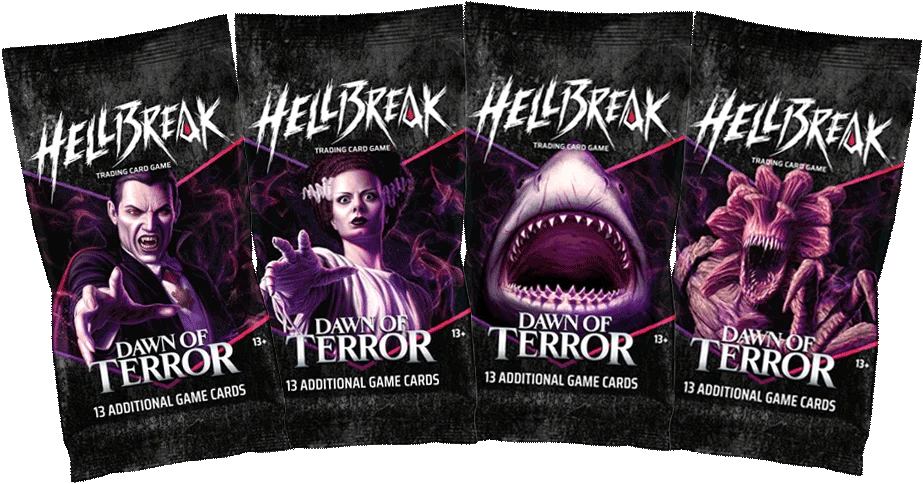
The nightmare began taking shape when Universal’s legendary monsters led the game’s initial public reveals. Classic icons such as Dracula and the Bride of Frankenstein—alongside unexpected cinematic menaces like the great white shark from Jaws—established the game’s core identity as a melting pot of cinematic dread. These Universal properties set the baseline for how monstrous leaders would function mechanically within the Hellbreak ecosystem.
Momentum escalated exponentially over the summer when the project secured partnerships with Blumhouse, AMC Global Media, and Lionsgate. This trifecta of horror heavyweights added immense prestige and an even deeper bench of intellectual property to the pipeline. Shortly after those announcements shook the industry, the undisputed king of campy slashers, Jason Voorhees from the Friday the 13th franchise, made a surprise and thunderously received debut at Gen Con, proving that the game’s designers were pulling no punches when it came to slasher representation.

Now, with Paramount Pictures officially crashing the party ahead of the game’s commercial release, the puzzle pieces of the ultimate cinematic horror trading card game are finally locking into place.
However, not all studios are arriving simultaneously. While Universal and Paramount anchor the initial Dawn of Terror base set, characters originating from AMC, Blumhouse, and Lionsgate—including heavy hitters from torture-porn franchise Saw and AMC’s juggernaut The Walking Dead—are officially slated to arrive in subsequent waves and expansions. This staggered release schedule ensures that the game’s meta will continuously evolve, injecting fresh blood and new strategic nightmares into the community long after the initial cards are unboxed.
Supporting Data: Release Details, Formats, and Store Integration
For collectors, competitive players, and casual fans eager to get their hands on the cards, the countdown has officially begun. Spin Master and Ghost Galaxy have locked in a hard release date for Hellbreak‘s debut set, Dawn of Terror.
The game will officially hit physical shelves at local game and hobby shops, alongside online retail giant Amazon, in January 2027.
Prior to the commercial release, local game stores will have the opportunity to build local communities and drum up excitement through organized play initiatives. Spin Master has confirmed that stores can run exclusive demo nights ahead of the January 2027 launch date. These pre-launch kits will be specifically built around dedicated learn-to-play decks centered on Jaws and Dracula, allowing newcomers to grasp the foundational mechanics of resource management and minion deployment without feeling overwhelmed by the expansive 200-plus card base set.
Furthermore, the physical product architecture is being designed to cater to both casual collectors and hyper-competitive tournament players. The Dawn of Terror booster packs—featuring striking, macabre packaging already teased by Spin Master—will utilize standard TCG distribution models, encouraging drafting, trading, and deck customization.
The breakdown of properties across the pipeline is as follows:
- Wave 1 (Base Set – Dawn of Terror / January 2027): Universal Monsters (Dracula, Bride of Frankenstein, Jaws), Paramount Pictures (A Quiet Place, Sleepy Hollow, Smile), and select reveals from earlier teaser phases.
- Wave 2 & Beyond (Future Expansions): Properties secured via Blumhouse, AMC Global Media, and Lionsgate, explicitly housing franchises such as Saw and The Walking Dead.
Official Responses and Industry Perspectives
The convergence of so many rival entertainment conglomerates under a single tabletop umbrella is no small feat, and executives from Spin Master are acutely aware of the cultural magnitude of what they are building.

Doug Wadleigh, Spin Master’s President of Toys, spoke enthusiastically about the inclusion of Paramount’s heavy-hitting horror catalog, emphasizing how it directly impacts the tactical depth and thematic resonance of the game.
"Paramount brings a deep catalogue of terrifying monsters that will unquestionably elevate the gameplay experience," Wadleigh stated, highlighting the studio’s unique capability to span everything from atmospheric supernatural dread to modern creature-feature terror.
Industry analysts note that securing properties like A Quiet Place poses a fascinating design challenge for Ghost Galaxy’s developers. Translating creatures that hunt strictly by sound into a physical card game requires inventive mechanical translation—forcing players to manage noise levels or audio tokens as a resource, showcasing the level of deep thematic integration Spin Master and Ghost Galaxy are striving for.
By treating the source material with narrative respect rather than just slapping recognizable faces onto generic templates, the creative teams are attempting to build a game that appeals equally to hardcore cinephiles and dedicated TCG enthusiasts who care deeply about rule sets and mechanical balance.
Implications for the TCG Market and the Horror Genre
The launch of Hellbreak in January 2027 represents much more than just another licensed card game hitting the market; it marks a potential paradigm shift for how cinematic intellectual properties are monetized in the tabletop space.
For years, the trading card game market has been overwhelmingly dominated by fantasy and sci-fi titans like Magic: The Gathering, Pokémon, and Yu-Gi-Oh!, with horror largely relegated to niche, standalone board games or temporary crossover sets (such as Magic: The Gathering’s Universes Beyond). Hellbreak flips the script by making horror the entire foundation, creating a unified ecosystem where Jason Voorhees can theoretically clash against the entity from Smile, or where Jaws can terrorize the waters of a board state ruled by Dracula.
This cross-studio collaboration also signals a maturing relationship between major Hollywood studios (Paramount, Universal, Lionsgate, and MGM/AMC/Blumhouse partners) and the tabletop industry. Recognizing the lucrative, highly engaged demographic of horror fans—who voraciously collect merchandise, physical media, and limited-edition items—these studios are increasingly viewing tabletop gaming as a premier destination for long-term brand engagement rather than a mere promotional afterthought.
As January 2027 approaches, anticipation among hobbyists is reaching a fever pitch. With local game stores preparing for demo nights and the community dissecting every newly revealed card from the Dawn of Terror set, Hellbreak is poised to become the ultimate battleground for cinema’s most iconic monsters. Whether players choose to side with the silent, deadly hunters of A Quiet Place or rely on the classic terror of Universal’s immortal fiends, one thing is certain: the horror genre has officially found its ultimate card game home.
