
Navigating the Chaos: Inside the Unconventional Career of Filmmaker, Writer, and Producer Miranda Sajdak
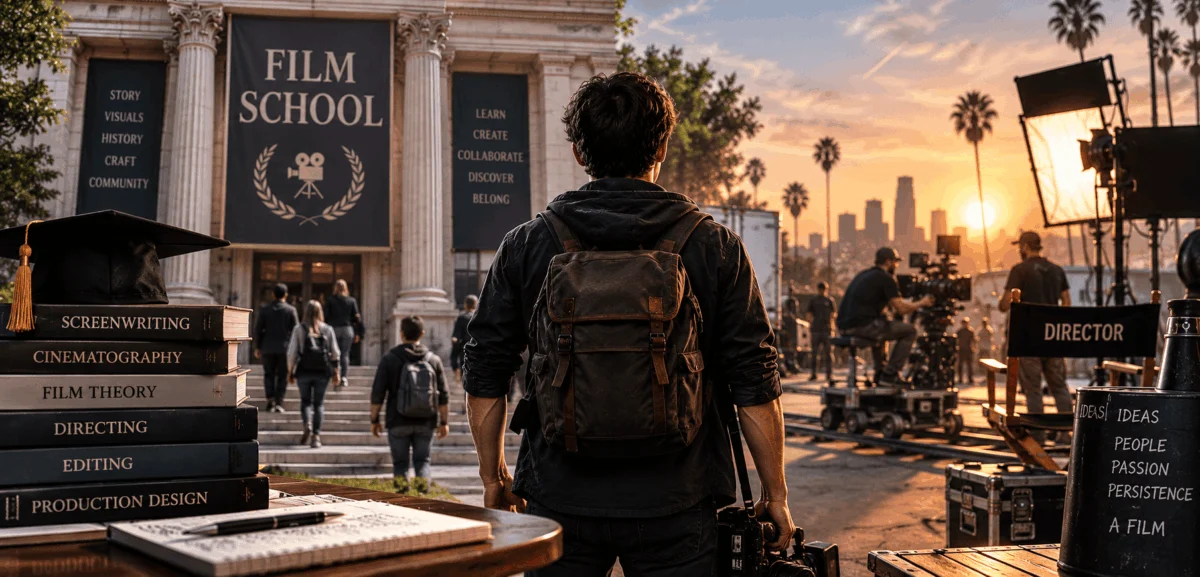
The question is as old as cinema itself, whispered in film studies lecture halls and debated over late-night coffees on indie sets: Do I actually need film school?
To the uninitiated, it sounds like a straightforward query with a binary answer. Yet, anyone who has spent more than five minutes in the entertainment industry quickly realizes that filmmaking careers rarely follow a straight line. Some professionals spend years dissecting European art-house theory in academia before stepping onto a lot. Others dive straight into the trenches—carrying heavy C-stands, fetching artisanal coffees, and absorbing the chaotic, high-pressure education of a live working set.
Miranda Sajdak, a multifaceted writer, producer, and director whose career spans high-profile studio blockbusters, independent features, television writers’ rooms, corporate script coverage, and her own directorial ventures, has seen the industry from almost every conceivable angle. Having lived through the triumphs, the re-writes, and the sheer logistical madness of production, Sajdak is living proof that there is no single, correct roadmap to a career in film. Instead, her journey offers a masterclass in adaptability, resilience, and the relentless pursuit of creative agency.
The Spark: From Childhood Epiphany to Columbia University
Long before she was navigating studio politics or hunting down pregnant horses in upstate New York, Sajdak knew she wanted to make movies. Her calling arrived in childhood when her mother took her to see Penny Marshall’s sports comedy-drama A League of Their Own.
Watching a narrative where women took center stage in a historically male-dominated arena struck a visceral chord. She walked out of the theater with a crystalline clarity: filmmaking wasn’t just a hobby; it was going to be her life’s work.
That early spark eventually led her to Columbia University’s renowned film program. But for Sajdak, film school offered something far more valuable than a syllabus of textbooks and cinematic history lectures. It provided a curated ecosystem: immediate access to like-minded creative peers, hands-on experiential learning on graduate student productions, a foundational understanding of unwritten set etiquette, and seasoned professors who helped distill the overwhelming, infinite universe of cinema into digestible, vital material worth studying.
Yet, Sajdak is remarkably pragmatic about her academic pedigree. She is careful never to turn her personal experience into a universal prescription. Film school worked for her, but she is quick to point out that it is certainly not a mandatory rite of passage for everyone.
"Plenty of aspiring filmmakers master cameras, film history, theoretical frameworks, and set protocols entirely independently," Sajdak notes. "Others simply throw themselves into the workforce. What truly matters is understanding your ultimate destination and determining which specific path equips you with the skills, the relationships, and the grit required to get there."
That academic foundation successfully prepared her to enter the industry at ground level, landing production assistant (PA) gigs on major studio productions, including blockbuster features like The Bourne Ultimatum and J.J. Abrams’ mystery-monster hit Cloverfield.
The Currency of the Industry: Networking and Reputation
Stepping onto the sets of massive studio films quickly reinforced a foundational truth of the entertainment business: relationships are everything.
Looking back at her early career breaks, Sajdak recalls that while one opportunity may have materialized through a standard production office application, another was secured through a trusted referral. In the film industry, career progression frequently boils down to networking and who you know.
However, Sajdak offers a vital caveat regarding what "networking" actually means. It is not about aggressively collecting business cards at crowded industry mixers or schmoozing at film festival after-parties. Real, career-sustaining networking happens organically when people witness firsthand how you operate under stress.
When colleagues and superiors see that you are reliable, professional, emotionally regulated, and relentlessly capable when a crisis hits, your name naturally enters the conversation the next time a production is scrambling to fill a vacancy. Your reputation precedes you long before your resume does.
Studio Scale vs. Indie Grit
Working on major studio pictures also provided Sajdak with a fascinating comparative lens against independent filmmaking. At their core, both environments share the exact same objective: telling a compelling story. However, the sheer scale of the operation changes every single dynamic.
A union studio production boasts massive budgets, deeply specialized departments, large specialized crews, robust safety nets, and considerably more time allocated for individual setups and artistic choices.
Conversely, on an independent film, resources are scarce. A director or producer might suddenly find themselves single-handedly troubleshooting logistical nightmares that, on a studio lot, would be handled by an entire department of middle managers. While daunting, Sajdak deeply appreciates the hands-on nature of indie filmmaking. It forces creators to intimately understand every single moving part of physical production, from catering contracts to camera packages.
And sometimes, those indie production problems escalate into the realm of the completely absurd.
The Case of the Uncooperative Horse
Ask any veteran producer to share a war story, and they will likely regale you with a tale that sounds like fiction. Sajdak’s defining producing baptism by fire occurred during a winter shoot in upstate New York.
The script called for a pivotal, emotional climax: a teenage girl assisting a horse in giving birth. Initially, the production plan seemed foolproof. They had secured a location on a horse farm populated by pregnant mares, meaning everything was theoretically manageable.
Then, nature intervened. The horses flatly refused to give birth during the designated shooting schedule.
Suddenly, Sajdak was facing an insurmountable crisis. She needed to locate another pregnant horse that bore a strong visual resemblance to the original, find a farm whose visual aesthetic matched their established location, and coordinate a scramble of a production around a biological event that stubbornly refused to run on a Hollywood timetable.
To complicate matters further, this was an era before modern mobile internet could instantly rescue a stranded producer via Google searches.
Refusing to panic, Sajdak walked over to a landline telephone, cracked open the local Yellow Pages, and began cold-calling horse farms throughout the region. Within roughly an hour, she had successfully identified two viable leads. The production swiftly pivoted, relocated the crew, captured the sequence on film, and crossed the finish line.
It remains a wonderfully ridiculous, textbook example of what producing actually entails. No film school syllabus or executive handbook hands you a manual detailing what to do when the equine star of your climax refuses to cooperate. You simply assess the wreckage and solve the problem sitting directly in front of you.
Television, Rewrites, and the Art of Humility
Transitioning into television provided Sajdak with an entirely different kind of education. Working as a writers’ assistant on shows such as Huge and China, IL taught her invaluable lessons not just about the craft of writing, but about the sprawling corporate and collaborative business structures that surround it.
While novelists often write in isolation, screenwriting and television production are intensely collaborative team sports. Networks issue creative notes. Studio executives request sweeping structural changes. Characters are abruptly written out to satisfy pacing. Scenes are chopped, flipped, and completely rewritten on the fly.
A writer who treats every single sentence they pen as sacred scripture is destined for a brutal, short-lived career. Sajdak frequently emphasizes the absolute necessity of professional humility in the writers’ room: "There will be rewrites. There will be a lot of rewrites." Embracing this reality separates amateur hopefuls from professional workhorses.
The Birth of Script Chicks: Sustaining the Creative Fire
That hard-earned industry philosophy eventually inspired Sajdak to forge her own entrepreneurial path. After stepping away from coordinator positions to pursue independent producing, she and fellow producer Sandra Leviton confronted a painfully familiar rite of passage for indie creators: passion projects do not pay rent.
They needed flexible, income-generating work that would simultaneously allow them to keep writing, directing, and producing on their own terms. Drawing upon their extensive years of executive development experience, they launched Script Chicks, a professional screenplay coverage business.
It was a brilliant alignment of skills and market need. The venture provided a sustainable financial runway, keeping the lights on and the rent paid while they continued to aggressively pursue their broader cinematic ambitions.
Sajdak’s journey highlights a crucial lesson often omitted from glossy magazine profiles: a sustainable filmmaking career is rarely built by climbing a single, linear corporate ladder until Hollywood finally notices you.
Instead, a modern career is often a mosaic. Sometimes you PA on blockbuster studio movies. Sometimes you read and evaluate scripts. Sometimes you act as a writers’ assistant. Sometimes you hustle to produce someone else’s project simply to build capital and network for your own. And sometimes, you launch an independent business purely to buy yourself the creative freedom required to keep making art.
Returning to the Director’s Chair
After years spent successfully writing, producing, and working across diverse sectors of the entertainment industry, Sajdak experienced a quiet realization: somewhere along the way, she had drifted away from the primary, foundational dream that initially drew her to the movies in the first place—directing.
Rather than waiting passively for an external benefactor to hand her a multi-million-dollar budget and beg her to helm a feature, she took matters into her own hands. She sat down, wrote a dynamic short script, and assembled a circle of trusted, brutally honest readers who were entirely unafraid to tear the screenplay apart and build it back up.
Once the script was bulletproof, she began casting talent and launching a crowdfunding campaign for an action-oriented project. Choosing momentum over stagnation, she actively marched back toward the work she had always been meant to create.
Implications for the Next Generation of Filmmakers
Miranda Sajdak’s career trajectory serves as an inspiring blueprint for a changing media landscape. Whether an aspiring creator enters the industry via elite film school lecture halls, an entry-level PA gig, a smoke-filled television writers’ room, or simply by holding an iPhone in their bedroom, the specific point of entry ultimately matters far less than the actions taken after walking through the door.
The takeaway from her journey is clear and actionable:
- Master the mechanics of how physical sets operate.
- Cultivate genuine, trust-based professional relationships.
- Listen intently to notes without letting ego obstruct the process.
- Cultivate resourcefulness when logistical disasters strike.
- Find sustainable ways to finance your life while refining your creative craft.
And above all, when you inevitably look up and realize you have wandered too far from the foundational reason you fell in love with cinema, summon the courage to find your way back to it.
