
Mike Flanagan’s Carrie Adaptation Trades Religious Fanaticism for Modern Cyberbullying in Prime Video’s Ambitious New Series
By Amy West
Published: October 1, 2026
Read time: 6 minutes
Introduction and Main Facts
High school has evolved into a far more complex and terrifying landscape since Stephen King first published his seminal horror novel Carrie in the mid-1970s. In an era where social media allows tormentors to follow their victims far beyond the heavy metal detectors and locker-lined hallways of traditional institutions, the pressures facing young people have multiplied exponentially. Recognizing this modern reality, master of horror and acclaimed adapter Mike Flanagan (The Haunting of Hill House, Midnight Mass) has taken on King’s legendary text, breathing a chillingly contemporary life into a familiar narrative.
Premiering exclusively on Prime Video on October 7, 2026, the new eight-episode series reimagines the tragic telekinetic teenager for the digital age. Rather than focusing primarily on the suffocating, dogmatic religious fanaticism that defined the original text and its previous cinematic incarnations, Flanagan’s adaptation sets its crosshairs squarely on the pervasive cruelty of modern digital culture.
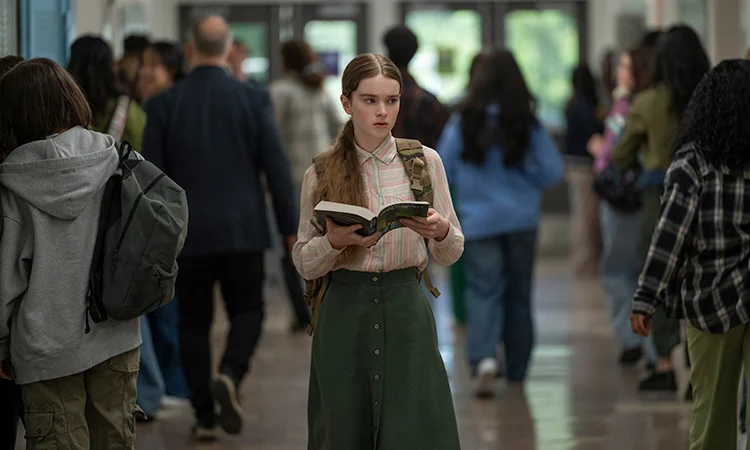
At the heart of the series is Summer H. Howell, who delivers a genuinely brilliant performance as the titular Carrie. Thrust into a public high school for the very first time following the sudden death of her father and the subsequent discovery of her existence by local authorities, Carrie faces an uphill battle just to understand basic socialization. To the profound dismay of her misanthropic, hyper-controlling mother—played with chilling detachment by Samantha Sloyan—Carrie is genuinely eager to integrate, make friends, and learn alongside her peers.
However, decades of extreme isolation leave her ill-equipped to navigate the complex social hierarchies of her worldly classmates. The situation rapidly deteriorates when the school’s reigning "cool girl," played by Alison Thornton, creates a fraudulent social media account under Carrie’s name. By weaponizing the platform to post malicious, defamatory memes targeting both students and faculty alike, the bullies unleash a wave of chaos that fractures the community long before the infamous prom night can even approach.
Chronology of Development and Production
The journey toward Mike Flanagan’s modern television adaptation of Carrie spans years of industry speculation, shifting studio landscapes, and a deliberate creative restructuring of King’s source material.
- The Origin (1974): Stephen King publishes Carrie, his debut novel, catapulting him to literary stardom and establishing the tropes of the modern psychological horror genre. The book relies heavily on themes of religious extremism, maternal abuse, and internalized shame.
- Adaptation Legacy (1976–2013): Brian De Palma delivers the cinematic masterpiece in 1976 starring Sissy Spacek, followed by television versions, a 1999 sequel (The Rage: Carrie 2), and a 2013 cinematic remake starring Chloë Grace Moretz.
- The Flanagan Era Announcement: Following critical acclaim for his streaming horror anthologies, Mike Flanagan sets his sights on King’s Carrie, conceptualizing it not as a standalone feature film, but as an expansive, multi-season television event designed to explore the psychological nuances of adolescent isolation.
- Casting and Production (2024–2025): Casting announcements confirm Summer H. Howell as Carrie and Samantha Sloyan as her mother. Principal photography takes place under strict secrecy, emphasizing practical effects balanced against modern digital aesthetics to reflect the hyper-connected high school setting.
- The Premiere Rollout (October 2026): Prime Video announces the global drop of all eight episodes of the first season on October 7, 2026, with early critical screenings pointing toward a bold, divisive, yet deeply compelling reinvention.
Supporting Data and Narrative Shifts
While comparisons to Netflix’s critically acclaimed Adolescence are inevitable—given the series’ shared focus on the intersection of youth mental health and digital fallout—Flanagan’s approach yields a mixed bag of narrative triumphs and thematic compromises.
In the transition from page to screen, the mechanics of Carrie’s torment undergo a fundamental shift. In King’s original novel, Carrie’s tragic descent and ultimate snapping point are deeply tied to the psychological rot caused by her mother’s religious fanaticism. The literary Carrie is not merely a passive, innocent victim of schoolyard mean-spiritedness; her internal monologue is frequently shocking, reflecting a complex, curdled psyche shaped by years of scriptural abuse, domestic imprisonment, and an emerging, terrifying awareness of her own destructive capabilities.
By contrast, the Prime Video series leans heavily into a more generalized "heroes and villains" dynamic. The focus shifts toward the immediate, recognizable horrors of online harassment—specifically, the weaponization of Facebook and Instagram accounts to isolate and humiliate vulnerable peers. While this makes the story aggressively timely, critics note that it occasionally strips away the rich, uncomfortable moral ambiguity that made King’s original character study so revolutionary.

Despite this streamlining of the thematic core, the production boasts standout elements:
- Format Expansion: An eight-episode first season allows for slow-burn character development that a standard two-hour film simply cannot accommodate.
- Visual Storytelling: Summer H. Howell’s performance captures manic-eyed glimpses of Carrie’s latent dark side, grounding the supernatural elements in authentic teenage vulnerability.
- Expanded Scope: The narrative deliberately avoids wrapping up at the book’s traditional climax, laying narrative groundwork for future explorations.
Official Responses and Creative Vision
Speaking behind the scenes on the conceptualization of the project, Mike Flanagan and his creative team have emphasized that their goal was never to simply copy what has already been done on film, but to examine how the core tragedy of Carrie functions in a world where cruelty is broadcast in high-definition to millions of devices.
Industry analysts have pointed out that adapting a property with such a heavy cinematic pedigree carries inherent risks. Previous cinematic iterations leaned heavily into the gothic, operatic terror of religious zealotry—symbolized by the iconic pig’s blood, burning candles, and household shrines. By substituting the pulpit for the smartphone screen, Flanagan’s creative team sought to make the terror more immediate to a generation of viewers who may find religious fundamentalism abstract, but understand cyberbullying intimately.
Early promotional materials released by Prime Video underscore this modern aesthetic, highlighting pristine high school corridors contrasted against cold, digital screen glows. Cast members have similarly noted the psychological demands of portraying contemporary school environments where bullying does not end when the final bell rings, but rather follows victims into their private homes through social media notifications and targeted online harassment.
Implications for Future Seasons and the Horror Genre
The ultimate test for Flanagan’s Carrie will not be how it handles the initial cyberbullying plotline of Season One, but where it chooses to direct its narrative energy moving forward.
With the creator openly expressing ambitions for a multi-season arc spanning two additional runs, the series is not constrained by the rapid pacing of a single-feature narrative. This structural freedom presents a fascinating opportunity: there is every chance that as the series progresses past the events of the novel, the narrative will peel back its current reliance on a generic "heroes versus villains" framework and return to the deeply layered, psychologically complicated character study that defined King’s original masterpiece.
However, a notable creative hurdle remains. Reviewers have pointed out the presence of a fun yet controversial, X-Men-style subtext that runs through the undercurrents of Season One. If this superhero-adjacent framing—which hints at an organized or systematic view of telekinetic individuals—begins to take precedence over intimate, grounded character exploration, the series risks diluting the intimate tragedy that makes Carrie White such an enduring figure in horror history.
Fortunately, in the hands of performers like Summer H. Howell, who anchors the chaotic narrative with moments of genuine pathos and subtle, simmering menace, the project retains the dramatic chops necessary to elevate its pulpier elements. As all eight episodes prepare to drop on Prime Video on October 7, 2026, audiences will soon discover whether this digital-age update can transcend its initial reliance on Facebook fears to deliver a truly definitive horror masterclass for the 21st century.
