
John Oliver Welcomes Skydance to HBO with Satirical Flair on ‘Last Week Tonight’
Introduction and Main Facts
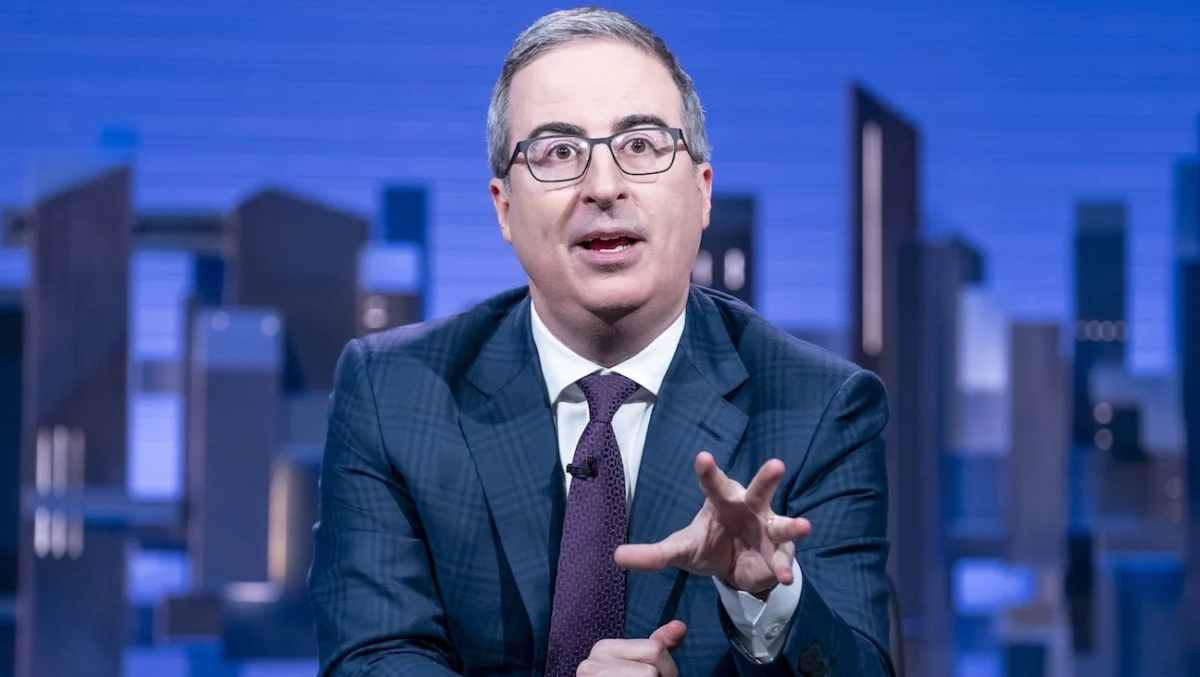
During Sunday night’s installment of HBO’s Emmy-winning satirical news program Last Week Tonight, host John Oliver offered viewers a quintessential blend of investigative journalism and corporate self-deprecation. Addressing the recent seismic shifts in the media landscape—specifically Skydance’s ongoing consolidation efforts and its acquisition of Warner Bros. Discovery—Oliver welcomed his new corporate overseers with a series of biting, deadpan jokes.
While the British comedian initially bypassed direct commentary on the merger during the previous week’s broadcast, Sunday’s episode featured multiple overt nods to the studio’s new management structure. Skydance, which formally secured its landmark acquisition of Paramount last year, now sits at the apex of a vast entertainment ecosystem that includes HBO and its stable of prestige programming. Rather than shying away from the corporate restructuring, Oliver integrated the development directly into his comedic routines, targeting everything from studio overhead to the eccentricities of late-night television production budgets.
The episode’s primary investigative segment focused on the complex regulatory framework governing the United States pharmaceutical industry. Specifically, Oliver and his writing team scrutinized the Food and Drug Administration’s inspection processes for overseas manufacturing plants responsible for producing generic medications consumed by millions of Americans. However, it was the surrounding banter—punctuated by quips about studio upkeep, wet markets, and suggestive depictions of corporate insurance mascots—that captured the attention of media industry analysts and fans alike.
Chronology of Events
To understand the context of Oliver’s remarks, it is helpful to trace the sequence of corporate and on-air developments that culminated in Sunday’s broadcast:
- The Skydance-Paramount Merger: Over the past year, Skydance Media aggressively pursued and finalized a multi-billion-dollar merger with Paramount, signaling a new era of consolidation within legacy Hollywood studios.
- WBD Integration and Rumors: Whispers and subsequent confirmations regarding Skydance’s broader acquisition ambitions involving Warner Bros. Discovery—the corporate parent of HBO and home to Last Week Tonight—sent ripples through the entertainment industry, raising questions about future structural changes, editorial autonomy, and potential budgetary mandates.
- Previous Week’s Broadcast: Despite the swirling corporate headlines, Oliver notably avoided mentioning the Skydance acquisition during the main segments and introductory remarks of his episode the prior week, focusing instead entirely on scheduled journalistic topics.
- Sunday’s Episode – The Pharmaceutical Deep Dive: During the main segment of Sunday’s show, Oliver addressed vulnerabilities in the global supply chain for generic drugs, focusing on the disparity between domestic and international FDA oversight.
- The Studio Budget Quip: Midway through the broadcast, while discussing unannounced facility inspections, Oliver pivoted to a joke about the cleanliness of the Last Week Tonight soundstage, explicitly invoking Paramount as he joked about preemptive measures against incoming budget cuts.
- The Liberty Mutual Bit: Later in the program, Oliver launched a surreal campaign targeting Liberty Mutual’s advertising mascot, "Liberty Biberty," presenting the fluffy yellow character in deliberately suggestive poses and encouraging audience participation.
- The Direct Welcome: Concluding the mascot bit, Oliver directly addressed his new corporate masters at Skydance, offering a tongue-in-cheek guarantee that the show’s provocative, boundary-pushing format would remain entirely unchanged.
Supporting Data and Context: The Investigative Core
While the corporate humor generated immediate headlines across entertainment media, the core of Sunday’s Last Week Tonight episode remained committed to deep-dive investigative reporting. The primary segment explored the opaque world of generic pharmaceuticals, a multi-billion-dollar sector that accounts for the vast majority of all prescriptions filled in the United States.
Oliver highlighted a critical vulnerability in the American healthcare supply chain: the inspection protocols governing overseas manufacturing facilities. According to data presented on the show, while domestic pharmaceutical plants face frequent, unannounced inspections by the FDA to ensure compliance with Current Good Manufacturing Practice (CGMP) regulations, international facilities—which manufacture a significant percentage of the active pharmaceutical ingredients (APIs) and finished generic drugs used by Americans—rarely experience surprise visits.
Instead, the vast majority of overseas inspections are scheduled weeks or months in advance. Oliver cited industry studies indicating that the probability of discovering severe manufacturing violations, contamination issues, or data integrity failures is exponentially higher during unannounced visits.
"You should know while surprise FDA inspections are common for U.S. factories, most FDA inspections done overseas are actually announced beforehand, allowing manufacturers to both prepare for them and potentially hide any issues," Oliver explained to the studio audience. "In fact, one study found that the odds of a facility receiving the most severe inspection outcome are over 250 percent higher for unannounced inspections, which just makes sense, doesn’t it? You clean up when you know people are coming over."
This statistical insight served as the bridge to his first corporate joke of the evening. Drawing a parallel between international pharmaceutical factories scrubbing their production lines ahead of scheduled inspectors and the television production process, Oliver quipped: "The only reason this studio is so clean is because I’m aware you were all coming here today. Otherwise, this place would be a complete pigsty. And by the way, I mean that literally: I run a wet market here the rest of the week. I’m just trying to get out ahead of any Paramount budget cuts."
Corporate Satire and the "Liberty Biberty" Campaign
Following the pharmaceutical segment, Last Week Tonight transitioned to its secondary focus: a satirical critique of corporate advertising mascots, specifically targeting Liberty Mutual’s round, yellow character known as "Liberty Biberty."
Rather than executing a standard advertising critique, Oliver and his production team escalated the bit by digitally rendering the mascot in a series of bizarre, suggestive, and intentionally unsettling artistic postures. The host urged viewers at home to weaponize these images across social media platforms, explicitly challenging the insurance company to drop the mascot from its high-rotation commercial campaigns out of sheer embarrassment.
As the suggestive images flashed across the studio monitors, Oliver seized the moment to cement his satirical welcome to his new corporate leadership. Breaking the fourth wall, he directly addressed the executives orchestrating the recent studio consolidation:
"I’m thrilled to be part of the Skydance family!" Oliver declared with theatrical enthusiasm. "Hope you’re happy with what you bought, guys! We’re never gonna change! … Never — we’re never changing!"
The comedic juxtaposition of high-budget corporate acquisitions with absurd, low-brow mascot manipulation is a hallmark of Oliver’s tenure on HBO. It simultaneously acknowledges the anxiety surrounding corporate oversight while aggressively asserting the show’s trademark irreverence.
Implications for HBO, Skydance, and Late-Night Television
John Oliver’s playful yet pointed remarks on Sunday night point to broader, ongoing implications for the media industry, particularly regarding the delicate ecosystem of prestige cable television under new ownership paradigms.
1. The Realities of Corporate Consolidation
As legacy media conglomerates continue to merge, restructure, and seek operational efficiencies, creative teams within networks like HBO face an uncertain landscape. Skydance’s entry into the Warner Bros. Discovery fold introduces new leadership layers, financial expectations, and strategic priorities. Oliver’s jokes about "Paramount budget cuts" and the immaculate state of his soundstage, while comedic, tap into genuine anxieties shared by writers, producers, and crew members across the entertainment industry regarding potential cost-cutting measures.
2. Editorial Independence and Satirical Immunity
One of the defining characteristics of Last Week Tonight has been its relative immunity from corporate interference, a freedom traditionally afforded by HBO’s subscription-driven revenue model, which relies less on traditional ad-sales pressures than basic-cable networks do. By openly mocking his new corporate parent—and daring them to react to deliberately provocative content like the Liberty Biberty campaign—Oliver publicly tests the boundaries of this editorial freedom. The underlying message to Skydance leadership is clear: the show intends to maintain its aggressive, unpredictable comedic voice regardless of who holds the master corporate deed.
3. The Future of Late-Night Commentary
As traditional late-night television undergoes structural decline on broadcast networks, premium cable and streaming platforms have increasingly become the sanctuary for long-form satirical journalism. Programs like Last Week Tonight demonstrate that audiences respond strongly when hosts transparently navigate the absurdities of the very corporate structures that fund their platforms. By weaponizing the Skydance acquisition for comedic effect, Oliver transforms a dry corporate transaction into participatory public theater, ensuring that the business of television remains as much a subject of scrutiny as the pharmaceutical industry or insurance marketing campaigns.
Ultimately, Sunday’s episode demonstrated that while corporate ownership may shift through multi-billion-dollar mergers, the core editorial mission of Last Week Tonight—combining rigorous investigative journalism with unyielding institutional critique—remains firmly intact, much to the amusement of its viewers and, presumably, the bemusement of its new executives.
