
Forging the Underground: How Don Barris and Windy City Heat Redefined DIY Comedy and Filmmaking
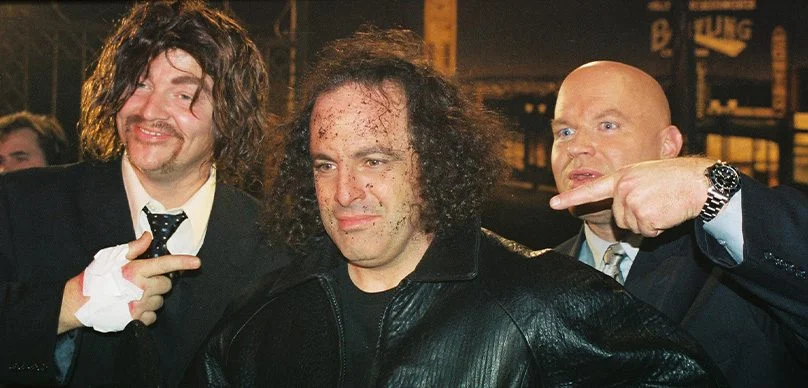
HOLLYWOOD — For over a century, the grand illusion of the entertainment industry has been the myth of the discovery. Generations of aspiring screenwriters, stand-up comics, and actors have arrived in Southern California clinging to the same passive narrative: write the immaculate screenplay, perform at the right showcase, cross paths with the right studio executive, and eventually, someone in power will grant you permission to have a career.
Don Barris never waited for permission.
As a veteran comedian, filmmaker, producer, podcaster, and longtime fixture at the legendary Comedy Store, Barris built his trajectory on an entirely different, highly aggressive philosophy: if no one is coming to discover you, you must create something so undeniable, so idiosyncratic, and so utterly unique that the industry simply cannot ignore it.
His journey through the trenches of show business is not a traditional Hollywood success story. It is a masterclass in resilience, guerrilla filmmaking, and the radical art of manufacturing one’s own opportunities in the face of near-total obscurity.
Main Facts: The Anatomy of a Cult Phenomenon
The cornerstone of Barris’s cultural footprint is Windy City Heat, a 2003 feature-length comedy experiment that defies easy categorization. Part mockumentary, part hidden-camera prank, and part real-world endurance test, the film follows Perry Caravello—an aspiring actor and eccentric personality—under the belief that he is starring in a major Hollywood motion picture titled Windy City Heat.
In reality, the entire production is an elaborate, multi-layered prank engineered by Barris, collaborator Bobcat Goldthwait, and late-night host Jimmy Kimmel. Cameras rolled openly because Caravello believed they were capturing behind-the-scenes footage for his big break.
The concept stands conventional comedy on its head. As Barris frequently notes, Windy City Heat operates as the exact inverse of an Andy Kaufman routine: instead of a single performer playing a trick on an unsuspecting audience, practically everyone in the production and audience understands the joke except for the solitary protagonist at the center of it.
The resulting film did not achieve immediate, mainstream blockbuster success upon release. Instead, it slowly mutated into a legendary cult classic, propelled by passionate word-of-mouth recommendations from comedy icons, late-night television champions, and a fiercely loyal internet following.
Chronology: A Decade in the Wilderness
To understand the triumph of Windy City Heat, one must examine the grueling timeline that preceded it—a decade-long endurance test that Hollywood outsiders rarely witness.
The Michigan-to-California Leap
Barris’s path began far away from the polished studio lots of Los Angeles. Relocating from Michigan to California with aspirations of carving out a life in comedy, Barris faced the harsh economic and professional realities that plague most creative transplants. There were prolonged stretches where his career flatlined entirely. At his lowest points, Barris was ejected from the Comedy Store and spent more than six consecutive months living out of his car.
The Potluck Discoveries
Refusing to abandon his dream, Barris continued working the circuit, eventually landing a gig hosting the Comedy Store’s notorious potluck nights. It was here that his creative epiphany occurred. Barris observed that the loudest, most authentic laughs in the room were rarely being generated by the most polished, technically proficient stand-ups. Instead, the audience erupted when unvarnished, unpredictable, eccentric personalities took the stage—people whose natural behaviors defied social norms.
Recognizing raw talent where others saw only chaos, Barris began gathering these singular personalities into his own live showcase, initially titled Simply Don. Rather than waiting for a television network to hand him a vehicle, Barris built the vehicle himself, road-testing the concept live night after night.
The Eleven-Year Build
The project that would evolve into Windy City Heat did not materialize overnight. According to Barris, exactly 11 years elapsed from the initial conception of his alternative comedy universe to the day the film was finally completed and released.
This chronology highlights the invisible labor of independent art. While audiences tend to focus exclusively on the final product—the festival premiere, the DVD release, or the television broadcast—they routinely overlook the decade of failed experiments, financial destitution, and relentless iteration that laid the foundation.
Supporting Data and Production Realities: One Take, No Safety Net
From a technical and logistical standpoint, shooting Windy City Heat presented a staggering, high-wire challenge: many pivotal moments effectively boiled down to a single take.
When executing an elaborate, feature-length prank on a subject who is entirely unaware of the premise, traditional filmmaking luxuries evaporate. The production crew could not simply yell "Cut!", reset the lighting, and ask actors to run the scene a second time if someone flubbed a line.
Barris frequently points to sequences like the infamous snack-table altercation as high-stakes gambles. No one on the crew knew with absolute certainty how Caravello would react to the mounting psychological pressure. If Caravello had suddenly caught on to the ruse, panicked, or walked off the set permanently, the entire multi-year production could have collapsed in an instant.
To manage this volatility, the filmmakers abandoned the traditional urge to micromanage every performance. Instead, Barris, Kimmel, and their collaborators engineered hyper-specific scenarios, established the rules of the world, positioned hidden and open cameras, and then stepped back to let raw reality dictate the narrative. The unpredictable friction of human emotion provided the film’s ferocious energy.
Official Responses and Word-of-Mouth Momentum
Though Windy City Heat bypassed a traditional theatrical distribution run, its lifespan was radically extended by the champions who rallied around it behind the scenes.
Jimmy Kimmel was instrumental in giving the project a second life. Convinced of its brilliance, Kimmel routinely purchased physical cases of the film out of his own pocket, handing out copies to actors, directors, and comedians he believed possessed the specific comedic palate required to appreciate it.
This grassroots distribution model created a powerful ripple effect throughout the entertainment industry. Barris recalls moments backstage at Jimmy Kimmel Live! where acclaimed auteur Quentin Tarantino enthusiastically cornered him to dissect scenes from the film, subsequently introducing Barris to director Eli Roth. A-list actors like Jack Black similarly stepped forward as vocal advocates for Barris and his creative cohort, known colloquially as "The Big Three."
The trajectory of Windy City Heat offers a vital lesson for contemporary independent creators: a project does not always need to find its audience during its initial release window. When a work possesses genuine originality, passionate viewers often step in to serve as its marketing department, slowly building its reputation across generations through word-of-mouth evangelism.
Implications: The Democratization of Distribution and the Value of Relationships
The evolution of Don Barris’s career offers a compelling lens through which to examine the radical shifts that have overtaken the entertainment industry over the past twenty years.
The Digital Infrastructure
As the traditional studio system became increasingly risk-averse, Barris closely observed the rise of alternative digital pioneers like Adam Carolla and Joe Rogan. These creators demonstrated that the internet provided something previous generations of performers never had: direct, unmediated access to audiences, accompanied by independent distribution and promotional infrastructure.
For Barris, the digital age meant creators no longer had to pitch pilots to executives who frequently lacked vision. Artists could independently produce podcasts, short-form digital videos, live webcasts, and narrative series. By building a self-sustaining audience base through these channels, creators could generate the leverage necessary to fund and control larger, more ambitious cinematic projects.
Relationships as Production Value
Beyond digital infrastructure, Barris’s career underscores an unwritten rule of independent production that rarely appears in film school curricula: Relationships are production value.
As Barris looks toward the future—including his plans to launch an independent entertainment network capable of producing everything from podcasts and short-form sketches to feature films—he draws heavily upon decades of goodwill. Because of his long tenure in the comedy underground, Barris maintains deep personal relationships with performers who would normally command exorbitant fees on commercial studio pictures. Yet, because of mutual trust and shared creative history, these artists are often willing to participate in independent ventures for a fraction of the cost.
Independent production, Barris’s career suggests, is not merely a numbers game dictated by capital budgets. The people you have worked with, supported, laughed with, and trusted over decades of hardship can grant a micro-budget production access to talent and resources that money alone could never purchase.
Conclusion
The career of Don Barris serves as a vital antidote to the corporate sanitization of modern media. He did not follow the standard, highly coveted roadmap from film school to studio intern to greenlit franchise.
Instead, he carved his own path through the comedy underground, discovered unorthodox collaborators, stewarded a bizarre concept for eleven years, partnered with late-night royalty to execute a cinematic prank, and continuously reinvented himself across podcasts, live stage shows, and digital platforms.
For emerging creators navigating an increasingly crowded media landscape, the overarching takeaway from Don Barris’s journey is clear and uncompromising: make your own opportunities.
Write the script, shoot the short, build the digital audience, and nurture genuine relationships with your peers. Keep producing work with relentless discipline, even when the mainstream industry looks away and no one appears interested. Because very often, the project that finally breaks down the door is the one you have been quietly, stubbornly building in the dark for a decade.
