
The Archival Turn: Why Cinema’s Future is Found in Its Forgotten Past
By Erika Balsom
In recent months, a peculiar transformation has swept through the landscape of global film culture. While mainstream media outlets—including London’s The Telegraph—have characterized this shift as a sudden “repertory boom,” the reality is far more nuanced and, arguably, more radical. We are not merely witnessing a nostalgic rotation of mid-century classics or a predictable cycle of Hitchcock and Wilder. Instead, we are seeing a profound, fetishistic, and intellectually charged obsession with the "deep cut"—the lost, the unfinished, the peripheral, and the archival artifact.
In this evolving ecosystem, new theatrical releases often feel like a secondary concern, a quiet sidebar to the main event: the excavation of cinema’s vast, unmapped history. This is the era of the provenance-obsessed print, the vogue for the fragmentary, and the rise of high-caliber historical exhibitions that challenge the traditional canons of film history.
The Chronology of an Archival Awakening
The summer of 2023 served as a microcosm of this trend. While the global box office was preoccupied with the commercial noise of the “Barbenheimer” phenomenon, a parallel, more intellectually rigorous world was unfolding in the darkened screening rooms of Europe.
In June, the Il Cinema Ritrovato festival in Bologna continued to solidify its status as the world’s premier destination for cinematic archaeology. Simultaneously, Berlin’s Arsenal hosted Archival Assembly #2, an event that epitomized the current thirst for the obscure. The highlight of this assembly was the screening of Prem Kapoor’s Badnam Basti (1971), touted as the sole surviving 35mm print of India’s first queer film.
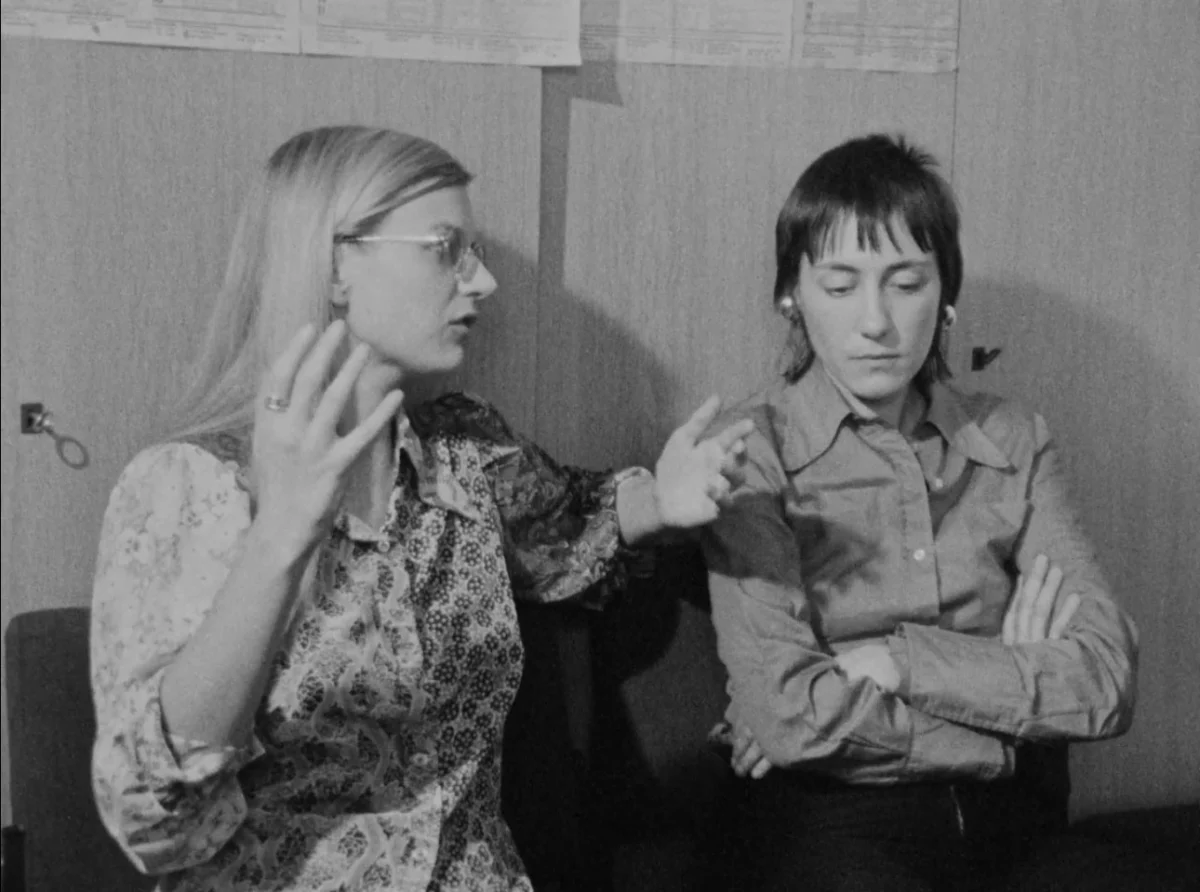
However, the most significant event occurred during a collaborative session with the feminist elsewheres collective. The audience was treated to 109 minutes of digitized 16mm footage documenting the First International Women’s Film Seminar, held in West Germany in 1973. Organized by filmmakers Claudia von Alemann and Helke Sander, this seminar was a foundational moment for European feminist cinema, bringing together 250 participants to debate abortion, labor, media representation, and gender roles. The footage, shot by Norwegian filmmaker Vibeke Løkkeberg—who had been at the seminar to present her hybrid documentary Abortion (1971)—had been presumed lost for decades until its 2019 discovery in the National Library of Norway.
Unearthing the “Time Witnesses”
The screening of Løkkeberg’s footage at the Arsenal was a masterclass in the power of the unfinished. Due to a technical complication where the sound elements could not be synced with the visual reels, the 109-minute film was presented silently. What might have been a disappointing technical failure instead became a living, breathing performance piece.
As the silent images of 1973 flickered on the screen, the audience was joined by "time witnesses"—women who had been present at the original seminar, including the formidable Claudia von Alemann. These women provided a spontaneous, live oral history, identifying participants, debating the context of the debates, and filling the silence with their own recollections.
This interaction effectively "put time out of joint." It was neither a standard archival presentation nor a simple viewing experience; it was a collaborative, often chaotic, and deeply moving bridge between the past and the present. It demonstrated that the value of archival film often lies not in the "finished" product, but in the social and political friction created by its re-emergence.
The Theoretical Framework: Possibility in the Incomplete
The fascination with such material is not merely a hobbyist’s pursuit; it is a burgeoning historiographical method. In their 2023 volume Incomplete: The Feminist Possibilities of Unfinished Film, editors Alix Beeston and Stefan Solomon argue that we must abandon the "hegemonic category" of the finished, feature-length, 35mm film.

They posit that unfinished works—those that were abandoned, interrupted, or censored—are often dismissed as "minor" or "deficient." By re-framing these absences as "signs of possibility," scholars and curators can expand the film canon to include the voices of those who were historically barred from completing their projects due to systemic obstacles. When we stop viewing an unfinished film as a failure, we begin to see it as a map of the barriers that defined the filmmaker’s reality.
This perspective suggests that our current obsession with archival materials is a form of "transvaluation." We are not just watching old movies; we are actively reconstructing the history of cinema’s margins, forcing a reckoning with the systemic exclusions that have defined the medium since its inception.
The "Peak Archive" Dilemma
Despite the intellectual merit of this movement, there are valid questions regarding the sustainability of this "archive fever." Some curators have begun to voice concerns about reaching a point of "peak archive," where the thrill of discovery risks eclipsing the intrinsic quality of the films themselves.
In the cinema, unlike the gallery space where one can wander and contextualize, the act of watching is inherently durational. One must sit through the entire film. If a "deep cut" is historically fascinating but cinematically inert, the viewer’s engagement can wane. There is a growing danger that the curatorial desire for rarity may occasionally override the responsibility to present work that actually holds the audience’s attention.
Furthermore, the logic of "discovery" remains a double-edged sword. While it rejects the commercial novelty of the new release calendar, it often relies on its own form of novelty: the thrill of the "find." As we continue to dig deeper, curators must balance the excitement of the obscure with the need for meaningful, accessible programming that moves beyond the fetishization of the marginal.
Implications for a Changing Medium
Is this archival turn a symptom of a broader malaise? It is possible that our fixation on the past is a reaction to a bleak, digital-saturated present. Today, we are overwhelmed by a "glut of content" that feels uniform, algorithmic, and ephemeral. In contrast, the archive offers something that feels tangible, historical, and deeply human.
However, the current moment is also defined by the digital tools that make this excavation possible. While the digital age has commodified content, it has also democratized access to the archives of the world. We are using the digital to contest the digital, using the speed of the internet to slow down and interrogate the history of the analog.
The "archival impulse," as identified by critic Hal Foster in 2004, remains as relevant as ever: it is a "will to connect" and a "desire to turn belatedness into becomingness." By embracing the fact that cinema is now an "irrevocably old medium," we are not accepting its death; we are celebrating its breadth.
As we look toward the future, the fever for the archive shows no signs of breaking. The resources of film heritage are far from exhausted, and as our own cultural values continue to shift, so too will our interest in what the past has left behind. The 1973 Berlin seminar was a moment of future-building—a time when everything was yet to be argued about and created. Today, we may be looking back, but we are doing so to understand how those past struggles inform our own.
The archive is not a graveyard; it is a laboratory. Whether through the silent, haunting rushes of a lost feminist film or the restored prints of forgotten masterpieces, we are engaged in a constant negotiation with history. In that negotiation, we find the "might have been" in all its dreamy, chaotic, and essential fullness. The delirium of the archive is not merely a retreat from the present; it is a necessary, vibrant, and ongoing act of resistance.
