
From Infamy to Legacy: The Unpredictable Journey of Manos: The Hands of Fate and Its Star, Jackey Neyman Jones
Independent filmmaking has always been an arena defined by a distinct, beautiful unpredictability. Major studio productions arrive with stratospheric budgets and massive marketing campaigns, only to vanish into cinematic obscurity within months. Conversely, underground films forged with little capital, questionable equipment, and green crews sometimes manage to defy the odds, embedding themselves in the cultural consciousness for generations.
Few cinematic artifacts illustrate this phenomenon quite like Manos: The Hands of Fate. When Jackey Neyman Jones appeared in the picture at just six years old, she had a front-row seat to an unorthodox production that would ultimately evolve into one of the most infamous cult classics in film history. Decades later, Neyman Jones—an accomplished actress, artist, and producer—returned to that bizarre cinematic universe to help orchestrate its improbable sequel, Manos Returns.
Main Facts: Anatomy of an Unlikely Cult Classic
The original 1930s-style monster movie, Manos: The Hands of Fate, stands as a masterclass in stripped-down independent filmmaking. It was constructed from the most rudimentary ingredients: a handful of eager individuals, whatever mismatched equipment they could scrape together, and an unyielding, almost stubborn determination to cross the finish line.
The production’s origins are rooted in a fortuitous collision of local ambition. Hal Warren, a fertilizer salesman turned aspiring filmmaker, crossed paths with Jackey’s father through the local community theater scene. The production urgently needed a young girl for a pivotal role, prompting six-year-old Jackey to join the cast.
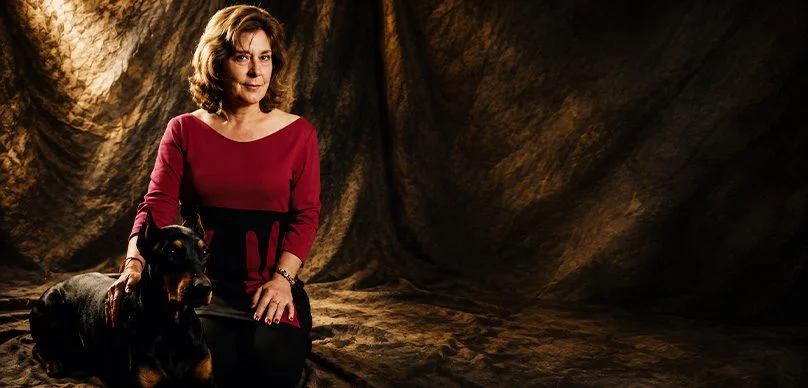
However, the Neyman family’s contributions extended far beyond acting. Jackey’s father built the sets, crafted props, and designed costumes. The production regularly borrowed the family’s furniture, personal automobile, and even their pet Doberman.
There was no glossy studio infrastructure or designated production crew. Jackey vividly recalls cast members storing sack lunches in an old household refrigerator because there was no dedicated craft service. Filming was strictly restricted to nights and weekends, squeezing around day jobs. For a young Jackey, the chaotic set served as an early, eye-opening lesson in the chasm between the illusion captured in front of the lens and the exhausting, unglamorous mechanics happening behind the scenes.
Chronology: From El Paso Premiere to Midnight Movie Infamy
The Red Carpet and the Tears
The world premiere of Manos offered the first stark warning that the film might not land the way its creator hoped. Hal Warren knew how to manufacture Hollywood-style excitement. Searchlights cut through the night air outside the El Paso theater, rolling out a red carpet accompanied by a stretch limousine, local dignitaries, and eager autograph seekers.
Jackey and her father secured seats roughly five rows back from the silver screen. As the projector rolled, the atmosphere shifted perceptibly. Whispers rippled through the crowd, quickly giving way to outright laughter. While young Jackey was initially thrilled simply to see herself on a movie screen, that joy curdled the moment her character spoke. Hearing her dubbed, distorted voice echo through the auditorium left her utterly mortified. She remembers her face flushing hot before she burst into tears, sitting through the remainder of the premiere in absolute misery.
The Wilderness Years
Following its disastrous debut, Manos swiftly vanished into obscurity, and the participants attempted to move on with their lives. Neyman Jones notes that for years, nobody involved wanted to discuss the film; she genuinely believed it was a relic she would never lay eyes on again.
The Mystery Science Theater 3000 Renaissance
Then occurred an event no filmmaker could have strategically planned: the cult comedy television series Mystery Science Theater 3000 (MST3K) picked up the film for an episode.
Suddenly, Manos possessed a massive, captive audience. The movie’s glaring technical shortcomings, bizarre editing choices, and wooden performances ceased to be mere embarrassments and instead became the very qualities that fascinated viewers. What was once a local cinematic punchline slowly metamorphosed into revered cult-film history. Fans began dissecting every frame, generating original artwork, staging theatrical adaptations, and building a vibrant subculture around a movie that Hollywood and its creators had long left for dead.
The Return of Manos
Decades after the premiere, that passionate grassroots audience opened a door that once seemed firmly sealed: the greenlighting of a brand-new Manos feature film.
However, Jackey and the creative team behind Manos Returns faced a unique artistic conundrum: How does one logically follow up a movie famous almost entirely for its unintentional mistakes? Their answer was resolute—they would not deliberately attempt to make another "bad" film.
Neyman Jones explains that the original Manos could never be artificially replicated because its bizarre tonal qualities stemmed from the earnest, uncompromised ambition of inexperienced artists trying to do something grand. Instead, Manos Returns acknowledged the rich history of its predecessor while carving out its own distinct identity. Jackey triumphantly returned to the screen, her father contributed scenes at the age of 80, and the filmmakers intentionally reached out to reunite surviving cast members and family members from the original 1966 production.
Supporting Data: The Modern Realities of Indie Crowdfunding
Securing financing for Manos Returns highlighted just how radically the landscape of independent filmmaking has transformed over the decades.
Rather than seeking out traditional venture capitalists or studio financiers, the team turned to the democratization of crowdfunding, launching a Kickstarter campaign with a modest base goal of $24,000. Neyman Jones quickly discovered that managing a high-profile crowdfunding campaign is not a passive side project—it is a grueling, full-time operational undertaking.
Division of Labor in Modern Micro-Budgets
The production team established a smart operational framework to handle the heavy lifting:
- Rachel Jackson: Spearheaded Kickstarter management and media/press outreach alongside Neyman Jones and director Tonjia Atomic.
- Joe Sherlock: Director of photography who also curated the campaign’s visual graphics.
- Steve Foley: Editor and screenwriter who focused heavily on producing engaging campaign video content.
Instead of buckling under the pressure of a single auteur trying to simultaneously direct, market, crowdfund, edit, and manage social media, the team leveraged collective strengths. For aspiring indie filmmakers eyeing crowdfunding platforms, this serves as a critical lesson: the campaign itself is an entirely separate production.
Furthermore, the filmmakers maintained a clear-eyed perspective on what additional capital could achieve. While the core team possessed the low-budget savvy to produce the film at a baseline level, incoming funds allowed them to elevate costume design, expand scope, onboard more seasoned collaborators, and inject higher production value directly onto the screen. A larger budget doesn’t magically guarantee a cinematic masterpiece, but in the hands of experienced storytellers, capital buys precious commodities: time, flexibility, and creative options.
Implications: The Enduring Philosophy of Independent Cinema
The multifaceted saga of Jackey Neyman Jones and Manos: The Hands of Fate holds profound takeaways for the broader independent film community.
Hal Warren understood that he wasn’t crafting high art, but he pushed forward with the singular intention of making the best movie his resources allowed. More broadly, Manos was envisioned as a catalyst—proof of concept that El Paso could sustain a vibrant local film industry. While that grand ambition outstripped their immediate resources and technical experience, the foundational instinct remains universally understood by independent creators across the globe: The first feature film is rarely a masterpiece; its primary purpose is simply proving that you possess the grit to finish one.
As Neyman Jones reflects on the unpredictable arc of her cinematic journey, her philosophy remains remarkably grounded: regardless of the constraints or the capital raised, a filmmaker’s duty is to squeeze every drop of potential out of the project and make the best film possible.
Filmmakers frequently exhaust themselves attempting to reverse-engineer audience desires, trying desperately to predict cultural tastes. Yet, Manos stands as an enduring, joyful testament to the fact that once a piece of art enters the wild, its journey is entirely out of the creator’s hands.
You cannot guarantee that your film will achieve critical acclaim. You cannot guarantee that mainstream critics will understand your vision. You certainly cannot guarantee that a massive audience will magically discover it the moment you push the release button.
The single variable entirely within a creator’s control is whether they have the tenacity to finish the damn movie and give it a fighting chance to find its people.
Right-click here to download the MP3 version of this feature story
