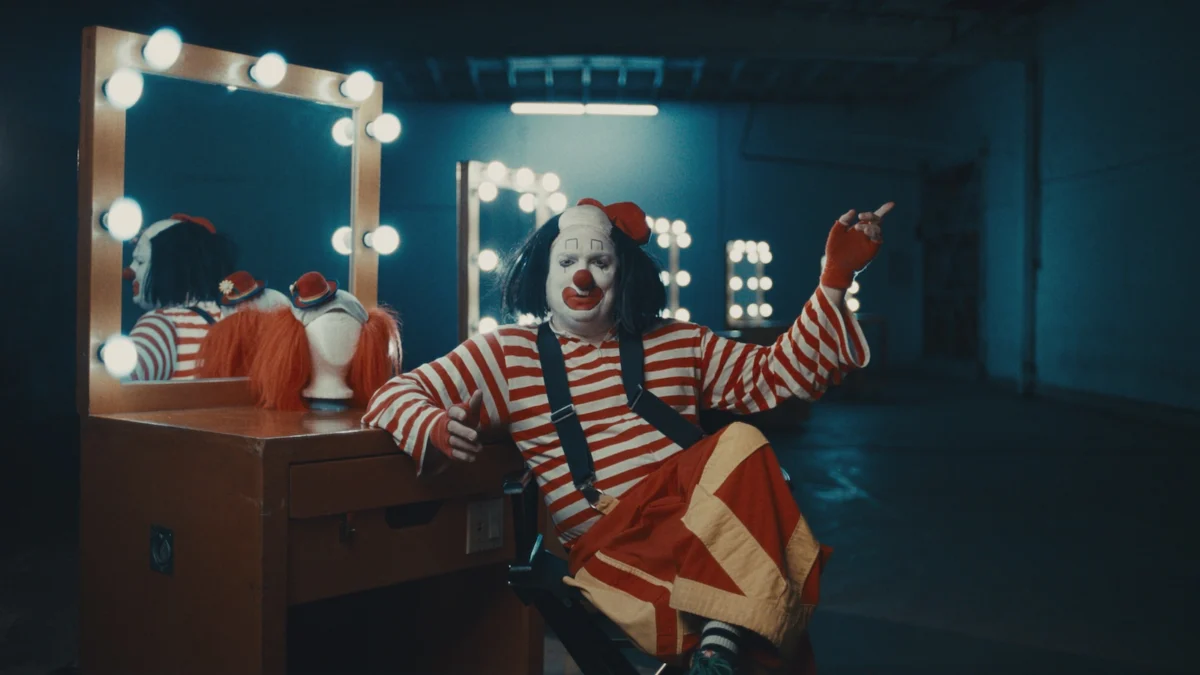
Behind the Greasepaint and the Panic: How the 2016 "Creepy Clown" Phenomenon Foretold a Decade of Digital Hysteria
The late summer and autumn of 2016 will long be remembered as a uniquely disorienting epoch in modern history. Across the Atlantic, the seismic shockwaves of Brexit were fundamentally reshaping European politics. In the United States, the bitterly contested presidential election between Donald Trump and Hillary Rodham Clinton exposed deep, raw nerve endings within the national fabric, with social media algorithms actively fueling the animus. Intersecting with persistent racial, economic, and technological anxieties, it was an era defined by a profound, pervasive sense of dread.
And then, as if ripped straight from a midnight horror anthology, the creepy clowns arrived.
Nearly a decade later, this surreal cultural aberration is being re-examined in the Hulu documentary ClownPanic. Directed by acclaimed filmmaker Ed Perkins (The Princess), the feature-length project peels back the layers of a bizarre internet-era phenomenon to reveal a surprisingly dark, complex, and cautionary tale about the mechanics of mass fear—and a society pushed to its absolute breaking point.
Main Facts: The Anatomy of a Modern Myth
At its core, Clown Panic revisits a period that many prefer to remember as an absurd, harmless internet meme. However, the documentary argues that the reality was far more sinister.
The phenomenon began quietly in August 2016 with unverified reports of menacing figures dressed as clowns lurking near wooded areas, apartment complexes, and schools, purportedly attempting to lure children. Originating in economically disadvantaged minority communities in the American Southeast, these rumors quickly migrated onto digital platforms. Propelled by the frictionless engine of social media, the sightings went viral with terrifying velocity, transforming into a global contagion as copycats, pranksters, and content creators filmed their own harrowing clown encounters.
What started as localized mischief soon spiraled out of control. Fear gave way to aggressive vigilantism, resulting in widespread school lockdowns, arrests, legal turmoil, and, in some tragic instances, real-world violence and death.
As the documentary posits in its opening moments, framed by a sweeping montage of 2016’s societal fracturing: “The story of the clowns is the story of America.”
Chronology: From Whispered Rumors to Global Social Contagion
Understanding how a novelty prank escalated into a nationwide crisis requires tracing its swift and erratic trajectory:
August 2016 (Greenville, South Carolina): Local law enforcement receives the first credible reports of individuals dressed in full clown regalia attempting to lure children into the woods near the Fleetwood Manor apartment complex.
Early September 2016: Sightings multiply across North and South Carolina. Schools increase security measures, and local police issue warnings against disruptive behavior.
Mid-to-Late September 2016: The phenomenon leaps across state lines, fueled by viral posts on Facebook, Twitter, and Snapchat. Reports emerge from Georgia, Alabama, and Ohio. Cryptic social media accounts operated by anonymous users threaten attacks on schools.
October 2016: The panic achieves global saturation. Sightings are reported across Canada, the United Kingdom, Australia, and mainland Europe. Law enforcement agencies worldwide are forced to allocate precious resources to investigate thousands of hoax calls. Schools are placed on lockdown, and vigilante groups form in neighborhoods to hunt down suspected clowns.
Late Autumn 2016: Following Halloween and the conclusion of the U.S. presidential election, the frenzy begins to subside just as rapidly as it flared up, leaving behind a trail of legal consequences, community trauma, and cultural bewilderment.
Present Day: With the release of Clown Panic on Hulu, cultural critics and sociologists reassess the event not as a statistical anomaly, but as the opening salvo in an ongoing war against digital misinformation and mass hysteria.
Supporting Data and Sociological Context
To dismiss the 2016 clown sightings as a temporary aberration is to misunderstand the deeply rooted social dynamics at play. According to criminologists and cultural historians, the panic thrived in an ecosystem of heightened ambient anxiety.
In 2016, traditional media gatekeepers were rapidly losing ground to algorithmic social media feeds that prioritized engagement, outrage, and viral sensationalism. Studies from the era indicate that online discussions surrounding the clown sightings generated tens of millions of interactions within a matter of weeks, eclipsing coverage of major policy debates.
Furthermore, the phenomenon exposed profound socioeconomic vulnerabilities. The initial reports disproportionately impacted marginalized neighborhoods where institutional trust was already fragile. When fear takes root in communities lacking adequate resources, the resulting pressure cooker often explodes downward, unfairly targeting the most defenseless populations.
Official Responses and Law Enforcement Strain
As the clown sightings morphed from localized folklore into a literal panic, public officials and law enforcement agencies found themselves in an untenable position: forced to treat absurd rumors with grave institutional seriousness.
Police departments across the globe were inundated with thousands of emergency calls daily. In states like Alabama and Georgia, school districts implemented strict campus lockdowns. Law enforcement agencies held urgent press conferences urging citizens to exercise restraint, emphasizing that wearing a clown costume was not inherently illegal, but that terrorizing the public or making terroristic threats on social media would be met with swift prosecution.
In October 2016, the White House even felt compelled to address the crisis. When asked by reporters whether President Barack Obama was monitoring the clown sightings, White House Press Secretary Josh Earnest offered a deadpan yet telling response: "I don’t know that the president has consulted with the FBI or Homeland Security about this matter," before adding that local law enforcement agencies take public safety threats—regardless of how bizarre the source—very seriously.
Implications: A Warning for the Digital Age
Speaking with Gold Derby, director Ed Perkins draws a direct parallel between the 2016 phenomenon and historical instances of mass hysteria.
"When I’m thinking about what happened in 2016, it feels so absurd, but underneath that is something that I think is kind of approaching what we call a moral panic," Perkins explains. "It’s like the Salem witch trials for the digital age."
Perkins notes that the film intentionally utilizes a bait-and-switch structural design. It begins with dark comedy, leaning into the surreal cognitive dissonance of watching adults try to police the supernatural-seeming threat of a circus performer lurking behind a suburban grocery store. But halfway through, the tone darkens dramatically. The humor evaporates as the real-world consequences—ruined reputations, violent escalations, and psychological trauma—come to light.
"My intention is that audiences at some point start to think, ‘Oh, I feel a bit uncomfortable about the fact that I’m laughing at this because I’m not quite sure where this is going to go… because that’s like the experience we all had back in 2016, where we didn’t know where it was going,’" Perkins says.
That uncertainty has only compounded over the past decade. Since 2016, society has limped through a global pandemic, intense political polarization, and the dawn of generative artificial intelligence—each crisis acting as a new catalyst for technological anxiety and digital moral panics.
Ultimately, Clown Panic seeks to remind viewers that human beings are remarkably susceptible to social contagions when fear is allowed to run amok. The documentary is less about greasepaint and red noses and more about examining the dark corners of human behavior when a community loses its collective equilibrium.
As society continues to navigate an increasingly volatile digital landscape, Clown Panic stands as a haunting cinematic monument to a strange autumn when the monsters hiding in the woods turned out to be projections of our own collective terror.