
The Maximalist Gamble: Why ‘Digger’ Is the Most Important Cinematic Event of the Year
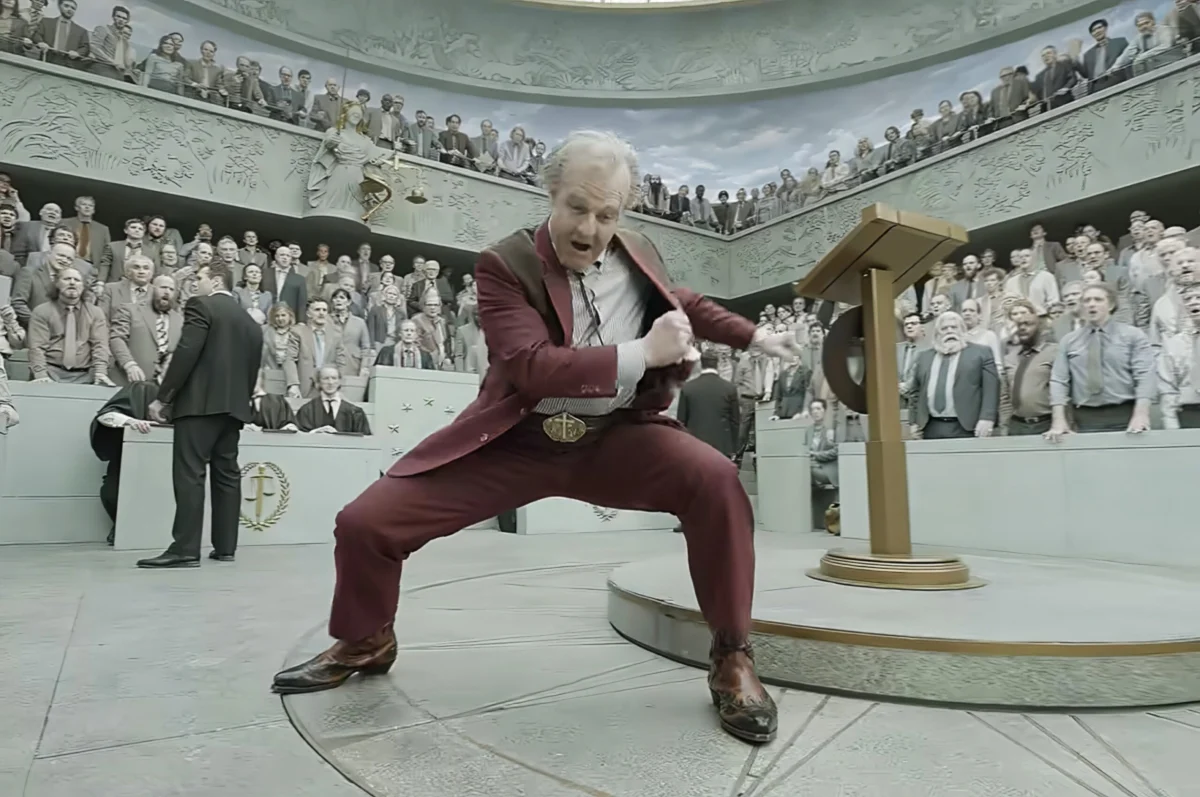
In an era defined by franchise safety and algorithmic risk-aversion, Alejandro González Iñárritu’s Digger arrives not merely as a film, but as a seismic event. It is, by a significant margin, the most visually inventive and conceptually ambitious studio picture to hit theaters since the release of One Battle After Another. Yet, in keeping with the tradition of true cinematic provocations, it has ignited a firestorm of discourse. The critical reception is currently a house divided: one side hails it as a maximalist masterpiece, while the other—including IndieWire’s David Ehrlich—labels it an indulgence in unearned pretension.
To understand Digger, one must look at the trajectory of its leading man. Much like his 1999 pivot in Stanley Kubrick’s Eyes Wide Shut and Paul Thomas Anderson’s Magnolia, Tom Cruise has once again stepped outside the "Ethan Hunt" comfort zone to collaborate with an auteur who treats the "Tom Cruise" persona not as a fixed asset, but as raw material to be deconstructed, challenged, and nearly obliterated.
A Legacy of Reinvention: The Cruise-Iñárritu Collaboration
The central conceit of Digger is as daring as it is divisive. Cruise portrays Digger Rockwell, an oil tycoon whose life is defined by staggering wealth, pathological self-absorption, and a reality so insulated it borders on the solipsistic. Iñárritu weaponizes our collective perception of Cruise—the untouchable Hollywood deity—to anchor the film’s early acts.
This is not a performance defined by the star’s typical kinetic energy; it is a surgical examination of fame. With the assistance of Kazu Hiro’s transformative prosthetic makeup, Cruise retreats behind a mask of privilege, allowing the film to comment on the very image he has spent decades cultivating. By the end of the first act, the film takes a narrative turn so radical that it threatens to alienate audiences looking for a standard dramatic arc. However, for those willing to engage with Iñárritu’s formal experimentation, this shift serves as the catalyst for the most profound, layered performance of Cruise’s storied career.
The Chronology of a Masterpiece in the Making
The journey of Digger from script to screen was anything but linear. During a recent Q&A session at the Academy’s Samuel Goldwyn Theater—moderated by the author and featuring Iñárritu, producer Mary Parent, and cast members John Goodman, Sandra Hüller, and Michael Stuhlbarg—the team revealed the iterative nature of their process.

"I had never read a character like it," Cruise noted during the discussion. "It’s really three characters I’m playing."
The production, characterized by high-stakes experimentation, saw the team testing various tonal shifts before locking in the final cut. Michael Stuhlbarg reflected on the ambiguity of the shoot, admitting, "We didn’t know which version of this we wanted to do. We tried many, and found it as a group." This sentiment was echoed by Iñárritu, who candidly discussed the agonizing process of reviewing dailies. "Sometimes we were shooting, and we were pushing everything, and it was super fun," the director said. "But then the next day I watched the dailies and said, ‘Fuck, this is horrible. This sucks. Let’s go back.’"
This period of "trial and error" eventually yielded a tone that balances the absurdity of political satire with the intimacy of a character study. By the time the film reached its final form, the cast had developed an almost telepathic shorthand, resulting in a rhythm that feels both calculated and spontaneous.
Orchestrating the Ensemble: Beyond the Star
While the marketing has focused heavily on the transformation of Tom Cruise, Digger is, at its core, a magnificent ensemble piece. Iñárritu views his cast as an "orchestra," with every performance serving as a necessary instrument.
John Goodman, playing a bewildered President of the United States, delivers a performance that feels simultaneously grounded and operatically theatrical. His work here recalls his best collaborations with the Coen brothers, yet it is uniquely tuned to the absurdist frequency of Digger. During the rehearsal process, which Goodman described as "taking a Ferrari out for a test drive," the cast leaned into the outrageous nature of the material while maintaining a psychological "realness" that prevents the film from descending into mere caricature.

The film’s depth of field—a hallmark of Iñárritu’s use of VistaVision—further enhances this ensemble effort. Unlike many contemporary directors who dictate the viewer’s focus through rapid cutting, Iñárritu allows the camera to linger. This creates a "Renoiresque" sense of democratic humanism; the viewer is encouraged to scan the frame, where they will find the brilliance of actors like Sandra Hüller and Michael Stuhlbarg, whose performances reward repeat viewings. Stuhlbarg, in particular, emerges as the film’s "comic secret weapon," his subtle, terrified presence in the background of scenes providing a silent counterpoint to the bombast in the foreground.
The Artistic DNA of ‘Digger’
The film’s aesthetic and thematic roots are eclectic, spanning the history of cinema. Iñárritu cites the speed and wit of 1940s Hollywood comedies—specifically Howard Hawks’ His Girl Friday and Ernst Lubitsch’s To Be or Not to Be—as primary influences on the film’s "rat-a-tat" dialogue.
"When we were together at Pinewood, we screened His Girl Friday," Iñárritu explained. "Hawks was a master of that kind of speedy dialogue."
This linguistic dexterity is most apparent in a ten-minute monologue delivered by Cruise in the second act—a sequence of verbal pyrotechnics that manages to be hilarious, enraging, triumphant, and resigned, often within the same sentence. It is a reminder that Cruise’s skill set extends far beyond the physical requirements of his action-hero roles; his command of cadence and subtext remains unmatched among his peers.
Beyond the dialogue, the film’s structural DNA borrows from the political satire of Kubrick’s Dr. Strangelove and the meta-theatricality of John Cassavetes’ Opening Night. Yet, where Kubrick’s work is often clinical and detached, Iñárritu’s Digger is defined by a palpable, beating heart. It is a film that refuses to choose between being a disaster-movie spectacle and a raw, human drama, choosing instead to occupy the uncomfortable space between the two.

Implications for the Industry: The Warner Bros. Renaissance
The success—and the audacity—of Digger cannot be separated from the environment that allowed it to exist. The film stands as a testament to the stewardship of Warner Bros. executives Pam Abdy and Michael De Luca. In a landscape where mid-budget and high-concept auteur films are increasingly relegated to streaming platforms or cancelled entirely, Abdy and De Luca have fostered a regime reminiscent of John Calley’s Warner Bros. era in the 1970s or Robert Evans’ golden run at Paramount.
Their commitment to "personal filmmaking on a grand scale" has resulted in a string of recent successes that have redefined the modern studio blockbuster, including Sinners, Weapons, Wuthering Heights, and Companion. By providing the resources and the creative freedom for directors like Iñárritu to push boundaries, Warner Bros. is effectively curating a library of future classics.
The Verdict of History
It is entirely possible that Digger will continue to polarize audiences and critics in the coming months. However, history suggests that the initial vitriol directed at challenging, maximalist works often softens into canonization.
Just as the early detractors of Eyes Wide Shut eventually found themselves on the "wrong side of history," those currently dismissing Digger as "pretentious" may find their perspectives shifting as the film’s nuances settle into the cultural consciousness. Digger is not a film that demands to be understood on the first watch; it is a film that demands to be lived with. It is an exquisite, handmade epic that dares to be everything at once: hilarious, terrifying, absurd, and deeply human. In a cinematic landscape starving for ambition, Digger is not just the best film of the year—it is a bold, necessary statement on the power of the medium itself.
