
Echoes in the Crosshairs: Reed Van Dyk’s ‘Atonement’ Delivers a Devastating Portrait of War and Conscience
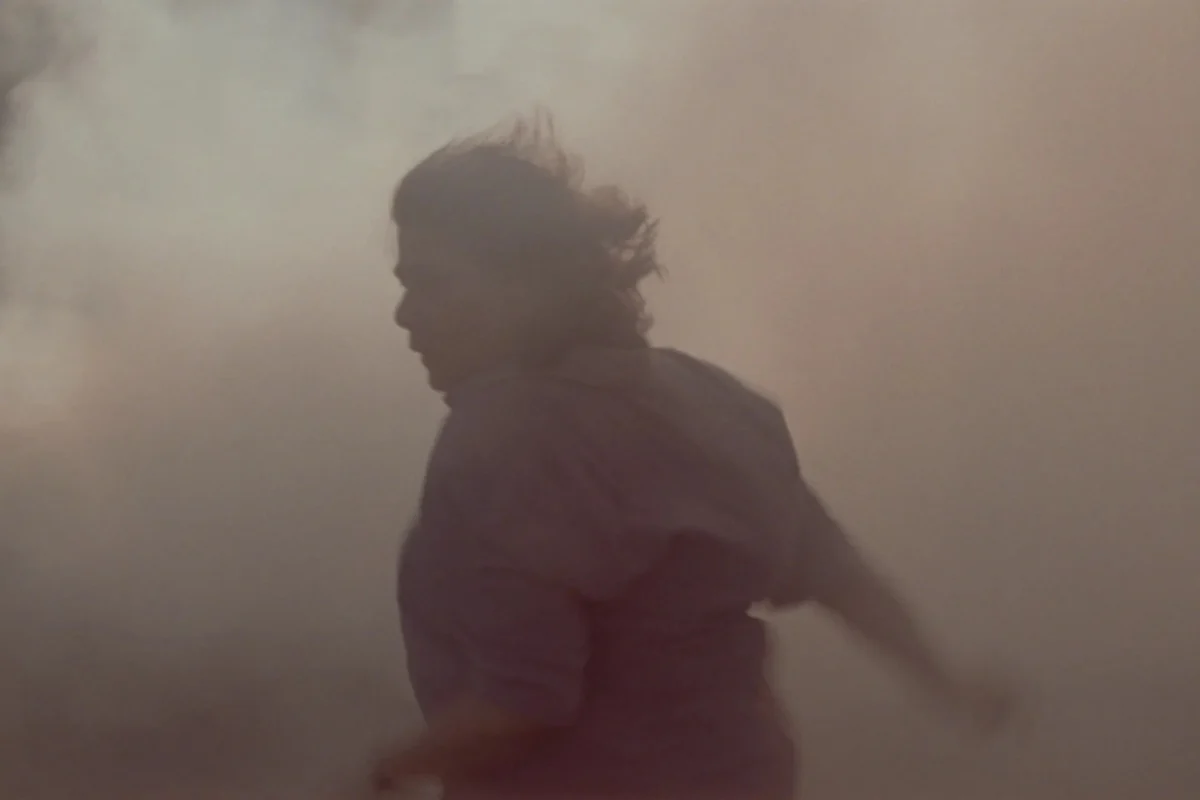
Originally premiered out of competition at the 2026 Cannes Film Festival, Reed Van Dyk’s feature directorial debut, “Atonement,” is slated for a theatrical release via Kino Lorber on Friday, October 2. Based on Dexter Filkins’ acclaimed 2012 New Yorker article of the same name, the film offers a deeply intimate, psychologically harrowing look at the lingering human toll of U.S. imperial violence.
Main Facts: A Paradigm-Shifting War Drama
In the landscape of modern cinema, war films frequently rely on spectacle, externalized violence, and the macro-politics of geopolitical conflict to command an audience’s attention. Reed Van Dyk’s Atonement completely bypasses these conventions. Instead of staging sprawling battlefield sequences or focusing on peripheral acts of war, the film zeroes in on a single, agonizing focal point: an April 8, 2003, shooting in the Baladiyat district of Baghdad that forever alters the lives of an ordinary Iraqi family and a young U.S. Marine.
Starring legendary Palestinian actress Hiam Abbass and Boyd Holbrook, Atonement trades grand pyrotechnics for the emotional acuity of a life-changing psychological evaluation. Rather than exploiting trauma for cheap thrills, the film immerses viewers directly into the inner lives of its subjects, examining how the shockwaves of a split-second military decision ripple across decades and continents.
With a measured runtime and a refusal to offer easy, Hollywood-style catharsis, Van Dyk’s debut has emerged as one of the most intellectually and emotionally challenging cinematic explorations of the Iraq War’s legacy in recent memory.
Chronology: The Anatomy of a Tragedy
The structural framework of Atonement is divided across two distinct temporal and spatial planes, tracing the arc from an idyllic spring morning in Baghdad to a fractured, ghost-filled existence in Los Angeles a decade later.

Act I: Baghdad, April 2003
The film opens on a deceptively serene morning in Baghdad just weeks after the initial U.S. invasion. Three generations of the Khachaturian family—a Christian-Armenian Iraqi household—are gathered together, preparing a meal from fresh produce. Water and electricity are intermittent, and distant bombs periodically rattle the air, yet domestic life retains its warmth.
Mariam (Hiam Abbass), a former ninth-grade teacher, moves through the home with a quiet, self-possessed grace. Her daughter Nora (Gheed) eats cherries and spits out the pits, while children chase a ball in the sunlit street outside. The family watches state television broadcasts of Saddam Hussein railing against "The Great Invader," though their patience for the rhetoric is thin.
Seeking safety from the encroaching fighting, the family packs into a convoy of two cars to travel from a relative’s refuge back toward their own home. Simultaneously, the narrative introduces Lou (Boyd Holbrook), a young U.S. Marine rolling through the dusty, graffiti-lined streets in an open-topped vehicle. Lou and his fellow servicemen joke casually, riding high on adrenaline and mutual bravado.
The collision of these two worlds is devastatingly swift. Sent to secure a rooftop position to fire at an unseen enemy, Lou’s unit opens fire. The bullets strike the Khachaturian family convoy. In a matter of moments, the fabric of multiple lives is torn apart. It is a sequence defined by suffocating tension, culminating in the only time the stoic Mariam breaks down in a piercing, unforgettable scream.
Act II: Los Angeles, a Decade Later
The narrative then leaps forward ten years, transplanting the focus to Los Angeles. Lou has returned home, but he is a physical and psychological ruin. Plagued by severe post-traumatic stress disorder, he experiences violent shakes during intimacy with his on-and-off partner, Anna (Gratiela Brancusi).

The film takes a profound narrative risk by asking audiences to empathize with a man directly responsible for the tragedy witnessed in the first act. Yet, rather than relying on heavy-handed sentimentality or special pleading, Van Dyk grounds Lou’s suffering in stark visual choices: his muscular frame is constantly weighed down by unironed clothes, and his eyes carry the hollow look of a man who hasn’t slept in a decade.
The catalyst for a potential reckoning arrives via a fictionalized New Yorker journalist surrogate, Michael Reid (played with low-key authority by Kenneth Branagh). Reid had documented Mariam and Nora’s stories in the wake of the Baghdad shooting. When Lou stumbles upon the article online, his lingering guilt finds a physical point of contact. The paths of the killer and the survivors begin to draw toward an inevitable, albeit quiet, convergence in California.
Supporting Data & Production Insights
To capture the texture of early-occupation Iraq without shooting on location in Baghdad, production utilized substitutes in Jordan, meticulously dressing sets with authentic Arabic graffiti and vibrant fruit markets to juxtapose the mundane details of daily life with the harsh debris of war—spent shell casings resting next to fresh produce.
- Source Material Adaptation: Dexter Filkins’ 2012 New Yorker piece, "Atonement After Iraq," served as the emotional bedrock for the project. Director Reed Van Dyk noted during a Directors’ Fortnight screening at Cannes that he was inspired to adapt the piece because he "cried all the way through it."
- Cast Standouts:
- Hiam Abbass brings an immense, generational weight to the role of Mariam Khachaturian. Drawing on her own lived experiences of displacement and identity—echoed in her work in Bye Bye Tiberias and Palestine 36—Abbass anchors the film with a solemn authority reminiscent of her memorable turn as Marcia in HBO’s Succession.
- Boyd Holbrook captures the disintegrating psyche of a veteran consumed by invisible wounds.
- Gratiela Brancusi delivers a finely tuned supporting performance as Anna, a partner caught in the crossfire of secondary trauma, delivering the film’s thematic thesis: "When a bullet is fired, it shoots both ways."
Official Responses and Critical Reception
Since its world premiere at the Cannes Film Festival, Atonement has drawn significant acclaim from critics and festival audiences alike for its refusal to pander to conventional war-movie tropes.
Film critics have highlighted the picture’s unique emotional intelligence. Unlike traditional Hollywood narratives that build toward grand, melodramatic resolutions or neat acts of absolution, Van Dyk’s film opts for a much quieter destination. Industry analysts note that Kino Lorber’s strategic October theatrical release positions the film squarely in the conversation for prestige autumn awards, particularly for lead performances and adapted screenplay consideration.

At a post-screening panel at Cannes, Van Dyk emphasized his intent behind the project:
"We didn’t want to make a movie about right and wrong in the geopolitical sense. We wanted to examine what happens to the human soul when it is locked into a perpetual orbit of grief, and whether grace can exist in the spaces where language fails."
Implications: Challenging the Binary of Killer and Victim
Beyond its technical mastery and powerhouse performances, Atonement forces its audience to confront uncomfortable truths regarding the systemic costs of military intervention. By refusing to paint either the Iraqi civilians as mere collateral damage or the American soldier as a simple monster, the film dismantles the comforting binary of "killers" and "victims."
Instead, it poses an implicit, haunting question: Which unseen, institutional forces are truly responsible for the cumulative suffering born of imperial conflict?
As the film concludes, it rejects Hollywood catharsis in favor of a fragile, unspoken understanding between people bound together by tragedy. Referencing the poetry of Rumi—“Somewhere beyond right and wrong, there is a garden, I will meet you there”—Atonement suggests that healing does not come from erasure or simple forgiveness, but from the agonizing, shared willingness to simply be in the same room with the truth.
