
The Myth of the Gatekeeper: How Michael Rousselet and Five Second Films Forged a Blueprint for Modern Independent Cinema
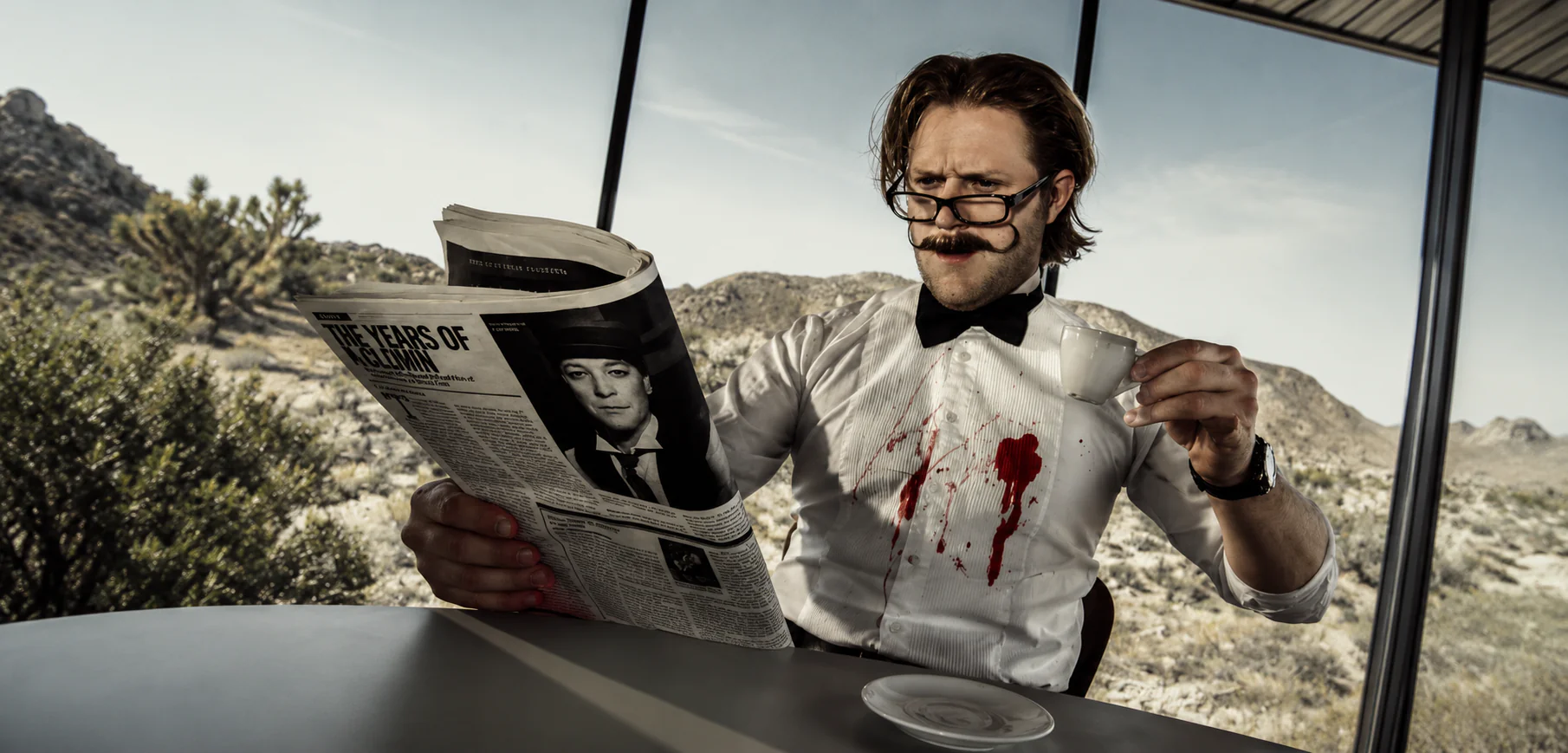
By [Your Name/Staff Writer]
Published: October 2023
Main Facts: The Death of Permission Culture
In the contemporary creative landscape, a pervasive and dangerous myth continues to misguide aspiring artists: the belief that a career in filmmaking requires an official invitation. For decades, the traditional cinematic ecosystem has been guarded by a phalanx of gatekeepers—film school admissions boards, risk-averse studio executives, literary agents, talent managers, and institutional financiers who hold the keys to production budgets and distribution channels.
The career of filmmaker, screenwriter, and digital pioneer Michael Rousselet systematically dismantles this paradigm. Best known as a founding member of the viral comedy collective behind Five Second Films and the cult classic feature Dude Bro Party Massacre III, Rousselet built his career not by waiting for authorization, but by operating on an ethos of relentless, self-directed execution.
Rather than chasing greenlights from executives who measured risk through spreadsheets, Rousselet and his collaborators proved that modern filmmaking careers are built incrementally. They are forged through volume, community-building, and an unwavering commitment to the tangible act of creation. By bypassing traditional institutional hurdles, Rousselet’s trajectory offers a masterclass in how today’s independent creators can leverage digital tools, audience direct-marketing, and raw iteration to carve out sustainable, autonomous careers in the entertainment industry.
Chronology: From the Halls of USC to the Front Page of Reddit
To understand how Rousselet unlocked the mechanics of independent film production, it is necessary to trace a timeline defined less by corporate milestones and more by a relentless daily output.
1. The Crucible of Film School: Building a Creative Ecosystem
Rousselet began his formal education in the prestigious screenwriting program at the University of Southern California (USC). However, looking back, he notes that the true value of film school lay outside the lecture halls. While the curriculum offered foundational knowledge, the true asset was proximity.
USC acted as a high-density incubator where Rousselet could find his creative tribe. Writers intersected with cinematographers; directors crossed paths with actors; and specialists in lighting, sound design, editing, and production management found one another. This collegiate network quickly evolved into what Rousselet characterizes as his "filmmaking family"—a core group of collaborators who would continue to build projects together long after graduation.
Crucially, Rousselet is transparent that film school is far from mandatory. Technical proficiencies can be acquired through self-directed study, mentorships, or hands-on trial and error. What cannot be easily replicated outside of an intentional community, however, is an environment rich in peers willing to make mistakes, critique one another, and push forward.
2. The Five Second Films Era: 1,500 Repetitions in Discipline
Out of this collegiate network emerged an idea that sounded absurdly counterintuitive: Five Second Films. The premise was stark—tell a complete, narrative-driven comedic story lasting approximately five seconds.
While the format sounds like a gimmick, it forced an intense level of artistic discipline. Every premise, setup, punchline, and resolution had to be stripped down to its absolute narrative DNA. Rousselet and his partners suddenly had a practical graveyard for the notebooks of micro-ideas that were never substantial enough to sustain a feature-length screenplay.
Upon graduation, the collective escalated their ambition into a grueling schedule: release a brand-new Five Second Film every single weekday, Monday through Friday. They maintained this punishing pace for roughly six years, ultimately producing more than 1,500 distinct short films.
In the beginning, the metrics were bleak. Their view counts languished in the double digits—often hovering between 15 and 30 views per video. Yet, they persisted without validation. Then, a single sketch breached the front page of Reddit. The algorithmic floodgates opened, subscribers poured in, and the paradigm shifted.
3. The Digital Sweat Equity and Asset Accumulation
The true value of those 1,500 videos is not merely statistical; it is experiential. The collective was putting themselves through a high-frequency, boot-camp-style film school. Every single week presented a new cycle of writing, directing, acting, lighting, shooting, editing, and technical problem-solving.
As their digital footprint grew, occasional commercial gigs generated modest cash flows. Instead of dividing the profits for personal luxuries, the group aggressively reinvested every dollar back into production hardware. They purchased professional-grade lights and microphones, scavenged usable gear, and systematically converted their shared household into a functional, makeshift production studio.
By the time they decided to transition into feature filmmaking, they possessed an asset that most aspiring filmmakers lack: empirical proof of execution. They had years of finished work demonstrating that they could finish what they started, manage logistics, and deliver content on a schedule.
4. Dude Bro Party Massacre III: Bypassing the Gatekeepers
When Rousselet and his team set out to produce Dude Bro Party Massacre III, they initially tested the waters of the traditional studio and financing path. They packaged the script and pitched it to conventional producers. Time and again, they hit a wall. Traditional financiers either failed to grasp the high-concept, satirical nature of the material or deemed an independent feature spearheaded by an online sketch-comedy troupe to be a financial liability.
Rather than letting those rejections shelve the project, the creators pivoted directly to the audience they had spent six years cultivating. They launched a Kickstarter campaign that successfully raised approximately a quarter of a million dollars.
Seeing the undeniable momentum, the robust audience engagement, and the validated crowdfunding success, independent financier Keith Calder of Snoot Entertainment stepped in to match the financing. Dude Bro Party Massacre III was successfully realized not because a studio executive gave them permission, but because an engaged community and a vast archive of past work served as undeniable proof of concept.
Supporting Data & Creative Philosophy: The Mechanics of Comedy and Screenwriting
Rousselet’s insights extend far beyond production logistics into the mechanical craft of screenwriting and comedic tone. His approach strips away the pretension often associated with cinematic writing, replacing it with practical, blue-collar techniques.
Breaking Down the Page: The Rough Draft Philosophy
When tackling a new screenplay, Rousselet begins with structural framing: establishing where the story starts and envisioning its ultimate destination. Once those parameters are set, he engages in a process of uninhibited brain-dumping.
He unloads raw ideas into a document without agonizing over prose elegance, tone consistency, or dialogue polish. Once the raw material is on the page, he arranges the thoughts chronologically, identifies structural gaps, and shapes the sprawling text into a working outline robust enough to drive a screenplay. When working with collaborators, he advocates for tactile tools like physical note cards to visualize character trajectories, causal relationships, and escalating dramatic tension.
Perhaps his most liberating piece of advice for emerging writers targets the psychological paralysis of the blank page: stop demanding perfection from the first draft.
“You can’t be afraid to write down a line that you know sucks,” Rousselet explains.
The scene can be clunky, the dialogue on-the-nose, and the plot mechanics clumsy. The directive is simple: write it anyway, push through to the end of the draft, and return later with an editorial "bullshit detector" to refine and elevate the material.
The Anatomy of a Sincere B-Movie
A critical lesson embedded in Dude Bro Party Massacre III is the danger of ironic detachment. The film is a hyper-stylized satire of 1980s slasher tropes, yet it was never approached with the sneering irony that sinks many modern parodies. Rousselet and his co-creators genuinely loved the genre they were lampooning.
Intentionally crafting a "bad" or campy movie easily devolves into forced, cynical execution unless anchored by genuine sincerity. The filmmakers cared deeply about the mechanics of gore, suspense, character psychology, and narrative stakes.
A major creative breakthrough occurred when the team realized that their "heroic" frat-boy protagonists were deeply flawed, obnoxious individuals, while the masked killer, Motherface, operated from a place of internally justified vengeance. By giving the antagonist an understandable perspective, the narrative anchor held firm, transforming an outrageous horror-comedy into a structurally sound dramatic experience.
Official Responses and Industry Implications
As the lines between traditional studio filmmaking and independent digital production continue to blur, Rousselet’s methodology carries profound implications for the broader entertainment industry.
Traditional gatekeepers have historically justified their existence by pointing to the prohibitive costs and technical complexities of film distribution and production quality control. However, the democratization of 4K digital cinema cameras, accessible editing software, and direct-to-consumer global platforms like YouTube, Kickstarter, and Vimeo have permanently altered the economic equation.
Industry analysts note that studios are increasingly looking to creators who have already built built-in audiences and demonstrated self-sufficient execution capabilities. The era of the "discovery" of raw, unproven talent in a vacuum is giving way to an ecosystem that values entrepreneurial grit and community-building.
Furthermore, Rousselet’s specific warning regarding production scope serves as a cautionary tale for first-time feature directors. His post-mortem analysis of Dude Bro Party Massacre III acknowledges the immense logistical strain of packing a debut script with sprawling moving parts:
- Forty-plus speaking roles requiring massive casting oversight and scheduling nightmares.
- Fifty distinct locations draining resources on company moves and technical resets.
- Complex logistical hurdles involving animals, children, pyrotechnics, water effects, and high-risk stunts.
His ultimate advice to first-time feature filmmakers is starkly pragmatic: write for what you actually have.
“Your first feature doesn’t need the logistical footprint of Lawrence of Arabia,” Rousselet notes. A compelling, tightly wound narrative driven by three strong actors across a handful of controlled locations can yield an extraordinary cinematic achievement without requiring a blockbuster apparatus.
Conclusion: The Ultimate Takeaway for Filmmakers
The thread connecting every facet of Michael Rousselet’s career philosophy is remarkably uncomplicated, yet profoundly difficult to maintain: Make the thing.
Finish the screenplay. Shoot the micro-budget short. Analyze why the lighting setup failed on set and correct the sound design on the next iteration. Seek out collaborators who share an obsessive passion for the medium. Cultivate an audience organically through consistency rather than assuming viewers will materialize magically upon a feature’s completion.
Accept that initial drafts will contain flawed writing. Accept that early productions will feature technical mistakes. Then, immediately, make another one.
Filmmaking does not become easier because an artist waits until they feel universally "ready." Instead, artists become filmmakers precisely because they refuse to wait—choosing, project by project, to simply do the work.
