
The Lasting Legacy of Eva Marie Saint: A Cinematic Icon Passes at 102
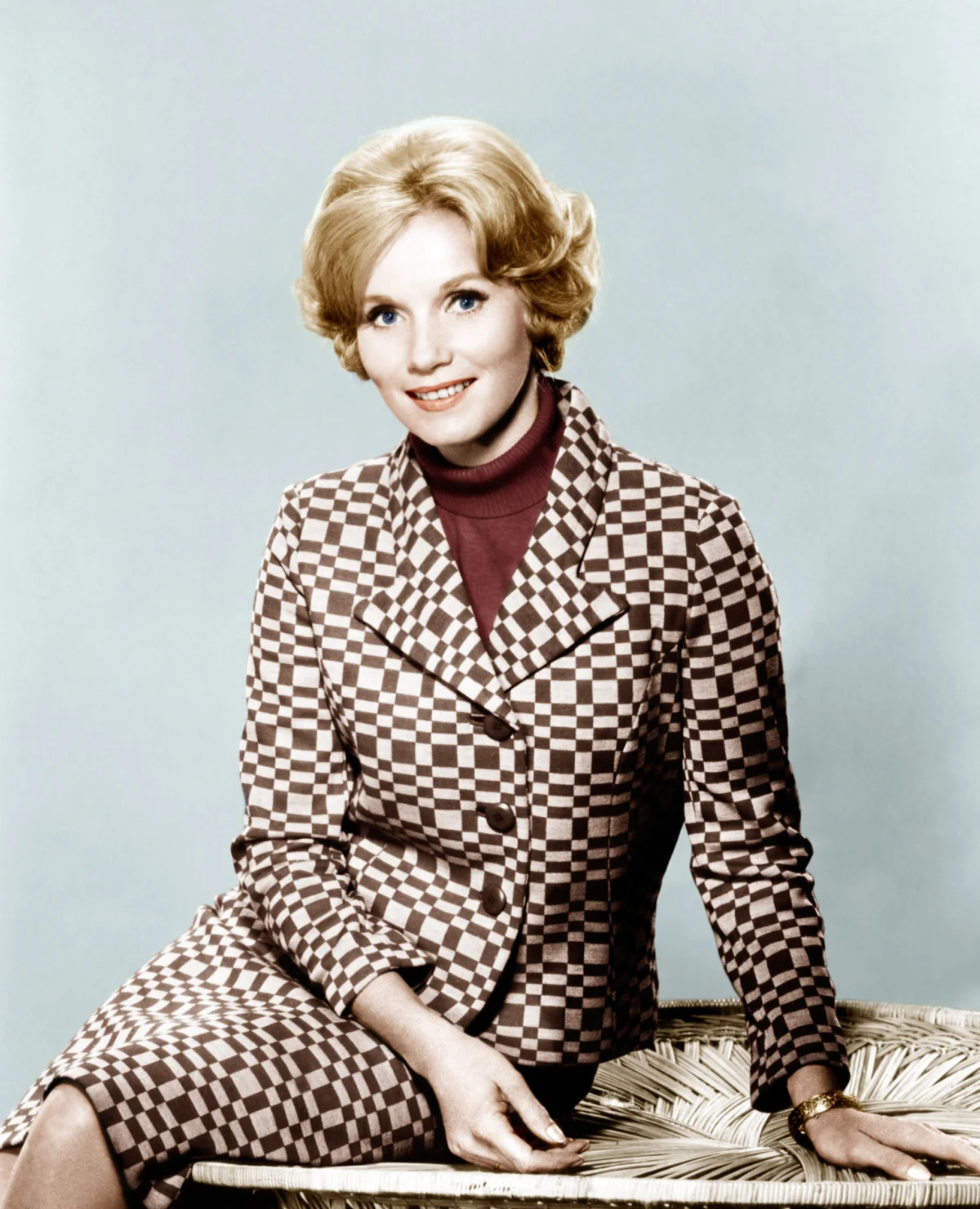
Eva Marie Saint, the quintessential “fine-boned” talent whose career bridged the golden age of live television and the heights of Hollywood stardom, has died at the age of 102. The Oscar-winning actress, known for her indelible performances in On the Waterfront and North by Northwest, passed away peacefully on Tuesday at her home in Los Angeles. Her death marks the end of a remarkable era; until this week, she stood as the oldest living Academy Award winner, a living link to the mid-century titans of American cinema.
A Career Defined by Grace and Versatility
Eva Marie Saint was not merely an actress; she was a transformative force in the evolution of modern acting. With a delicate, ethereal presence that often belied a steely, analytical mind for character development, Saint emerged as one of the first true breakout stars of the early television era.
Her career was defined by a rare refusal to be pigeonholed. Whether she was playing the vulnerable, tender Edie Doyle in Elia Kazan’s On the Waterfront (1954)—a performance that earned her the Academy Award for Best Supporting Actress—or the cool, duplicitous secret agent Eve Kendall in Alfred Hitchcock’s North by Northwest (1959), Saint brought a level of psychological depth that set her apart from her contemporaries. Critics frequently noted that Saint possessed the unique ability to project fragility while maintaining an underlying strength, a duality that made her an essential partner to leading men like Marlon Brando, Cary Grant, and Paul Newman.
Chronology: From Radio Waves to the Silver Screen
Early Beginnings and the Television Revolution
Born in Newark, New Jersey, and raised in Delmar, New York, Saint initially set her sights on a career in education. While attending Bowling Green State University in Ohio, however, the theater bug took hold. After graduating, she moved to New York City, determined to forge a path in the arts.
Her start was humble; she earned her first paycheck—a mere $10—for providing off-camera applause for The Borden Show. To survive, she worked as a model and found steady, if unglamorous, work in radio serials like Rosemary and Young Doctor Malone.
The advent of live television in the early 1950s provided the perfect crucible for her talent. Saint became a fixture of the "Golden Age of Television," starring in anthology series such as Philco Playhouse, Robert Montgomery Presents, and Studio One. Her work in these demanding, live-broadcast dramas—including a memorable musical adaptation of Thornton Wilder’s Our Town alongside Paul Newman and Frank Sinatra—earned her multiple Emmy nominations and caught the eye of legendary director Elia Kazan.
The Academy Award Breakthrough
Her leap to film was nothing short of meteoric. After a critically acclaimed performance in the television play The Trip to Bountiful alongside Lillian Gish, Kazan cast her in On the Waterfront. The 1954 film became a landmark in cinema history, winning eight Oscars, including Best Picture. Saint’s portrayal of Edie Doyle, the moral compass in a world of corruption, remains one of the most celebrated supporting performances in history.
Rather than succumbing to the pressure of a long-term studio contract—a common trap for actresses of that era—Saint opted for independence. She returned to the stage, performing in stock productions like The Rainmaker and Desire Under the Elms, ensuring that her craft remained grounded in the rigorous demands of live theater.
The Hitchcock Muse and Beyond
In 1959, Saint cemented her place in the pantheon of cinema icons as Eve Kendall in Alfred Hitchcock’s North by Northwest. It was a role that subverted the “damsel in distress” trope. As a blonde spy caught in a web of international intrigue, Saint played the character with a sharp, seductive, and often dangerous wit. Hitchcock, known for his demanding nature, found in Saint an actress who could navigate the technical precision of his vision while maintaining a human warmth that made her character resonate.
Following this, she continued to work with the industry’s finest, starring in films like Otto Preminger’s Exodus (1960) and John Frankenheimer’s All Fall Down (1962). Her dramatic range was vast, spanning from the poignant drama of The Sandpiper (1965) to the comedic timing required for Norman Jewison’s The Russians Are Coming, the Russians Are Coming (1966).
Supporting Data: A Lifetime of Accolades and Advocacy
Saint’s versatility allowed her to traverse mediums with ease. She is one of the few performers to hold two separate stars on the Hollywood Walk of Fame: one for motion pictures and one for television.
Her later years were marked by a graceful transition into character roles that showcased her enduring relevance. From her recurring role as Cybill Shepherd’s mother on the hit series Moonlighting to playing Martha Kent in 2006’s Superman Returns, she never ceased working. Her dedication was finally rewarded with a Primetime Emmy Award in 1990 for her performance in the miniseries People Like Us, a crowning achievement following four previous nominations.
Beyond the screen, Saint was a dedicated advocate. She was a longtime supporter of the Motion Picture and Television Fund and the Epilepsy Foundation of Los Angeles. Her civic-mindedness even extended to road safety; she famously campaigned against distracted driving, distributing bumper stickers that read, "Get Off The Phone Or Get Off The Road."
Official Responses and Reflections
The industry has reacted with an outpouring of grief and admiration. Colleagues and film historians alike have highlighted her status as an "actor’s actor."
"Eva Marie Saint was the embodiment of the studio era’s best qualities—discipline, talent, and a profound respect for the work," said a spokesperson for the Academy of Motion Picture Arts and Sciences. "She proved that one could be a star without sacrificing the integrity of the performance."
In 2014, when she made her final big-screen appearance in Winter’s Tale, she was honored not as a relic of a bygone age, but as a working professional who remained as dedicated to her craft at 90 as she was at 20. Her peers often noted that Saint’s lack of scandal and focus on her family life—including her 66-year marriage to director Jeffrey Hayden, who passed in 2016—provided the stability necessary to maintain such a long, illustrious career.
Implications: The End of an Era
The passing of Eva Marie Saint serves as a sobering reminder of the thinning ranks of Hollywood’s Golden Age. She was one of the final connections to a time when cinema was defined by the transition from radio and theater to the massive, immersive world of the silver screen.
Her legacy, however, is far from fading. For aspiring actors, her career remains a masterclass in longevity and choice. By refusing to be tied to a singular image or a restrictive contract, she pioneered a version of the “independent actress” that is now the industry standard.
She is survived by her children, Darrell and Laurette, as well as four grandchildren—Eli, Tyler, Molly, and Stella—and two great-grandchildren, Arlo and Finley. As the curtain falls on a life that spanned more than a century, the final image of Eva Marie Saint is not one of decline, but of a brilliant, consistent light that graced the screen for over seven decades, leaving behind a body of work that will continue to be studied, admired, and cherished by generations to come.
