
Unmasking History: Joel Kinnaman on Bringing the Hunt for Saddam Hussein to Life in TNT’s ‘High Value Target’
Main Facts
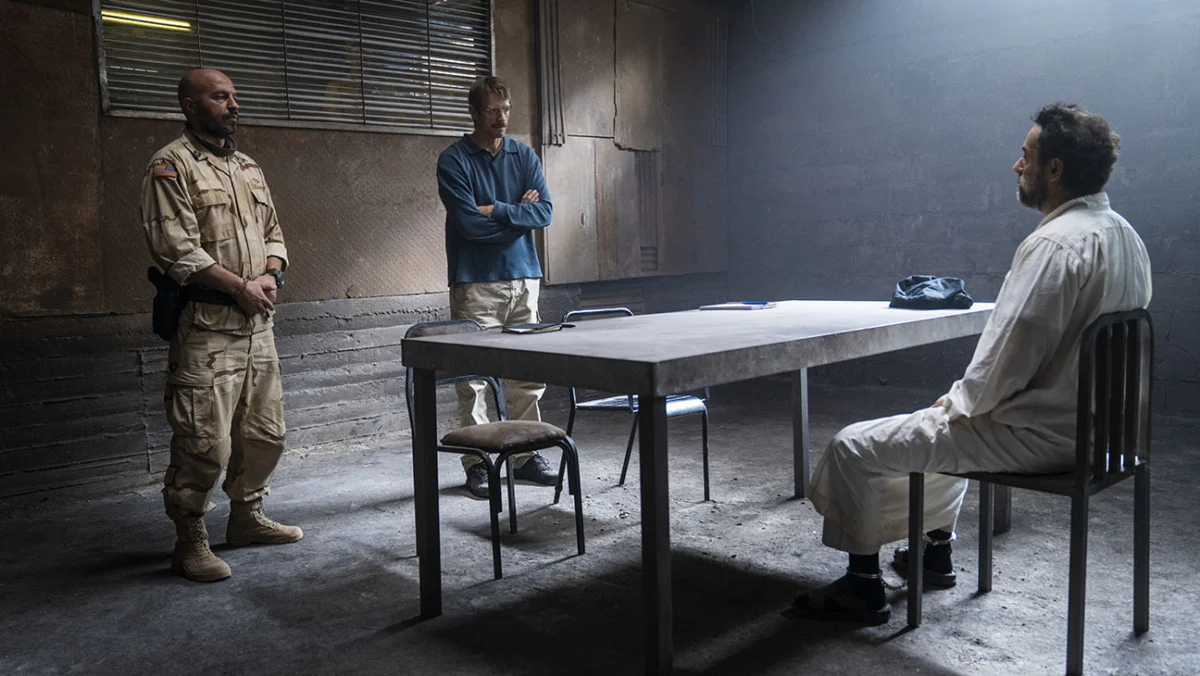
In the tense, high-stakes political thriller High Value Target: The Hunt for Saddam, TNT’s eight-part limited series dives deep into the post-invasion labyrinth of Iraq in December 2003. At the center of the narrative is actor Joel Kinnaman, who stars as former CIA analyst John Nixon—the very first American intelligence officer to interrogate a captured, defiant Saddam Hussein.
Opposite Kinnaman is acclaimed actor Waleed Zuaiter (Baghdad Central), who steps into the role of the deposed Iraqi dictator. The series chronicles the exhaustive, multi-million-dollar manhunt, the psychological chess match inside the interrogation room, and the shattering geopolitical realizations that followed. Adapted from Nixon’s 2016 memoir, Debriefing the President: The Interrogation of Saddam Hussein, the series explores the stark disconnect between intelligence on the ground and the political narratives manufactured in Washington.
The ensemble cast supporting Kinnaman and Zuaiter features a stellar lineup, including Lena Góra, Rebecca Night, Ewan Miller, Tom Berenger, Matt Barr, Paul Ryan (portraying President George W. Bush), Christopher McDonald, Dar Salim, and Talia Balsam. Created by Daniel Stiepleman and Jonathan Wakeham, and co-written and directed by Leslie Greif, the series is a co-production between AR Content and Big Dreams Entertainment.
Chronology of a Manhunt and Interrogation
The historical timeline underpinning High Value Target stretches back to the U.S.-led invasion of Iraq in March 2003, which abruptly ended Saddam Hussein’s 23-year brutal regime. Following the collapse of the Ba’athist government, a massive, multi-national manhunt ensued, fueled by a $25 million bounty.
The climax of this search occurred on December 13, 2003, during "Operation Red Dawn," when U.S. forces discovered Hussein hiding in a small underground spider hole near Tikrit. Almost immediately, the responsibility of determining whether the captive was indeed the ousted dictator fell upon intelligence specialists like John Nixon.
Rather than relying on a strict physical impersonation, Kinnaman chose to capture the psychological and physical essence of Nixon—a tall, lumbering, intellectually rigorous analyst thrust into the historical spotlight. In preparation for the role, Kinnaman immersed himself in Nixon’s memoir and spent personal time with the former CIA analyst.
The psychological interplay between Nixon and Hussein forms the backbone of the series. Kinnaman recalled being repeatedly struck by Zuaiter’s uncanny physical resemblance to the dictator on set. "Waleed, apart from doing a great performance, looked so much like Saddam," Kinnaman noted. "There were times when the light hit him in certain ways and I was looking upwards and I was like, ‘Holy fuck! It’s Saddam!’" The actor even admitted to treating moments on set like a portal to history, asking Zuaiter to freeze so he could capture photographs of the chilling transformation.
Supporting Data and Behind-the-Scenes Insights
High Value Target peels back the layers of one of the most consequential intelligence failures in modern history: the phantom pursuit of Weapons of Mass Destruction (WMDs).
One of the most eye-opening revelations dramatized in the series—and confirmed during the historical debriefings—was why Hussein fostered ambiguity regarding his regime’s WMD capabilities prior to the U.S. invasion. According to the historical record and Kinnaman’s interpretation of the interrogations, Hussein deliberately bluffed about possessing WMDs. His primary motivation was not to provoke the United States, but rather to project strength against his primary regional arch-rival, Iran.
"Well, of course, if I would 100 percent, without a doubt, prove to the world that I have no weapons, then as soon as you march away, Iran is going to invade," Kinnaman explained, articulating Hussein’s desperate strategic calculus to stay in power.

This revelation placed CIA analysts like Nixon in an impossible bind. Tasked by Washington superiors to extract a confession that validated the administration’s pre-invasion casus belli, Nixon instead found himself developing a grudging, complex respect for the fallen dictator as he uncovered the tragic reality of the intelligence apparatus. The series culminates in a dramatic, historically resonant scene where Nixon warns President George W. Bush inside the White House that unseating Hussein would inevitably remove the primary geopolitical buffer against Iranian dominance in the region.
Official Responses and Creative Perspectives
The creators and cast of High Value Target have been vocal about the contemporary relevance of a story set over two decades in the past. Leslie Greif, who co-wrote and directed the series, aimed to ground the narrative in the grueling, claustrophobic reality of intelligence work rather than Hollywood spectacle.
For Kinnaman, stepping into the shoes of John Nixon offered a lens through which to critique ongoing foreign policy blunders. Drawing parallels between the bloody early months of the 2003 Iraq occupation and modern military interventions, the actor did not mince words regarding the cyclical nature of geopolitical conflict.
"I’m a little bit more cynical than just thinking it’s a lack of knowledge," Kinnaman argued, pointing to underlying forces that manipulate political systems. He argued that the historical hubris driving the Iraq war risks constant repetition, explicitly citing ongoing military tensions involving the U.S. and Israel in the Middle East.
"You didn’t need much game theory to see what would happen if you attack Iran," Kinnaman said. "Everyone knew exactly what would happen… It’s whose interest is actually behind that and what forces are pushing us into these devastating conflicts? It’s an absolute tragedy for America, for the innocent people that get killed and for the American people."
Reflecting on Nixon’s ultimate disillusionment, Kinnaman noted that the character’s journey mirrors the frustration of honest analysts whose insights are discarded when they fail to serve a pre-ordained political narrative. "The experiences John had in Iraq and seeing the human cost and human toll of these policies and ignoring reality, ignoring the real intel… he was just fed up with that."
Global Implications
While High Value Target: The Hunt for Saddam is framed as a historical drama examining a pivotal chapter of the early 2000s, its thematic ripples extend far into the present day. The U.S. occupation of Iraq successfully dismantled a brutal 23-year dictatorship, but it simultaneously uncorked a Pandora’s box of sectarian violence, radical insurgencies, and profound geopolitical shifts.
Chief among those unintended consequences was the empowerment of Iran, a strategic outcome that analysts like the real John Nixon foresaw and attempted to communicate to the highest levels of the U.S. government. By dramatizing these warnings, High Value Target forces modern audiences to confront uncomfortable truths about how policy is shaped, how intelligence is weaponized or ignored, and how short-sighted military adventures cast long shadows over global stability.
As viewers tune into TNT to watch the gripping psychological chess match between Kinnaman’s Nixon and Zuaiter’s Hussein, the series serves as both a riveting piece of prestige television and a sobering reminder of the human and political cost of ignoring reality on the ground.
