
The New Titans of Tinseltown: Inside the High-Stakes Paramount-Warner Bros. Merger
The landscape of Hollywood is undergoing a seismic shift. As the historic merger between Paramount and Warner Bros. formally closes this week, two figures stand at the epicenter of the industry’s most ambitious gamble: Josh Greenstein and Dana Goldberg. Their ascent to the helm of this newly consolidated powerhouse—an $80 billion debt-laden entity—marks a turning point in the streaming era, as they prepare to execute an unprecedented mandate to release 30 theatrical films annually.
In an industry currently defined by austerity and the retreat from theatrical expansion, the duo’s plan is an outlier. While Netflix and other platforms have toyed with high-volume output, the logistical and financial burden of executing a 30-film theatrical slate—complete with global marketing campaigns and distribution infrastructure—is a task that dwarfs the current capabilities of most legacy studios.
A Partnership Forged in the West
The professional bond between Greenstein and Goldberg is not a product of the current boardroom shuffle, but a decade-long evolution. Their trajectory began in 2010 during the development of the Coen brothers’ True Grit, a Western remake that served as the foundational financing deal between Paramount and Skydance.
For Greenstein, a former marketing powerhouse at Paramount, and Goldberg, a burgeoning executive at Skydance, that collaboration was "the first glimmer of what was to come." Over the ensuing years, they would cultivate a working relationship defined by mutual trust and complementary skill sets. While Greenstein honed his reputation as a marketing savant—responsible for the innovative, cost-efficient campaigns behind the Spider-Man and Jumanji franchises—Goldberg evolved into a "producer’s producer," scaling Skydance from a financing entity into a creative engine with deep ties to industry titans like Tom Cruise, Shawn Levy, and John Krasinski.

Chronology of an Ambitious Ascent
The path to this consolidation has been long and fraught with corporate turbulence. Warner Bros. has endured a decade of uncertainty, passing from AT&T in 2018 to the Discovery merger in 2022, and now, finally, to the stewardship of Skydance CEO David Ellison.
- 2010: Greenstein and Goldberg collaborate on True Grit, establishing their professional synergy.
- 2014: Greenstein departs Paramount for Sony, where he oversees global marketing and eventually rises to president of the motion picture group.
- 2016–2024: Goldberg serves as a key lieutenant to David Ellison at Skydance, navigating the studio’s transition into high-concept original production.
- 2025: A banner year for departing Warner Bros. chiefs Michael De Luca and Pamela Abdy, who nonetheless face a premature exit following high-profile box office disappointments like Digger.
- 2026 (Present): The formal merger closes, thrusting the massive, combined slate of both studios into the hands of Greenstein and Goldberg.
The Strategy: Moving Beyond "Pencil Pushers"
The sheer scale of the new entity’s mandate has invited scrutiny from industry veterans. Critics point to the fact that neither Greenstein nor Goldberg has managed a studio of this magnitude, nor do they possess the storied auteur relationships of their predecessors, De Luca and Abdy.
However, supporters argue that their success lies in their ethos. Unlike previous regimes that prioritized fiscal hedging, insiders describe Greenstein and Goldberg as "enthusiasts, not pencil pushers." One former studio chief who has worked with them for decades noted, "I can’t tell you the number of conversations I hear about how hard it is to make money as opposed to ‘this is so cool, how do we do it.’ They’re going to get more out of the creative people because they lead with conviction."
Their early tenure at Paramount provides a blueprint for their future approach. In just one year, they successfully increased output from fewer than 12 films to 18, all while maintaining fiscal discipline. Their ability to "dial back" spending on projects that showed signs of weakness—rather than throwing good money after bad—has been a hallmark of Greenstein’s career, a skill that will be tested as they manage the massive debt burden left by the merger.

Financial Realities and the "Consent Decree" Constraint
The economic environment of this merger is complex. Unlike the Disney-Fox acquisition, which allowed for massive consolidation, Greenstein and Goldberg are bound by consent decrees with state Attorneys General, the result of an antitrust settlement. They cannot simply streamline operations by merging departments; they are legally obligated to maintain and service two distinct studio slates.
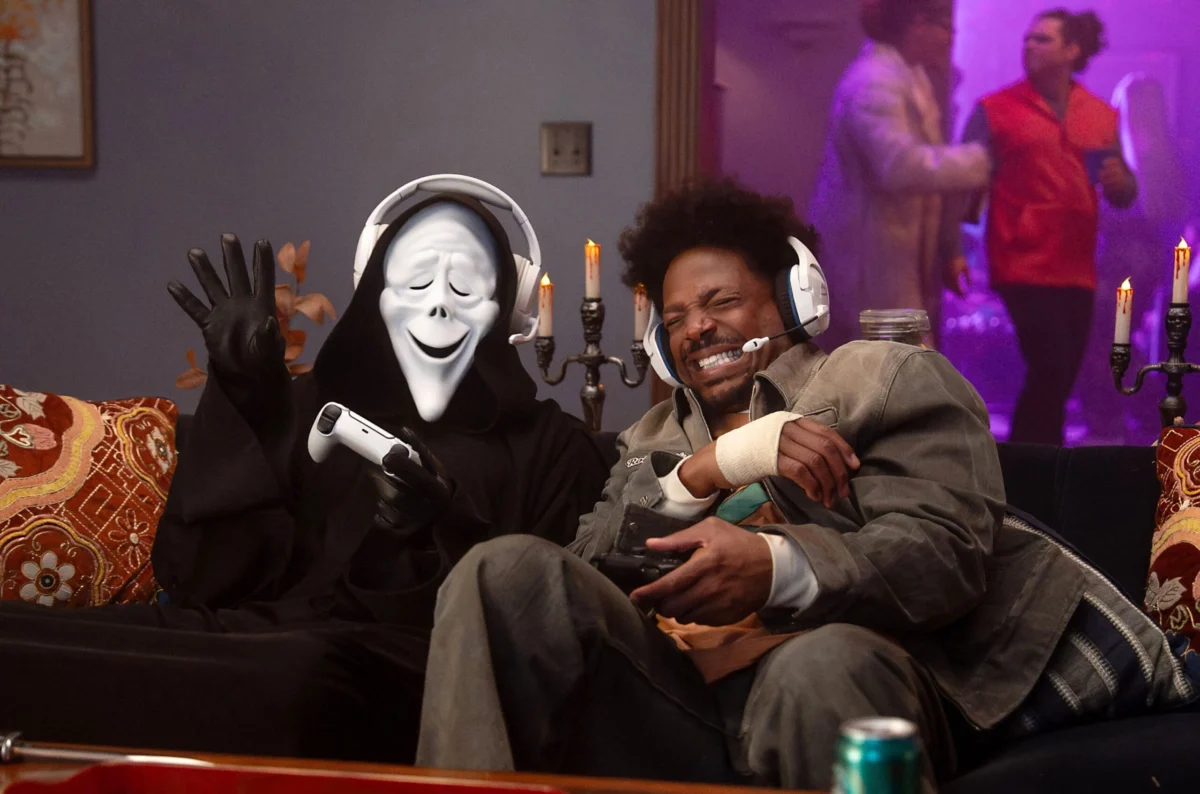
This creates a logistical hurdle: how to keep the unique brand identities of Paramount and Warner Bros. alive while managing 30 films annually. Fiscal performance remains a primary concern. While Paramount has seen one of its most profitable years in a decade, it has been driven by cost-cutting rather than a deluge of blockbusters. Only two 2026 releases—Scream 7 and Scary Movie—surpassed the $100 million domestic threshold. To succeed, the new leadership must pivot from mere efficiency to explosive, audience-driven growth.
The Cultural Toll and the Search for Stability
For the rank-and-file employees at Warner Bros., the transition brings a mix of relief and anxiety. "Everybody here thinks they’re going to lose their jobs," one insider remarked, noting that the staff feels as though they have been competing in an "endless season of Survivor."
The lack of stability has historically led to the abandonment of projects that lacked executive oversight. De Luca and Abdy had promised a pipeline extending through 2028; the fate of these projects is now in question. The new leadership faces the immediate challenge of proving to the creative community that the studio is a reliable home for high-budget, high-concept cinema. They have already moved to secure talent through overall deals with Jon M. Chu, Travis Scott, and the Duffer brothers, signaling a desire to cultivate a roster of "brand-name" creators.

The Road Ahead: Implications for the Industry
The implications of the Greenstein-Goldberg era are profound. If they succeed in their mission to produce 30 films a year, they will essentially redefine the theatrical model for the late 2020s. They are tasked with blending the "streaming-first" DNA of Skydance—responsible for hits like The Adam Project—with the prestige-driven legacy of Warner Bros.
The challenge is not merely about the number of films, but the quality of them. They must shepherd projects from heavyweights like M. Night Shyamalan, Sam Esmail, and J.J. Abrams, while simultaneously revitalizing dormant franchises like Lord of the Rings and Ocean’s.
As NYU professor and former studio executive Joe Pichirallo notes, "The size and the scope is much bigger than two people." Success will depend on their ability to delegate and to convince the agent and management world that their studio is once again a place where "conviction" takes precedence over quarterly earnings reports.
Ultimately, the merger is a high-wire act. Greenstein and Goldberg have the loyalty of David Ellison, a clear, transparent process, and a genuine enthusiasm for the creative process. Yet, in an industry where even the most seasoned veterans have stumbled, their greatest test remains: they have the infrastructure, they have the mandate, and they have the debt. Now, as the industry watches with bated breath, they simply need the blockbusters to justify the gamble. Whether they can turn this, their biggest promotion yet, into a sustained era of cinematic dominance remains the most compelling narrative in Hollywood today.
