
The Labyrinthine Imagination of Cadwell Turnbull: A Deep Dive into All the Hidden Places
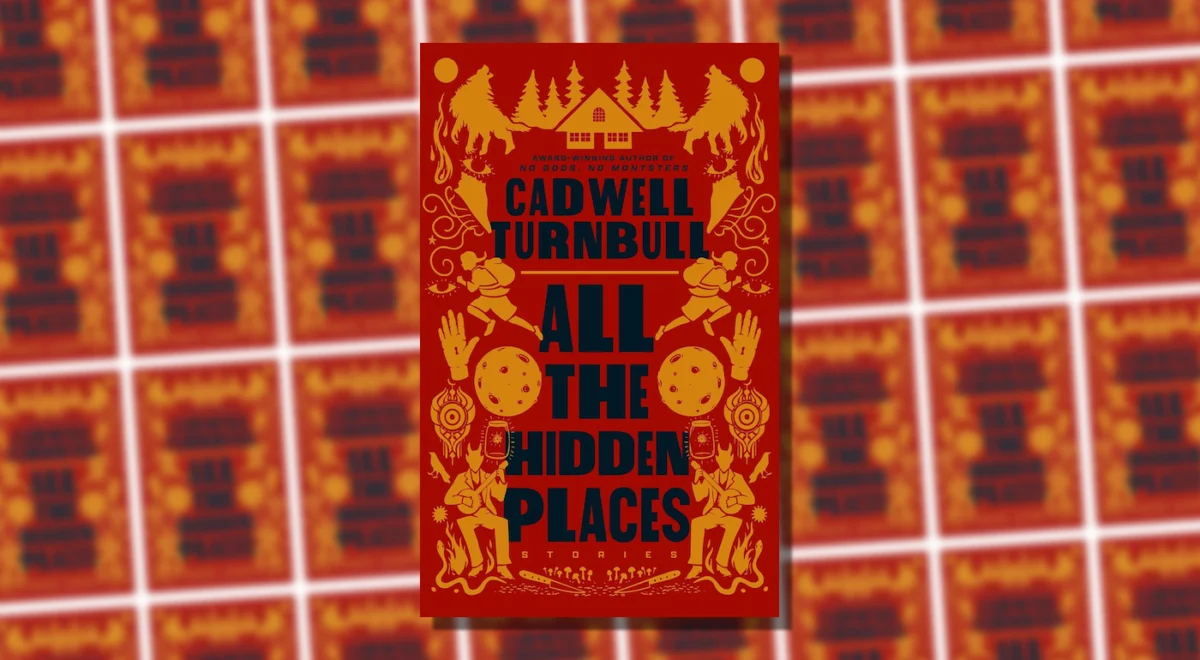
Cadwell Turnbull has long been recognized as an architect of the surreal and the expansive. To read his work is to enter a space where the boundaries of genre are not merely blurred—they are dismantled and rebuilt into something entirely new. In his latest collection, All the Hidden Places, published by Blackstone, Turnbull pivots from the sprawling, multiversal epics of his Convergence Saga toward a more focused, yet equally potent, examination of the human condition under the pressure of the impossible.
While his previous work, including the celebrated A Ruin, Great and Free, functioned as a high-velocity collision of supernatural realism and metafictional grandiosity, All the Hidden Places offers a deliberate recalibration. Here, Turnbull demonstrates that he does not need a multiverse to ground his big ideas; he only needs a singular, well-placed crack in reality.
Main Facts: A New Direction for a Master of Speculative Fiction
All the Hidden Places is a collection that operates on the tension between the mundane and the metaphysical. While Turnbull’s signature interest in "big ideas" remains, the execution is sharper and more intimate. The stories within traverse familiar subgenres—vampiric transformation, infernal bargains, and post-apocalyptic survival—but they do so with a structural precision that feels distinct from his earlier, more chaotic narratives.
The collection serves as a diagnostic tool for Turnbull’s own capabilities. By limiting the scope of each individual story, he forces himself to distill his thematic concerns—identity, sociopolitical rot, and the cyclical nature of family trauma—into tighter, more lethal prose. It is a work of maturation, where the "madcap energy" that defined his early career is tempered by a sharper, more surgical narrative focus.
Chronology: Navigating the Arc of the Collection
The collection’s opening piece, "Wandering Devil," serves as a perfect thesis statement for Turnbull’s current phase. It introduces Freddy, a protagonist defined by a pathological inability to remain static. His life is a series of abandoned friends and lovers, a restlessness that feels both human and deeply cursed. When Freddy introduces the supernatural element—a clandestine interaction with a mysterious, otherworldly figure—the story shifts from a character study into a chilling cautionary tale. It is a reminder that in Turnbull’s universe, the most frightening thing about a supernatural entity is often the human vulnerability that invited it in.
This journey continues into "There She Didn’t Need Air to Fill Her Lungs," a story that defies traditional narrative expectations. Opening with an impossible, striking image—a tree rooted in an inhospitable, high-altitude landscape—the story forces the reader into an uncomfortable proximity with an unnamed female protagonist and a mysterious "we" narrator. The ambiguity regarding the relationship between the two speakers is the engine of the story, pulling the reader toward a metaphysical resolution that challenges the very act of storytelling itself.
Moving into the middle of the collection, we encounter "The Letters Triptych," a centerpiece of political and social commentary. Spanning a critical period in the evolution of the United States, the triptych tracks a family struggling against the tide of rapid, often violent, sociopolitical change. Through the lens of the "Right to Work" political movement and the advent of viable suspended animation, Turnbull crafts a narrative that is both a biting critique of neoliberalism and a profound exploration of personal agency.
Supporting Data: Themes of Blood, Bone, and Policy
The brilliance of All the Hidden Places lies in its ability to anchor its most bizarre elements in the visceral reality of human relationships. In "Loneliness Is In Your Blood," Turnbull tackles the trope of immortality and vampirism with a level of domestic intimacy that is as unsettling as it is tender. The narrator, an apex predator, is rendered entirely helpless by the mundane reality of raising a child.
Turnbull writes:

"Your prey can’t see you without your skin, can’t hear you shuffle into their resting places. They sleep quietly as you unlatch your tongue and stab its tapered edge into the throbbing vein of their necks. They won’t make a sound as you gorge yourself on their blood. You float from house to house, drinking your fill, until your tongue is fat in your mouth and your puckered lips cannot close around it."
This passage is a masterclass in contrasting the horrific with the domestic. The vampire, capable of unspeakable violence, is suddenly confronted with the universal challenges of parenthood. The metaphor of shedding skin—literally and figuratively—serves as a poignant reminder that in Turnbull’s fiction, the most profound transformations are always tied to the people we choose to keep close.
Official Responses and Literary Implications
Critics and peers have long compared Turnbull’s work to the likes of Jean Ray, whose novel Malpertuis is a touchstone for the kind of "madcap energy" Turnbull has historically mastered. However, with this collection, the conversation is shifting. All the Hidden Places is being viewed as a departure point. Where once readers looked to Turnbull for the sheer volume of his ideas, they are now looking to him for his depth.
The implications for the genre of speculative fiction are significant. Turnbull is effectively arguing that the "big idea"—the multiverse, the tech-dystopia, the supernatural entity—is only as valuable as its ability to reflect the microscopic realities of the human heart. By focusing on the "hidden places" within his characters, he is making a case for a more psychological approach to the fantastic.
Furthermore, "The Letters Triptych" has already sparked discourse regarding the role of politics in speculative fiction. By focusing on the "curdling" of political platforms and the personal cost of governmental policy, Turnbull avoids the trap of didacticism. He doesn’t tell the reader how to feel about Adam Barnes or the "Right to Work" program; he shows us how those policies manifest in the lives of ordinary people, leaving the reader to draw their own conclusions about the fragility of the social contract.
Conclusion: The Persistence of Tenderness
If there is a single thread that ties these disparate stories together, it is the persistent, often desperate, search for connection. Whether his characters are traversing the multiverse or simply trying to survive the night in a house filled with blood, they are all, at their core, looking for someone to hold.
Cadwell Turnbull has created a collection that is, in every sense, a mirror. It is a work that dares to look at the darkest corners of the human experience—loneliness, political betrayal, the inevitability of death—and finds, amidst the wreckage, something that looks remarkably like love.
All the Hidden Places confirms that Turnbull is not just a writer of big ideas; he is a writer of profound humanity. He understands that the most terrifying and beautiful things in the universe are not found in the stars or the void, but in the small, quiet, and often hidden places we carry inside ourselves. For those who have followed his career, this collection is a necessary evolution. For those new to his work, it is the perfect place to begin an exploration of a mind that is as relentless as it is compassionate.
As the literary world continues to debate the future of speculative fiction, one thing is certain: Cadwell Turnbull is not just participating in the conversation—he is defining the terms of it. All the Hidden Places is a landmark collection that cements his status as one of the most vital voices in contemporary literature. It is, quite simply, essential reading.
