
Milcho Manchevski Returns to the Global Stage with "Sister Brother Manhole Cover"
Main Facts: A Bold Return to Competition
Venice Golden Lion winner Milcho Manchevski is poised to make a significant splash on the international festival circuit once again. His latest feature film, Sister Brother Manhole Cover, has been officially selected to compete in the main competition at the prestigious Tokyo International Film Festival (TIFF). The announcement marks another milestone in the director’s storied career, confirming his status as a recurring favorite of the Japanese festival, where his previous work, Kaymak, also made its world premiere.
As the industry prepares for the upcoming Asian Contents & Film Market (ACFM) in Busan, Francesca Breccia’s Coccinelle Film Sales has confirmed it will be handling international sales for the project, positioning it as a key title for global distributors and exhibitors. To herald the film’s arrival, Variety has secured the exclusive debut of the official trailer, offering a visceral first look at the gritty, dark-comedy landscape Manchevski has crafted.
The Narrative: Life on the Margins
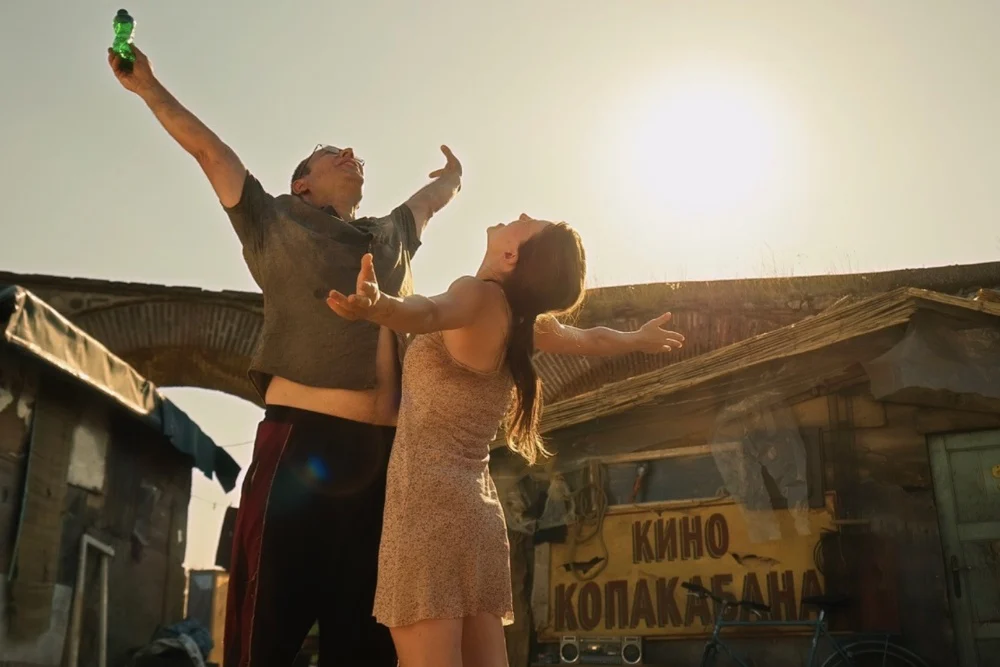
At the heart of Sister Brother Manhole Cover is a story of survival, resilience, and the unconventional bonds formed in the shadows of Macedonian society. The narrative follows Malina (played by Sara Klimoska) and Viktor (Filip Trajkovikj), a sibling duo existing on the precarious edges of urban life. To secure their daily bread, the pair engages in the illicit trade of pilfering bronze busts and manhole covers—an act of desperation that they carry out with an air of defiant, chaotic swagger.
The film’s trajectory shifts when their path crosses with that of a wealthy, blind, and elderly woman. This encounter serves as the catalyst for the film’s central moral dilemma. As the siblings interact with this woman—who balances a hardened exterior with moments of unexpected kindness—they are forced to confront their own definitions of right and wrong. It is a nuanced examination of human devotion, stripped of romantic pretense, focusing instead on the raw mechanics of unconditional acceptance.
Chronology: Manchevski’s Path to Tokyo
To understand the significance of this new feature, one must look at the arc of Milcho Manchevski’s career. The Macedonian filmmaker first captured the global consciousness with his 1994 masterpiece, Before the Rain. The film was a watershed moment for Balkan cinema, winning the Golden Lion at the Venice Film Festival, the FIPRESCI Prize, and securing an Academy Award nomination for Best Foreign Language Film.
Following his initial success, Manchevski maintained a consistent presence in international cinema, though his projects often defied easy categorization. His filmography includes:
- 1994: Before the Rain – The breakthrough hit that established his signature lyrical yet brutal style.
- 2001: Dust – A sprawling, ambitious western-drama that served as the opening-night film at Venice.
- 2010: Mothers – An exploration of the intersection between documentary and fiction.
- 2019: Willow – A poignant look at the complexities of motherhood and modern life in Macedonia.
- 2022: Kaymak – A satirical exploration of unconventional family structures that premiered at the Tokyo International Film Festival.
- 2024: Sister Brother Manhole Cover – A return to the dark comedy genre, exploring themes of marginalization and non-erotic love.
His repeated selection by the Tokyo International Film Festival underscores a long-standing creative synergy between the director and the Japanese audience, which has consistently embraced his challenging, humanistic narratives.
Supporting Data: Production and Creative Vision
The film is anchored by a strong ensemble cast. Sara Klimoska, known for her magnetic screen presence, and Filip Trajkovikj deliver performances that Manchevski describes as central to the film’s "anti-hero" ethos. They are supported by Sonja Mihajlova, with the production spearheaded by Jane Kortoshev.
Regarding the film’s thematic weight, Manchevski has been vocal about his intentions. "Our anti-heroes defiantly refuse to identify as victims," the director noted in a recent statement. This rejection of the victim narrative is a hallmark of Manchevski’s work; he prefers to place his characters in environments where they must navigate their own morality without the safety net of societal sympathy.
Furthermore, Manchevski highlighted his fascination with the nature of human connection: "I was interested in telling a story of great love and unconditional acceptance that is not erotic." By stripping away the tropes of romantic or familial sentimentality, the director aims to present a more clinical, yet ultimately more profound, look at what it means to be truly devoted to another human being.
Official Responses and Industry Reception
The industry buzz surrounding Sister Brother Manhole Cover is palpable, particularly as Coccinelle Film Sales prepares to launch its sales campaign at the Busan Asian Contents & Film Market. The film is being marketed as a dark comedy that possesses both local specificity and universal appeal—a difficult balance to strike, but one that Manchevski has mastered throughout his three-decade career.
Festival programmers at Tokyo have historically favored works that challenge the status quo, and Manchevski’s latest appears to align perfectly with the festival’s mandate to showcase bold, auteur-driven cinema. By focusing on the "invisible" members of society, Manchevski challenges the viewer to look beyond the socioeconomic labels pinned on his characters.
Implications: The Future of Balkan Auteur Cinema
The release of Sister Brother Manhole Cover carries several implications for the current state of independent international film.
First, it signals the continued relevance of the "Auteur" model in an era increasingly dominated by franchise filmmaking. Manchevski remains a director who writes his own scripts and maintains a tight, singular vision over his projects. By returning to the festival circuit with such regularity, he provides a roadmap for emerging filmmakers from Eastern Europe on how to sustain a career of integrity while engaging with global markets.
Second, the film highlights the growing importance of the Asian film market for European independent cinema. The partnership between a Macedonian production team, a European sales agent, and a Japanese festival platform illustrates the globalized nature of film finance and distribution. The Asian Contents & Film Market in Busan has become a crucial node in this network, and the decision to launch the film there suggests a strategic move to tap into the expanding interest in non-Western, high-concept dramas.
Finally, the thematic focus of the film—marginalization and the search for belonging—is timely. As urban landscapes across the globe become increasingly stratified, the story of two siblings scavenging on the periphery feels less like a niche local interest and more like a commentary on the "have-nots" in a globalized, consumerist world.
Conclusion
As the Tokyo International Film Festival draws near, all eyes will be on Sister Brother Manhole Cover. Whether the film will achieve the same level of critical acclaim as Before the Rain remains to be seen, but the signs are promising. Milcho Manchevski has once again proven himself to be a director who refuses to play it safe. By weaving a story of dark comedy, social critique, and unconditional love, he continues to push the boundaries of his craft.
The trailer, now available for viewing, captures the film’s kinetic energy and visual grit—a testament to a director who, despite his decades of experience, retains the restless, searching spirit of a debutant. For audiences and distributors alike, Sister Brother Manhole Cover is poised to be one of the most compelling entries in the international competition circuit this year.
