
Streamlining the Workflow: FilmConvert Brings Precision Grading to the DJI Osmo Pocket 4P
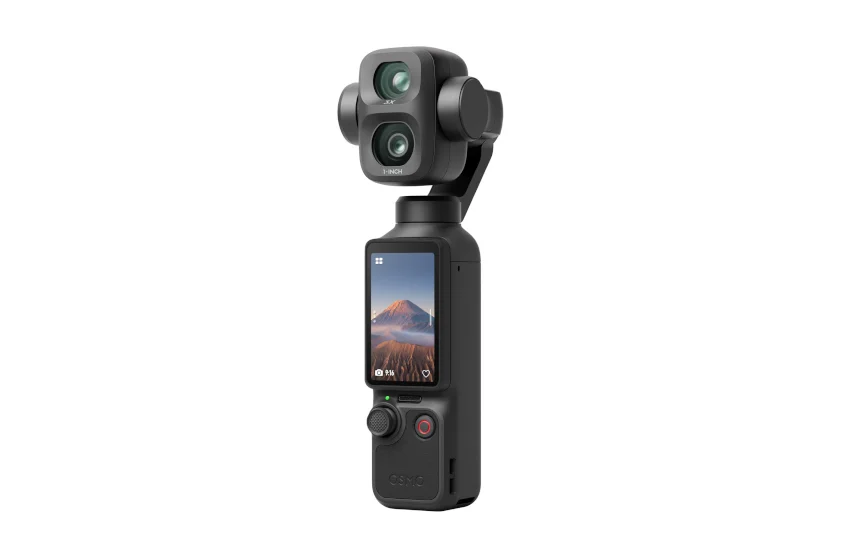
The post-production landscape is undergoing a quiet revolution, driven by the increasing prevalence of "mixed-camera" production environments. As filmmakers rely more heavily on compact, stabilized devices like the DJI Osmo Pocket 4P for B-roll, travel sequences, and unconventional camera angles, the challenge of maintaining color continuity has become a primary bottleneck for colorists and editors. Addressing this, FilmConvert has officially rolled out dedicated camera profiles for the DJI Osmo Pocket 4P across its flagship software suites, Nitrate and CineMatch.
This integration marks a significant bridge between consumer-grade portability and professional color-grading pipelines, allowing creators to seamlessly incorporate Pocket 4P footage into projects shot on high-end cinema cameras and professional mirrorless bodies.
Main Facts: Bridging the Gap Between Compact and Cinema
The latest update from FilmConvert provides users with native camera profiles specifically tuned for the DJI Osmo Pocket 4P. By moving away from generic, "unsupported" source settings, editors can now leverage camera-specific math to normalize their footage.
Within CineMatch, this means the software can now perform sensor-level color mapping, ensuring that the Pocket 4P’s output is mathematically aligned with the primary camera package. Within Nitrate, the update allows the Pocket 4P to benefit from FilmConvert’s renowned film-stock emulations and sophisticated grain management, enabling a cinematic texture that often eludes compact sensors.
By identifying the camera directly within the software’s menu, the user gains a more stable baseline for exposure, white balance, and tint adjustments, effectively reducing the time spent on manual "match-grading" at the start of a session.
Chronology: The Evolution of Professionalizing Small-Sensor Footage
The journey toward this update reflects a broader industry trend toward hardware-agnostic post-production.

- The Rise of the Pocket Utility: Over the past few years, the DJI Osmo Pocket series transformed from a hobbyist tool into a staple of professional production. Its unique 3-axis gimbal stabilization allowed for shots that would otherwise require complex rigs or drones.
- The Workflow Friction: As professional productions began utilizing the Pocket series, colorists reported significant friction. The sensor’s color science, while impressive for its size, rarely matched the log curves or color spaces of cameras from manufacturers like ARRI, RED, or Sony.
- The Development Phase: Recognizing this demand, FilmConvert’s engineering team initiated testing to map the Pocket 4P’s sensor output. This required rigorous analysis of the camera’s color response and dynamic range.
- September 2026 Rollout: Following extensive beta testing and calibration, FilmConvert officially integrated the profiles into both the Nitrate and CineMatch ecosystems, marking the completion of this update cycle.
Supporting Data: Why Sensor-Specific Profiles Matter
In modern digital cinema, "color science" is not merely an aesthetic preference; it is a mathematical function of how a sensor interprets photons. When a camera is not supported by a grading plugin, the editor is essentially "guessing" the source color space. This leads to common issues:
- Skin Tone Discrepancies: When mixing shots, the most common failure point is the inconsistency in skin tones. Without a dedicated profile, the Pocket 4P might render skin with a magenta or green shift compared to the primary camera.
- Highlight Roll-off: Cinema cameras possess sophisticated highlight roll-off curves. Compact sensors often clip highlights more harshly. The new FilmConvert profile compensates for this by mapping the Pocket 4P’s highlight recovery to a curve that mimics the look and feel of the primary production camera.
- Noise Floor Management: The Pocket 4P is a small-sensor device. FilmConvert’s Nitrate plugin uses this new data to intelligently apply grain, ensuring that the texture of the Pocket 4P footage matches the organic, pleasing grain of the project’s master, rather than appearing as digital, blocky noise.
Official Responses and Industry Implications
The release has been met with enthusiasm from the independent filmmaking community, where budget constraints often require the use of "A-cam" and "B-cam" setups that vary wildly in price point.
"Our goal is to ensure that the camera becomes an invisible part of the process," a representative from FilmConvert stated during the launch. "A director shouldn’t have to choose between the mobility of the Osmo Pocket and the ability to achieve a high-end, consistent cinematic grade. By providing the exact sensor data for the Pocket 4P, we are empowering creators to focus on the story rather than the technical hurdles of matching disparate footage."
The "A-Cam/B-Cam" Paradigm Shift
The implication for production is clear: the hierarchy of camera equipment is flattening. In the past, the "A-Cam" was the only camera that mattered because it was the only one that could hold up to rigorous grading. Today, the "B-Cam" or "C-Cam"—often a DJI Osmo Pocket 4P—is expected to hold up just as well.
This update facilitates a "unified pipeline." When an editor applies a LUT or a specific film print emulation (like Kodak 5219 or Fujifilm 3510) to a timeline, the DJI footage now responds to that emulation with the same characteristics as the cinema camera. This is the holy grail of modern color grading: visual cohesion across the entire project.
Practical Implementation: Integrating the Profile
For users looking to adopt this new workflow, the process is designed for minimal disruption to the editing timeline.

Installation and Workflow
- Update the Plugins: Users must ensure both CineMatch and Nitrate are running the latest version. This is critical, as older versions lack the internal database for the Pocket 4P.
- Selection: Once updated, simply navigate to the "Camera" dropdown menu in the plugin interface. If the device does not appear, a quick refresh or application restart is required.
- Matching: In CineMatch, the user selects the "Source" (DJI Osmo Pocket 4P) and the "Target" (the primary cinema camera). The software then creates the transformation bridge.
- Grading: With the foundation set, the user can then transition to the Nitrate interface for final look development, secure in the knowledge that the base color space is corrected.
The Future of Compact Production
As we look toward the future of filmmaking, the lines between "prosumer" and "professional" continue to blur. Tools like the DJI Osmo Pocket 4P offer capabilities that were once the exclusive domain of high-budget productions. However, these tools are only as effective as the post-production infrastructure supporting them.
FilmConvert’s commitment to updating its plugins for the Pocket 4P is a testament to the fact that the modern filmmaker is no longer tethered to a single ecosystem. Whether a production is captured on a massive full-frame cinema rig or a handheld, pocket-sized stabilized device, the ability to harmonize the image is now more accessible than ever.
By removing the technical barrier of color matching, this update allows for greater creative freedom. Directors can now place the Pocket 4P in tight spaces, mount it to moving vehicles, or use it for candid, handheld sequences, knowing that the final image will integrate seamlessly into the high-fidelity color grade of their primary footage. This is not just a software update; it is an endorsement of the "hybrid" production style that defines the current era of independent filmmaking.
For those who rely on the portability of the Osmo Pocket series, this update is a vital tool for ensuring that their footage maintains its professional integrity from the first frame to the last.
