
The High Cost of Private Gigs: Jennifer Lopez and the Perils of Celebrity Diplomacy in Repressive Regimes
Main Facts
Global superstar Jennifer Lopez found herself at the center of an international controversy following a high-profile performance in Turkmenistan, where she serenaded the nation’s authoritarian leader, Gurbanguly Berdimuhamedow. The incident has once again cast a harsh spotlight on the lucrative, yet ethically fraught, world of private corporate concerts performed by A-list celebrities for ultra-wealthy clients in politically oppressive states.
The focal point of the controversy was a custom rendition of "Happy Birthday" delivered by Lopez directly to Berdimuhamedow during a corporate event hosted by the China National Petroleum Corp. (CNPC). While Lopez’s representatives scrambled to distance the singer from the authoritarian government, asserting that the engagement was strictly a corporate booking, the optics of the performance drew immediate and fierce condemnation from human rights organizations.
According to Human Rights Watch (HRW), Turkmenistan languishes under an iron-fisted dictatorship characterized by "extraordinary levels of repression," where dissent is systematically crushed, media freedom is nonexistent, and political prisoners face routine abuse. By taking the stage and extending warm birthday wishes to a ruler accused of widespread human rights violations, Lopez inadvertently stepped into a geopolitical minefield—a misstep that risks undermining her extensive philanthropic efforts and advocacy for marginalized communities worldwide.
The controversy highlights a recurring blind spot within the entertainment industry: the systemic failure of talent agencies, public relations teams, and management firms to thoroughly vet the political and human rights landscapes of the foreign territories in which their clients perform. Despite commands for tighter security and background checks, multimillion-dollar paychecks continue to blind artists and their handlers to the ethical implications of accepting bookings from dubious benefactors.
Chronology of the Turkmenistan Event
The Setup and Vetting Process
Months prior to the event, Jennifer Lopez was approached to perform at a private gathering in the Central Asian nation of Turkmenistan. According to official statements released by her publicist, the booking was presented entirely as a corporate function. It was organized and financed by the China National Petroleum Corporation (CNPC) to entertain local executives and international stakeholders involved in lucrative energy projects.
Lopez’s management and legal teams reportedly conducted a preliminary review of the engagement. Because the client was a major multinational energy corporation rather than a sovereign state or a government ministry, the booking initially appeared benign, clearing the standard operational hurdles required for international corporate performances.
Arrival and the Last-Minute Request
Upon arrival in Turkmenistan, the production moved swiftly toward showtime. However, backstage dynamics shifted dramatically just moments before Lopez was scheduled to take the stage. According to her publicist, representatives from CNPC approached Lopez’s camp with an unscripted, last-minute addendum to the evening’s program: they requested that the global pop icon sing a personal "Happy Birthday" greeting to President Gurbanguly Berdimuhamedow, who was unexpectedly in attendance as a guest of honor.
The request was not part of the original contractual agreement negotiated prior to the trip. Nevertheless, operating under the assumption that she was simply entertaining corporate executives, Lopez "graciously obliged" the host company’s request, viewing it as a polite gesture of hospitality toward the leadership of the host nation.
The Performance and Public Backlash
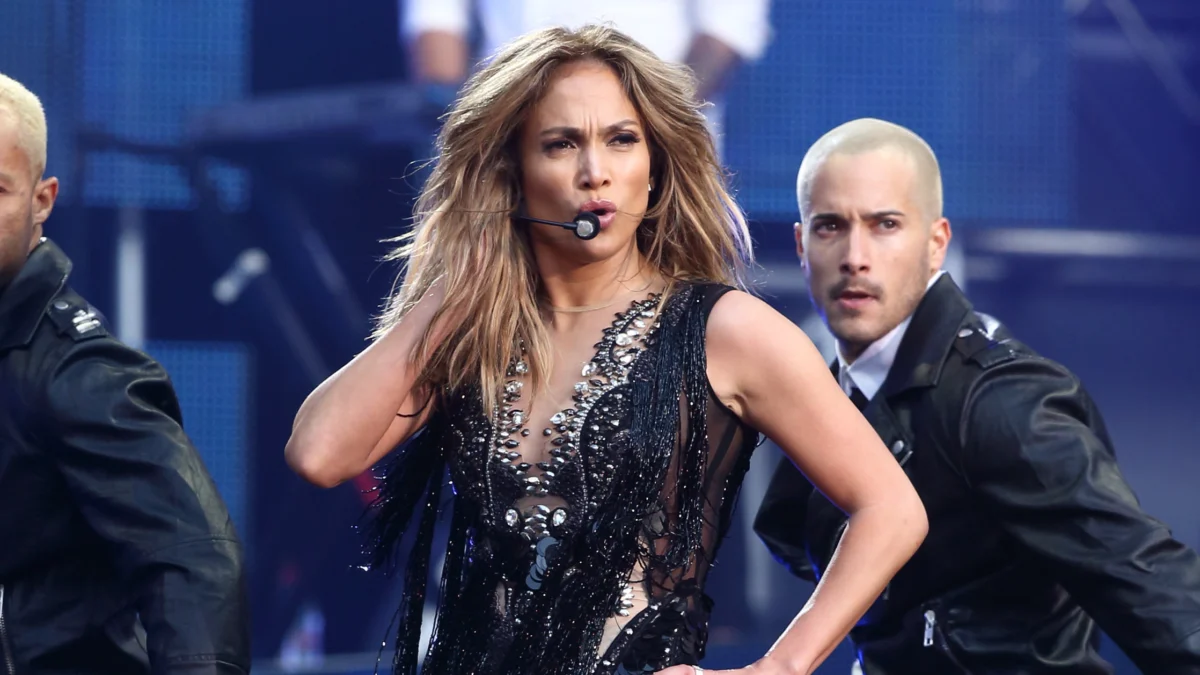
Footage capturing the moment quickly surfaced on YouTube and international news outlets. In the video, Lopez can be seen addressing the crowd and the nation’s president directly, offering a cheerful, "We wish you the very happiest birthday," before launching into the celebratory song.
The backlash was swift. Human rights activists, journalists, and fans immediately took to social media and editorial platforms to criticize the singer. The juxtaposition of a global icon celebrating an autocrat notorious for suppressing civil liberties generated a massive public relations crisis. By Sunday, the pressure mounted to such a degree that Lopez’s publicist issued a formal statement to the Associated Press, attempting to contextualize the sequence of events and clarify the nature of her participation.
Supporting Data: A History of Celebrity Missteps
Jennifer Lopez is far from the first mainstream entertainer to fall into the trap of accepting exorbitant fees to perform for authoritarian figures or their families. Over the past decade, a disturbing pattern has emerged wherein pop stars, actors, and cultural icons trade their prestige for private wealth, only to face severe reputational damage when their associations are brought to light.
The Gaddafi Family Performances (2011)
Perhaps the most notable precursor to the Lopez controversy occurred in 2011, when a slate of high-profile musicians—including Beyoncé, Mariah Carey, Nelly Furtado, and Usher—faced intense scrutiny for having accepted millions of dollars to perform at private parties hosted by the family of Libyan dictator Muammar Gaddafi.
The revelations came to light just as the Gaddafi regime was initiating a brutal, bloody crackdown on domestic pro-democracy demonstrations, a conflict that ultimately escalated into a full-scale civil war and the violent downfall of the regime. The artists rushed to distance themselves from the dictator, expressing profound public embarrassment.
Mariah Carey, who had performed a private New Year’s Eve concert for Gaddafi’s sons in St. Barts, issued a candid mea culpa:
"I feel horrible and embarrassed to have participated in this mess. Going forward, this is a lesson for all artists to learn from. We need to be more aware and take more responsibility regardless of who books our shows."
Hilary Swank and the Chechen Gala (2011)
Later that same year, Academy Award-winning actress Hilary Swank found herself at the center of a public relations disaster after traveling to Grozny, the capital of the Russian republic of Chechnya, to attend an extravagant birthday celebration for regional leader Ramzan Kadyrov. Kadyrov, handpicked by the Kremlin, has faced persistent, credible accusations of orchestrating torture, forced disappearances, and extrajudicial killings.
Swank’s presence at the gala—where she reportedly praised Kadyrov and expressed joy at being part of the celebration—sparked international outrage from human rights organizations. Recognizing the severity of the PR fallout, Swank quickly issued an apology, severed ties with her management team, and even donated her appearance fee to charitable causes. During an appearance on The Tonight Show with Jay Leno, a visibly contrite Swank admitted:
"Shame on me. The bottom line is I should know where I’m going and I should do better research."
Divergent Paths: Apologies vs. Defiance
While stars like Lopez, Carey, and Swank chose the path of public contrition, other cultural figures have defiantly defended their associations with controversial regimes. Actor Sean Penn and musician Danny Glover faced enduring criticism from conservative circles for their vocal support of and visits with the late Venezuelan socialist leader Hugo Chavez, defending their actions as political solidarity rather than commercial opportunism.
Similarly, action star Steven Seagal has frequently courted controversy through his enthusiastic hobnobbing with foreign strongmen, including Russian President Vladimir Putin and Chechnya’s Ramzan Kadyrov. Seagal’s willingness to accept Russian citizenship and act as a cultural emissary for the Kremlin has repeatedly drawn questions regarding whether Western celebrities serve as willing propaganda tools for repressive states.
Official Responses and Industry Safeguards
The recurring cycle of celebrity-autocrat scandals prompted civil society organizations to take concrete action to protect artists from exploitation by repressive regimes. In the wake of the 2011 controversies involving Carey, Furtado, and Swank, Human Rights Watch (HRW)—in collaboration with the Global Philanthropy Group—took the unprecedented step of launching a confidential verification service for performers and their management teams.
This advisory service was specifically designed to provide Hollywood agents, publicists, and booking agencies with reliable, objective intelligence regarding the human rights records of potential host countries, corporate entities, and private benefactors. The goal was simple: to ensure that artists could vet foreign engagements discreetly and avoid inadvertently lending their cultural capital to dictators and human rights abusers.
Despite the creation of such resources, the Lopez incident indicates that systemic gaps remain. Many booking agencies prioritize the financial windfall of multi-million dollar private retainers over rigorous geopolitical vetting.
Complete Statement from Jennifer Lopez’s Representative
To clear up conflicting media reports, Lopez’s publicist issued the following comprehensive statement regarding the Turkmenistan concert:
"Jennifer Lopez and several other artists were invited and performed at a private corporate event for the China National Petroleum Corporation that was presented to their local executives in Turkmenistan. This was not a government-sponsored event or political in nature.
The event was vetted by her representatives; had there been knowledge of human rights issues of any kind, Jennifer would not have attended.
The China National Petroleum Corporation made a last-minute ‘birthday greeting’ request prior to Jennifer taking the stage. This was not stipulated in her contract, but she graciously obliged the China National Petroleum Corporation request."
While the statement highlights the last-minute nature of the birthday shout-out, critics argue that management teams must look beyond the immediate corporate entity commissioning the work and analyze the broader political ecosystem in which these performances take place.
Implications for the Entertainment Industry
The controversy surrounding Jennifer Lopez’s performance in Turkmenistan transcends a single awkward concert; it raises fundamental questions about the intersection of global capitalism, soft power, and celebrity ethics in the 21st century.
The Monetization of Soft Power
Authoritarian regimes and state-affiliated conglomerates possess vast financial resources derived from natural resources such as oil, gas, and minerals. Tapping into these immense fortunes allows them to hire Western pop stars, actors, and athletes to legitimize their rule. For a dictator isolated by the international community, the presence of an artist of Lopez’s magnitude functions as a powerful instrument of soft power. It projects an image of normalcy, modernity, and global acceptance—effectively sanitizing a brutal domestic rights record in exchange for a few hours of entertainment.
The Erosion of Authentic Activism
For decades, A-list celebrities have cultivated personal brands built on philanthropy, humanitarianism, and social activism. Jennifer Lopez, for instance, has long maintained a public commitment to charitable causes, working alongside organizations like the Children’s Defense Fund and actively promoting healthcare reform and improved medical access in Panama.
When an artist champions vulnerable populations on one hand while serenading an oppressor on the other, the dissonance severely damages their credibility. Activism begins to look less like a genuine moral calling and more like a superficial marketing strategy. The public is increasingly less forgiving of the "naive superstar" defense, particularly in an era of instant global information where human rights abuses are easily researched.
A Call for Institutional Reform
Moving forward, the Lopez incident serves as a stark warning to the entertainment industry at large. Talent agencies, legal representatives, and public relations firms can no longer treat international private gigs as standard business transactions insulated from politics.
To prevent future PR disasters, the industry must adopt mandatory geopolitical risk assessments for all foreign engagements. Artists must be empowered to say no when corporate clients attempt to blur the lines between private entertainment and state propaganda. Until the allure of unchecked petrodollars is balanced by genuine ethical accountability, celebrities will continue to risk their reputations on the perilous global stage.
