
The Art of Conflict: Inside the Abstract Title Sequence for HBO’s War
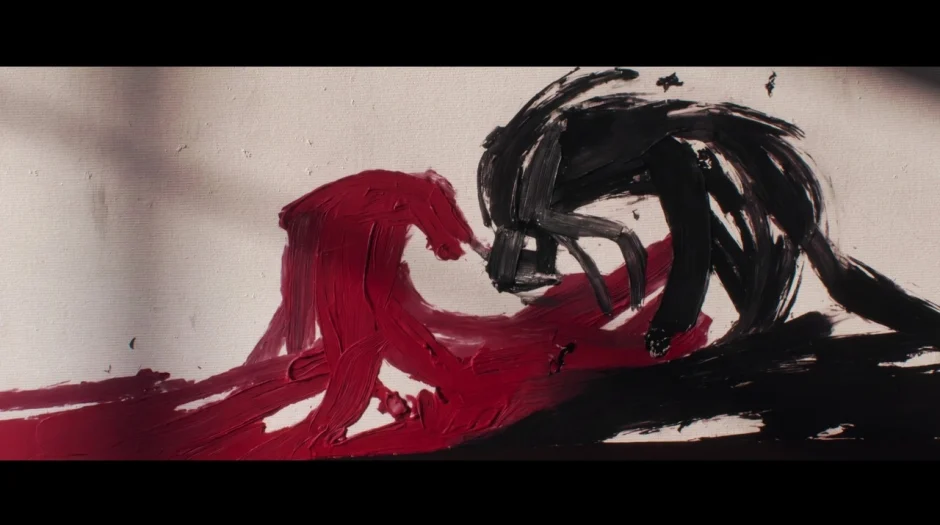
In the landscape of modern television, the opening title sequence serves as a vital bridge between the viewer’s anticipation and the narrative’s reality. When HBO sought a visual identity for its high-stakes legal drama, War, the network turned to the renowned creative studio Imaginary Forces. The result is a masterclass in visual storytelling—a sequence that eschews the typical tropes of mahogany-paneled courtrooms and stacks of legal briefs in favor of the raw, visceral language of abstract expressionism.
Directed by Ronnie Koff, the title sequence functions as a kinetic metaphor for the series’ central premise: a high-profile, acrimonious divorce that weaponizes two of London’s most formidable law firms. By treating digital paint as a proxy for the human actors, Imaginary Forces has created a sequence that doesn’t just introduce a show—it captures the very nature of conflict.
Main Facts: A Collision of Creative Disciplines
The eight-part series War, created, written, and executive produced by George Kay—the creative force behind Lupin and Hijack—centers on the explosive clash between tech entrepreneur Morgan Henderson (played by Dominic West) and film star Carla Duval (Sienna Miller). As their personal lives unravel, they drag their respective legal powerhouses, Cathcarts & Sons and Taylor & Byrne, into a battle of attrition.

To represent this, the title sequence utilizes a sophisticated digital pipeline. The creative team hand-animated layers of digital paint using Procreate on an iPad with an Apple Pencil. These files were then refined in Krita to enhance texture and depth before being imported into Cinema 4D and rendered with Redshift. The end product is a hyper-tactile, dimensional piece of art that mimics the spontaneity of traditional painting while leveraging the precise control of modern 3D software.
Chronology: From Concept to Screen
The development of the sequence was a study in iterative design. According to Koff, the initial challenge was avoiding the "literal" trap of the legal genre.
The Conceptual Phase
Early brainstorming sessions focused on the emotional core of the series. Instead of looking at lawyers or judges, the team looked at the nature of friction. "We wanted the sequence to feel like conflict distilled to its most elemental form," Koff explained. They moved away from representational imagery, opting instead for a language of collision and collapse.

The "Boxer" Breakthrough
The turning point for the creative team was a shift in perspective. They began to view the abstract forms not as random splashes, but as sentient entities. "We started thinking about the two sides almost like two boxers in a ring," Koff noted. This anthropomorphic approach provided a narrative spine: one force advances, the other responds, and they engage in a rhythmic cycle of collision, separation, and renewed aggression. Once the paint was given "intention," the abstraction began to mirror the show’s plot.
The Production Pipeline
The technical execution followed a rigorous path:
- Animation: The movement was captured via Procreate. This allowed for the organic, human touch of an artist’s hand—essential for conveying the "emotional weight" of the conflict.
- Refinement: The team used Krita to enrich the texture of the strokes, ensuring that the digital medium retained the physical properties of paint.
- Dimensionality: Finally, the sequence was ported to Cinema 4D. Here, the team added physical canvas, complex lighting rigs, and surface details. By applying these 3D principles, they gave the abstract forms a tactile presence that leaps off the screen.
Supporting Data: The Anatomy of a High-Stakes Production
War is not merely a regional legal drama; it is a significant international collaboration. Produced by Banijay-owned New Pictures and Observatory Pictures in association with Sky and HBO, the series is positioned as a cornerstone of the premium cable landscape.

- Cast: Dominic West and Sienna Miller lead an ensemble cast tasked with portraying the toll of professionalized conflict.
- Release Context: The series premiered on Thursday, October 1, on HBO, and debuted on Sky in the U.K. on October 2.
- Future Outlook: High viewership and critical buzz have already secured the series for a second season, which is currently in active production.
- The Creative Team: Ronnie Koff (Creative Director) led a powerhouse team including Art Director Henry Chang, Designer Kathy Liang, Painter/Animator Drew Tyndell, Editor Lexi Gunvaldson, Producer Christina Hwang, and Executive Producer Renee Robson.
Official Perspectives: The Philosophy of Abstraction
For Ronnie Koff and his team at Imaginary Forces, the goal was never to illustrate the plot, but to embody the show’s atmosphere. In a professional landscape often dominated by literalism—where title sequences serve as "previously on" recaps or simple mood boards—the War sequence demands more from the audience.
"There’s something beautiful about abstract expressionism because you can feel aggression, tension, and emotion without being told exactly what you’re looking at," Koff said in an official statement. This philosophy allowed the sequence to serve as an emotional primer for the audience. By the time the episode begins, the viewer has already internalized the feeling of the "war" through the rhythmic, violent, and fluid motions of the digital paint.
The sequence operates on a subconscious level. When the audience sees the paint fracture, bleed, and consume itself, they are seeing the structural integrity of the protagonists’ lives breaking down. It is a visual representation of the "legal war" that goes beyond the courtroom walls.

Implications: Changing the Genre Aesthetic
The success of the War title sequence has broader implications for the future of television branding. As streaming platforms compete for attention in an increasingly crowded market, the "brand identity" of a series—represented most potently in its opening titles—has become a competitive advantage.
The Shift Toward Fine Art
The reliance on tools like Procreate and Krita, combined with the power of high-end 3D rendering (Redshift), signals a move away from standard motion graphics. Studios are increasingly looking toward the fine arts—painting, sculpture, and mixed media—to differentiate their content. This approach provides a "prestige" aesthetic that aligns perfectly with the high-budget, high-concept nature of HBO programming.
The Human Element in a Digital World
Despite the high-tech nature of Cinema 4D and Redshift, the heart of the War sequence is human performance. By using the Apple Pencil, the animators ensured that the "brushwork" carried the specific, individual energy of the artist. In an era where AI-generated content is becoming prevalent, the conscious choice to center the human "hand" in the animation process acts as a powerful statement on the necessity of creative intuition.

Narrative Integration
The most significant takeaway for the industry is the effectiveness of metaphor over literalism. By treating the paint like boxers, the Imaginary Forces team demonstrated that abstract art can be as narratively dense as live-action film. This creates a psychological priming effect that prepares the audience for the narrative shifts within the show. The sequence does not just set the scene; it establishes the emotional stakes, ensuring that the audience is prepared for the complex, often messy, legal and personal maneuvering that defines the series.
In conclusion, War sets a new benchmark for how television can use abstract visual art to ground its narrative. By bridging the gap between the organic spontaneity of painting and the precision of 3D technology, Ronnie Koff and Imaginary Forces have created a sequence that is not merely an introduction, but an integral part of the show’s identity. As the series continues its run, the "war" depicted in the opening frames remains a constant, silent partner to the drama unfolding in every scene.
