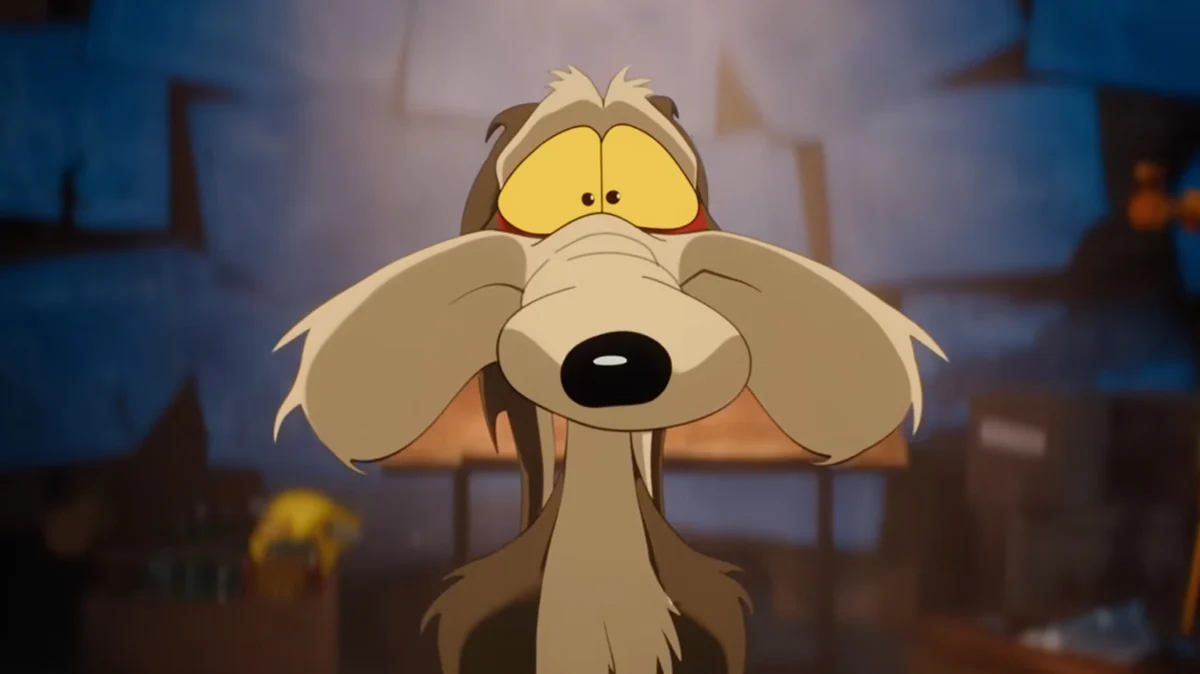
The Case Closed: How Coyote vs. Acme Settled the Great Looney Tunes "Meep-Meep" vs. "Beep-Beep" Mystery
For generations, the classic LooneyTunes shorts created by animation legends like Chuck Jones have defined physical comedy, slapstick, and American humor. Yet, despite their monumental cultural footprint, the franchise has historically struggled to translate its anarchic genius into feature-length cinematic formats.
That drought, however, has decisively ended. Following the triumph of 2024’s The Day the Earth Blew Up: A Looney Tunes Movie—which rightly earned acclaim for centering on Daffy Duck and Porky Pig—animation fans have been gifted the long-shelved, highly anticipated hybrid film Coyote vs. Acme. Released by Ketchup Entertainment after surviving a high-profile corporate shelving ordeal at Warner Bros. Discovery, the film has emerged as a critical and commercial victory.
Beyond its sharp commentary on corporate greed and systemic legal failure—blending the tone of Erin Brockovich with the multimedia wizardry of Who Framed Roger Rabbit—Coyote vs. Acme accomplishes a historic feat. It decisively answers a pop culture debate that has raged across schoolyards and internet forums for decades: Does the Road Runner say "meep-meep" or "beep-beep"?
Main Facts: The Resolution of a Decades-Old Debate
The core mystery of the Road Runner’s signature vocalization has baffled animation historians, linguists, and casual viewers alike since the character’s debut in 1949. While the bird is fundamentally defined by its swift escapes and effortless avoidance of Wile E. Coyote’s elaborate traps, the exact phonetic spelling and pronunciation of its signature sound have been fiercely contested.
In Coyote vs. Acme, the debate is put to bed once and for all. Toward the climax of the film, the Road Runner communicates via a physical sign—mirroring the classic silent communication method utilized by Wile E. Coyote throughout the decades. On this sign, the catchphrase is explicitly spelled out: "BEEP BEEP."
This definitive spelling brings closure to an argument fueled by inconsistent audio mixing in classic theatrical shorts, divergent memories among viewers, and variations in merchandising over the latter half of the 20th century. While the sound effect has often been interpreted phonetically by human ears as "meep-meep," the official canon established by the new feature film confirms that the bird’s rallying cry is, and always has been, "beep-beep."
Chronology of the Conflict: From Chuck Jones to the Big Screen
To understand why this linguistic debate endured for so long, one must look back at the chaotic production history of the original Road Runner theatrical shorts.
1. The Genesis of a Sound (1949–1960s)
When director Chuck Jones first introduced Wile E. Coyote and the Road Runner in the 1949 short Fast and Furry-ous, the bird possessed only a single, synthesized vocalization, famously provided by sound effects artist Paul Julian. Julian originally designed the sound as a simple, mechanical "beep-beep," mimicking an automobile horn.
However, because Julian produced the sound quickly and altered it with vocal modulation, many viewers heard a higher-pitched "meep-meep." Jones himself occasionally referred to the sound colloquially as "meep-meep" in later interviews, inadvertently planting the seeds for decades of confusion.
2. The Pop Culture Split (1970s–1990s)
As the classic shorts transitioned into Saturday morning syndication, home video, and commercial licensing, the split deepened.
The "Beep-Beep" Camp: Pointed to official comic books, cereal boxes, and Hanna-Barbera/Warner Bros. merchandise from the 1970s and 80s, which consistently spelled the sound as "Beep! Beep!"
The "Meep-Meep" Camp: Insisted that auditory perception in the original theatrical mixes clearly favored an "M" consonant sound over a "B."
Over the decades, pop culture trivia books, late-night talk shows, and early internet message boards routinely cycled through the debate, treating it as an unsolved pop culture Mandela Effect.
3. The Resurrection and Resolution (2020s)
When director Dave Green and his creative team began development on Coyote vs. Acme, they recognized that dealing with the Road Runner’s iconic vocalization required careful navigation. Rather than ignoring the lore, the production decided to weave the debate directly into the narrative, utilizing audio cues, human dialogue, and, ultimately, visual confirmation to settle the score permanently.
Supporting Data: Behind the Scenes of the Sound Design
The journey to definitively spelling "beep-beep" on screen was not without its internal dissent among the filmmakers. In an interview with ComingSoon, director Dave Green detailed how the studio grappled with the phonetic dilemma during production, crediting composer Steven Price with the conceptual breakthrough.
Price wanted the film’s musical score to reflect the internal psychology of Wile E. Coyote, suggesting that the perpetually traumatized predator hears nothing but the echoing taunts of the Road Runner inside his own head. This psychological framing led to a pivotal choral arrangement during the film’s climax, which utilizes a sweeping cover of the 1812 Overture driven entirely by a choir of vocalized sounds.
According to Green, this creative choice sparked a lighthearted civil war in the recording booth:
"There was an argument, by the way, that we settled in the recording session on whether it was ‘meep’ or ‘beep’. The choir did a vote, and we said, ‘Well, what do you think the Road Runner says?’ Everyone except for one person said it is ‘meep.’ But it’s technically ‘beep.’ It’s okay because sometimes it sounds like ‘meep,’ but it is spelled ‘beep’ in the movie. So, I think we’ve gotten away with it."
This split among professional voice artists and musicians mirrors the exact division seen among global audiences for over 75 years, proving that the ambiguity was baked into the very execution of Paul Julian’s original sound effect.
Official Responses and Creative Intent
The release of Coyote vs. Acme has been hailed as a triumph of artistic perseverance. Originally written off as a tax write-off casualty by Warner Bros. Discovery leadership—sparking widespread industry backlash—the film fought its way to the silver screen under Ketchup Entertainment.
Speaking on the broader implications of the film, critics and creators alike have emphasized that Coyote vs. Acme does more than just answer trivia questions; it revitalizes a foundational pillar of American animation. By allowing Wile E. Coyote to carry a feature-length narrative without relying on Bugs Bunny as a crutch, the film demonstrates the rich, untapped potential residing within the broader Looney Tunes bench.
Animation historians have praised the production team for respecting the character’s legacy while injecting modern cinematic sensibilities. By officially cementing "beep-beep" into the text of the film, the creators have provided closure to an affectionate, harmless debate that united generations of fans in shared nostalgia.
Implications for the Looney Tunes Franchise
The definitive resolution of the "meep-meep" vs. "beep-beep" debate carries several important takeaways for the future of the Looney Tunes intellectual property:
Canon Establishment: Future animated projects, comic books, and licensing endeavors now have a definitive, court-tested (literally, within the context of the film’s courtroom plot) ruling on how the Road Runner’s catchphrase must be transcribed.
Director-Driven Lore: The willingness of modern creators like Dave Green to lean into legacy fan debates proves that contemporary adaptations thrive when they engage deeply with fan culture and animation history.
Proof of Concept for Secondary Characters: Both The Day the Earth Blew Up and Coyote vs. Acme have shattered the long-held studio dogma that only Bugs Bunny can headline a financially and critically successful theatrical feature. By letting secondary and tertiary icons take the spotlight, Warner Bros. (and external distributors like Ketchup Entertainment) have opened the door for a potential renaissance of character-specific theatrical features.
As Coyote vs. Acme continues its theatrical run, it stands not only as a masterclass in hybrid live-action/animation comedy, but as the final, triumphant word on a debate that entertained, confounded, and delighted millions for more than three-quarters of a century. That’s all, folks—and this time, the spelling is official.