
The Night Hollywood’s Titans Took the Stage: Remembering the 1963 Philharmonic Spectacular
In the modern cultural landscape, "Film Music Night" has become a staple of the concert hall experience. From the Boston Pops to the London Symphony Orchestra, the world’s most prestigious ensembles regularly fill seats by performing the iconic scores of John Williams, Hans Zimmer, and Howard Shore. Yet, beneath the veneer of these high-production, high-definition showcases lies a historical milestone that arguably birthed the entire genre.
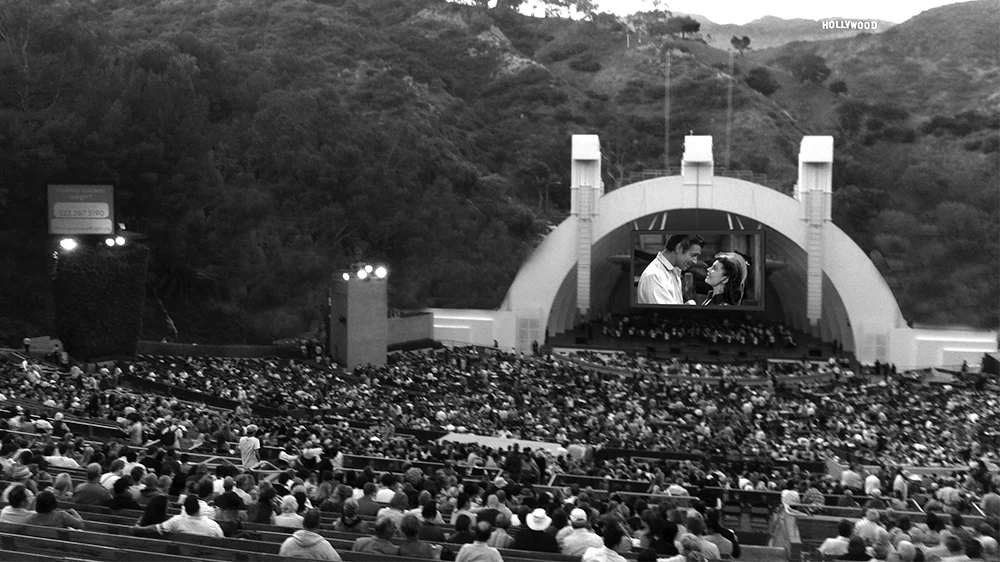
Fifty years ago, on a humid Wednesday evening on September 25, 1963, the Hollywood Bowl played host to a singular, unprecedented gathering of cinematic royalty. It was an event that transformed film music from a background functional necessity into a standalone concert art form. For one night, the men who defined the sonic identity of the Golden Age of Cinema stepped out of the shadows of the recording studio and onto the podium, wielding batons to conduct their own masterpieces.
A Gathering of Giants: The Night the Composers Conducted
The atmosphere at the Hollywood Bowl that night was thick with anticipation. Despite it being a mid-week event in the middle of a sweltering Los Angeles autumn, an estimated 10,000 fans poured into the iconic amphitheater. They were there not just to hear the music, but to witness the architects of their favorite movies.
The program was an embarrassment of riches, featuring a "who’s who" of the film music industry. Elmer Bernstein, the man whose brass-heavy, soaring themes defined the American Western, set the tone early by opening the night with the electrifying, galloping theme from The Magnificent Seven. It was a statement of intent: this music was powerful, complex, and capable of standing on its own merits without the visual aid of the silver screen.
Henry Mancini, already a darling of both the charts and the box office, made only his second-ever appearance at the Bowl. He treated the crowd to the sultry, sophisticated jazz-infused melodies of "Days of Wine and Roses" and the sharp, rhythmic tension of "Peter Gunn." The evening reached a fever pitch when the legendary Alfred Newman took the stage, delivering a thunderous, stirring rendition of his overture from How the West Was Won, an act that reportedly "brought the house down" and solidified the night as a historic triumph.
Chronology of a Cultural Shift
To understand the significance of the 1963 concert, one must understand the status of film music at the time. In the early 1960s, scores were frequently viewed as disposable, secondary to the film itself. The composers—the "backroom boys" of the studio system—rarely received public acclaim outside of the trade press.
The concert was, fundamentally, a fundraising initiative for the Composers and Lyricists Guild of America (CLGA), an organization that sought to protect the rights and royalties of the creative forces behind the screen.
- The Opener: Elmer Bernstein’s The Magnificent Seven set the stage for a night of orchestral dominance.
- The Orchestral Suites: David Raksin and Franz Waxman demonstrated the symphonic depth of film music by premiering new suites for Laura and A Place in the Sun.
- The Heavy Hitters: Miklos Rozsa, Bernard Herrmann, Dimitri Tiomkin, and Alex North provided a masterclass in varied genres, moving from the epic historical sweep of Ben-Hur and Cleopatra to the suspenseful, idiosyncratic fandango of North by Northwest.
- The Passing of the Torch: A poignant moment arrived when Max Steiner, the 75-year-old pioneer of the Hollywood score, chose to forgo conducting in favor of watching the conductor Percy Faith interpret "A Summer Place."
- The Variety Acts: The evening was bolstered by star power, including Andy Williams’ emotive performance of "Moon River" and gospel legend Mahalia Jackson’s turn on a song from The Alamo.
Supporting Data: Why It Never Happened Again
Though the concert was a resounding artistic success, it remains a solitary anomaly in the annals of Hollywood history. The event was billed as the "first annual" celebration of film music, yet it never saw a second iteration.
Why did such a potent display of talent fail to become a tradition? The logistics were astronomical. Bringing together the most sought-after composers in the world required a level of coordination that was, at the time, unsustainable. Moreover, the industry was in a period of significant flux. As the old studio system began to fracture, the collective power of the CLGA shifted, and the appetite for such massive, multi-composer showcases waned in favor of more focused, thematic concert tours.
Columbia Records captured the essence of the evening on an LP titled Music From Hollywood. While the record served as a time capsule for those who couldn’t attend, it also highlighted a disconnect: while the public clearly loved the music, the industry had not yet fully grasped the commercial potential of film music as a dedicated touring product.
Official Perspectives: The Legacy of 1963
Reflecting on the event decades later, the perspective of those who followed in the footsteps of these legends is telling. David Newman, a prolific composer in his own right and the son of the legendary Alfred Newman, has frequently noted the gravity of that night.
"I don’t think there has ever been a bigger collection of top composers on one stage, before or since," Newman remarked in a later interview. "You had the absolute titans of the medium, all in one place, all conducting their own work. It was a singular moment of recognition."
For Newman, the concert was the "Big Bang" of the modern film-in-concert industry. "It just may have been this concert that paved the way for film music to be presented in concert halls around the world," he added. The event served as a validation. It proved that audiences were not just interested in the stars on the screen—they were deeply invested in the soundscapes that provided the emotional architecture for their lives.
Implications: A Lasting Cultural Footprint
The implications of the 1963 concert extend far beyond a single evening at the Hollywood Bowl. It shattered the misconception that film music was merely "background noise." By demanding that audiences sit in a concert setting and listen to the music on its own terms, the composers of 1963 invited the public to participate in a new form of high-brow appreciation.
Today, the industry has come full circle. We see a proliferation of live-to-picture concerts, where entire films are projected while an orchestra performs the score in real-time. We see composers like Hans Zimmer selling out arenas usually reserved for rock stars. These phenomena are the direct descendants of that 1963 experiment.
The composers who gathered that night—men like Herrmann, Rozsa, and Mancini—were not just technicians; they were the symphonists of the 20th century. Their music helped define the American experience during one of the most turbulent and transformative periods in history. When they stood at the podium in the Hollywood Bowl, they weren’t just conducting themes; they were conducting history.
As we look at the current state of orchestral music, where film scores often keep the lights on for major symphonies, it is important to remember the pioneers who first dared to suggest that the music of the movies deserved to be heard in the light of day. The 1963 Hollywood Bowl concert was more than a fundraiser; it was the moment film music stepped out of the projector’s beam and into the light of the concert stage, where it has remained—triumphant and essential—ever since.
