
The Invisible Threshold: Why Cinema Fails Women in Their Late Thirties—And What Diane Lane Taught Us
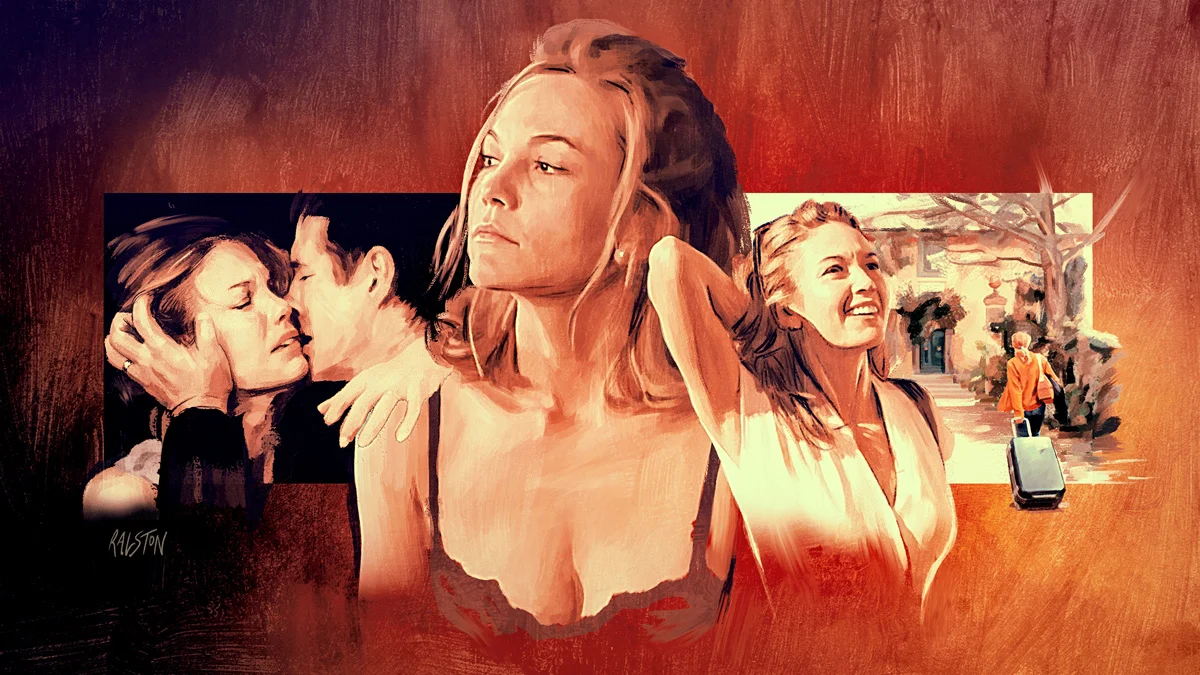
At 37, a woman finds herself standing on a precarious, invisible ledge. It is the age where, according to the unwritten rules of Hollywood casting, the protagonist begins to fade from the screen. She is too old to be the wide-eyed ingenue, yet too young to be the sagely grandmother; she exists in a cultural black hole, a transitional space that coincides, quite ironically, with the decade of a woman’s most profound self-actualization.
For those navigating this steep transition—that hormonal, psychological, and social "hold and release"—the lack of representation is not merely an aesthetic grievance. It is a structural erasure. To understand why women in their late thirties are so rarely depicted with agency, career stability, or authentic satisfaction, we must look at the stories we tell, the ones we stop telling, and the rare artifacts that dared to document this metamorphosis.
The Cultural Vanishing Act: Why Movies Stop at 37
The cinematic "disappearance" of the late-thirties woman is a well-documented phenomenon. In the current industry landscape, women of this age are frequently relegated to the fringes: the exhausted mothers of teenagers, the unhinged antagonists, or the "infantilized mess" navigating a sitcom-style crisis. They rarely appear as fully realized individuals who are thriving in their careers or finding contentment in their choices.
Industry analysts and critics have long posited that this erasure is a symptom of a male-dominated studio system. There is a palpable, if rarely admitted, anxiety surrounding the woman who has reached a state of "out-of-fucks" clarity. As women shed the need for external validation, they become harder to commodify. They are no longer seeking to be "saved" or "fixed," rendering them less useful to traditional, conflict-driven scripts that rely on a woman’s vulnerability as a plot device. When art refuses to mirror the reality of a woman’s power at 38, it denies her the template to understand her own evolution.
A Tale of Two Paths: The Diane Lane Archetypes
In the early 2000s, actress Diane Lane—at the age of 36 and 37 respectively—anchored two films that serve as the definitive, albeit divergent, case studies for this life stage: Adrian Lyne’s Unfaithful (2002) and Audrey Wells’ Under the Tuscan Sun (2003). While seemingly disparate in genre, they are, in essence, siblings: two meditations on married women whose lives reach a critical breaking point, leading them down drastically different paths toward discovery.
Unfaithful: The Destruction of the Self
Unfaithful is a masterclass in the "ripping apart" phase. Connie Sumner, a woman living a life of privilege in Westchester, is "ripe with impulse." Her life is defined by the rigid, comfortable structures of suburban success—a doting husband, a young son, and a wardrobe of soft neutrals. When an affair with a younger man, Paul, consumes her, the film serves as a cautionary tale about what happens when one mistakes a destructive impulse for liberation.
Connie’s journey is not one of growth, but of fracture. She seeks to escape the "stale" safety of her life, yet she lacks the tools to integrate her desires with her reality. The tragedy of Unfaithful is that Connie’s "metamorphosis" is filtered through the lens of male violence; the film culminates in her husband’s murder of her lover, forcing her to sacrifice her identity to maintain the facade of a life she no longer recognizes as her own.
Under the Tuscan Sun: The Architecture of Joy
Conversely, Under the Tuscan Sun represents the "building up" phase. Frances Mayes, a writer whose life is shattered by the revelation of her husband’s infidelity, finds herself in Italy. Unlike Connie, who attempts to burn her world down, Frances chooses to cultivate hers.
The film serves as a manual for the "spherical life"—the concept of living in many directions at once. Through her renovation of a crumbling villa and her cultivation of a chosen family (including the unforgettable, bohemian Katherine), Frances discovers that happiness is not a destination provided by a romantic partner, but a structure one builds with their own hands.
Supporting Data: The Cost of Absence
The disparity between these two films highlights a fundamental truth about aging: we fear that stability is stagnation, and we fear that disruption is the end. Research into gender representation in film consistently shows that characters over 35 are less likely to have a professional life depicted on screen and are more likely to be defined solely by their relationship to men.
When we look at the box office trajectory of films centered on women in this age bracket, a clear pattern emerges: stories that emphasize the internal work of a woman—her friendships, her professional ambition, and her personal autonomy—consistently resonate with audiences, yet they remain under-produced. Studios often claim "lack of market demand," yet the cult-like longevity of Under the Tuscan Sun suggests that women are starving for narratives that validate their agency.
Industry Perspectives: The Fear of the Un-Caged Woman
"It is not just fear; it is jealousy," one industry insider remarked when asked about the scarcity of stories centered on women in their late thirties. There is a systemic discomfort with the woman who "spreads out" while the men around her "fold inward."
This psychological friction is evident in the scripts that do get greenlit. If a woman is not being "battered down" by the plot, she is often sidelined. The refusal to spotlight the late-thirties metamorphosis is, in effect, a refusal to reset the traditional world order. If a woman can find absolute satisfaction in a life she built for herself—outside the context of marriage or motherhood—the entire framework of the "damsel in distress" or the "scorned wife" collapses.
Implications: The House That Protects the Dreamer
As we move further into the 21st century, the need for a new "blueprint" for women has never been more urgent. The lessons from Diane Lane’s dual performances are more relevant than ever.
- The Danger of the Bomb: Unfaithful reminds us that tossing a grenade into one’s life is rarely a path to true self-discovery. It is an act of war against the self.
- The Power of Cultivation: Under the Tuscan Sun offers the counter-narrative: that one can be the architect of their own joy. That the "train tracks" can be built even before the train arrives.
The implication for the film industry is clear: the audience is waiting for stories that take the complexity of the late-thirties woman seriously. They want to see the "cursive" of the wrinkles, the "mahogany" of lived experience, and the quiet power of a woman who has finally stopped performing for an audience.
Ultimately, the woman at 38 is not a woman in descent; she is a woman in bloom. She is a house that protects the dreamer. She is no longer waiting for a man to define her, a studio to validate her, or a society to give her permission to exist. As Frances Mayes writes in the closing of her Tuscan journey, "Unthinkably good things can happen, even late in the game."
For the modern woman, the game is not ending at 38. It is, finally, beginning to get beautiful.
